I've been spending my morning watching footie, reading and dozing. Now that Brighton are losing 2-0 with 13 minutes left to go, I'm going to switch to the Burnley - West Ham game and get going on my final group of books; #1 - 10. When I started this idea, I posted my Top Ten lists, as developed a few years back. This is the link to that post if you want to compare my updated list to those lists.
So without further ado, drum roll please... here is my Top Ten list as of March 2018.
#10 - 1
10. Parade's End by Ford Madox Ford (War / Classic). At university I took The Good Soldier by Ford. I was very lazy at university and when it came to the Classics, it took quite a bit for me to actually finish them. A few years back, while I was still working, I noticed Jo listening to a radio dramatization of Parade's End. It piqued my interest so when I saw a copy of this book in Kingston, I thought it might be worth a try. Since then we've also enjoyed a BBC dramatization of the book. It's quite excellent.
"This was a challenging, but ultimately, an enjoyable, interesting read. The book is made of four separate books, Some Do Not, No More Parades, A Man Could Stand Up and, The Last Post. It is set in England and France, before, during and after WWI. It deals with Christopher Tietjens, his wife Sylvia and Valentine Wannop, a young woman who has captured Christopher's heart. Around these people are family members, Christopher's brother, Mark; friends, associates and many others. Christopher's relationship with his wife is bitter and harsh, she goes out of her way to destroy his life, even though she won't grant him a divorce. At the same time, Christopher has fallen in love with the young woman, Valentine, who he met as a result of his father's friendship with her mother. Amidst these personal issues is the war, life in the trenches, all these matters. The story is detailed, it takes time to get used to the flow of the story, but when you do, it is most enthralling. The second and third books, which deal more with the War itself, I personally found the most interesting. Critics have said that there needn't have been a fourth book, that Christopher, himself, isn't really even present, but ultimately, I found that it wrapped up so many of the unresolved issues very nicely. Definitely worth reading, if you want to try a classic."
9. Far from the Madding Crowd by Thomas Hardy (Classic). I read this in 2015 as part of my continuing efforts to try the classics. It was my first story by Thomas Hardy.
"I loved this classic. It's not normally my thing, but it was so well-written and there were such excellent characters, especially Gabriel Oake and Bathsheba Everdene. I was fully drawn into this story, basically the gist being that Bathsheba is an eligible single woman who has inherited her uncle's farm and now decides to run it herself (which must have been unique in those times). She is loved by Gabriel, who becomes her shepherd. Through an accident on her part, because of a small joke she plays, the rich farmer next door, a bachelor, Boldwood also falls in love with her and plights his suit to gain her hand in marriage. Unfortunately, Bathsheba doesn't really love him and this suit is rather one-sided. She falls for a cad (don't they all), Sgt Troy, who wants her only really for her money; he has already played a hand with serving girl, Fanny. So there you have it. The story describes their relationships and also life in Wessex; the running of a large farm, incidents that affect their lives. I had to find out how the story went and could not wait for the ending to see if it would end up the way I hoped. I don't often get this involved with the characters of a book, but this was a fascinating, totally engrossing story. Read it!!!"
8. The Razor's Edge by W. Somerset Maugham (Fiction). I found this edition of The Razor's Edge when Jo and I were visiting Kingston on our way to the World Figure Skating championship's in London Ontario back in 2013. It was in a neat little antiquey store that was closing down. I read it during the weekend we spent in London. It was my first of many Maugham books.
"I'd never read any Somerset Maugham before and really had no desire to read anything by him either. However recently I saw The Razor's Edge in a antique/ collectibles shop and I liked the look of it. Since one of my Reading groups was reading Modern English Classics as that month's genre, I decided to read it. I must say that I was most pleasantly surprised. Maugham has a way about him of telling a story. His writing style is very fluid and eminently readable. The story was interesting, the dialogue flowed nicely and I found myself waiting anxiously to get back to the book when I put it down. Did a lot happen? It was a tale of people, specifically friends of Maugham's, as he is the narrator and a character as well, who he spends time with and observes. I liked the characters and I liked Maugham as well. He's an observer of humanity and expresses his observations so very well. Anyway, I loved the story, it's one of my favorites of this year. Will I read any more of his books? Well I purchased The Moon and Sixpence yesterday, so I hope so."
7. A Town Like Alice by Nevil Shute (Fiction). I apologize now if you don't like Shute's story-telling as this might not be the only book by Shute in the Top Ten. :0)
"As Joe says and most Queenslanders say throughout this book, 'Oh my word!'. What a great book A Town Like Alice by English author Nevil Shute is. Shute is one of my favourite authors. I've enjoyed so many of his books and I will keep searching for others of his stories.
A Town Like Alice (which I've always wanted to name A Town Called Alice; I know now why the title is as it is) is the story of Jean Paget, a young English woman, whose journey carries her from Malaysia in WWII, back to England and on to Australia. She is a normal girl, who finds herself in unique situations and finds a strength of character common to the heroes and heroines who people Shute's novels. Shute has said this story is based on a true story of a Dutch woman who kept many women prisoners of the Japanese alive with her efforts. In Shute's story, the Japanese invade Malaysia and capture a group of English women and their children. Not wanting to have anything to do with them, the women begin a march around Malaysia, from Japanese camp to camp, suffering terrible privations. Jean, unmarried, becomes a rational, smart leader of the group.
They are helped by an Australian prisoner, Joe, who risks his life to provide food and medicine to the women. After the war, Jean returns to England and discovers she has inherited a fair bit of money. The story teller, her solicitor Noel, helps her sort out this inheritance, which Jean wants to use to help the Malaysian village that kept the women safe.
She also decides to go to Australia to find out more about Joe, where he was from and when she arrives decides to use her money once again to help the town he was from, to make it 'a town like Alice'.
I don't want to discuss the plot much more as it is a book that needs to be enjoyed and savoured. I love the characters, I love the spirit of nation building, the positiveness of the people. There are outstanding events that take place in this story, but they are told in such a gentle, matter of fact way that it makes them even more impressive. There are many highlights for me. I especially enjoyed discovering how the Australian outback radio communication system worked and how much of a key it was to saving a lost man. The story reminds me of The Far Country, another story that features Australia. Shute is a great author that should be explored."
6. Rebecca by Daphne du Maurier (Fiction). I've been slowly delving in to du Maurier's works. I have mentioned The House on the Strand previously, #21 on my list. I've also enjoyed a couple of collections of her unique short stories, including The Birds (used for Alfred Hitchcock's famous movie). Rebecca was so excellent.
"Wow! I cannot believe it's taken this long for me to pick up this book and read it. I had read The House on the Strand a few times and enjoyed, but for some reason, I've never read anything else by du Maurier, maybe some misguided feeling that it was 'chick-lit'. I'm glad that I've started exploring more and more classic and modern classic fiction. This was a fascinating story, well-crafted, intelligently written and a page turner. At first I was irritated by the new Mrs. de Winter, her naivety and innocence, but as I read more, her character made more sense; a young woman with little life experience and low self-esteem. Marrying the older Maxim de Winter, an experienced but damaged and withdrawn individual didn't help her attitude, especially with how much she loved him. Being placed in a strange, almost other worldly situation as the new mistress of de Winter's estate of Manderley, which had been run masterfully by his first wife, Rebecca, added to her discomfort. Throw into the mix, the house keeper, the creepy Mrs. Danvers, who seems to resent the new lady of the manor and you've got a tense, fascinating situation. The story builds and builds (I won't spoiler this for anyone who hasn't read before... even though I think I'm probably one of the few who hasn't) and draws you in. Such an excellent story. I've discussed with the missus as I've progressed and now will have to sit down with her and watch the movie version."
5. Pied Piper by Nevil Shute (War). I've read this Shute story 3 or 4 times. It always impresses me and I always find out something new to enjoy when I read it. It always chokes me up.
"It is the spring of 1940
and John Sidney Howard wants nothing more than to enjoy his fishing
holiday in southern France in peace and quiet. However, the Nazi
conquest of the Low Countries puts an end to that, and he is asked by
friends to take their two children back to England. Crossing France with
his young charges seems simple enough at first - until the Germans
invade, rendering them fugitives. As Howard struggles to sneak across
France, he picks up several more helpless children of various
nationalities. They walk for miles in an endless river of refugees,
strafed by German planes and hiding in barns at night. By the time
Howard and his flock of little ones reach the Channel, his plan of
escaping on a fishing boat has become utterly impossible, and in their
final confrontation with the invaders, all their lives are at stake."
4. The Heart is a Lonely Hunter by Carson McCullers (Fiction). Excellent book, excellent movie which Jo won't watch any more because it makes her (and me too) cry every single time. One of the best roles Alan Arkin has ever portrayed.
"When she was only
twenty-three, Carson McCullers’s first novel created a literary
sensation. She was very special, one of America’s superlative writers
who conjures up a vision of existence as terrible as it is real, who
takes us on shattering voyages into the depths of the spiritual
isolation that underlies the human condition. This novel is the work of a
supreme artist, Carson McCullers’s enduring masterpiece. The heroine is
the strange young girl, Mick Kelly. The setting is a small Southern
town, the cosmos universal and eternal. The characters are the damned,
the voiceless, the rejected. Some fight their loneliness with violence
and depravity, some with sex or drink, and some - like Mick - with a
quiet, intensely personal search for beauty."
3. To Kill a Mockingbird by Harper Lee (Fiction). This has long been a favorite book of mine, touching, enduring, excellent. I've read so many times and always enjoy, always get emotionally involved with Scout and her family and her community. The movie starring Gregory Peck reflects these values just as well. I have since read the newly discovered Go Set a Watchman which I enjoyed but it does put a different perspective on Mockingbird....
"Harper Lee's Pulitzer
Prize-winning masterwork of honor and injustice in the deep South - and
the heroism of one man in the face of blind and violent hatred.
One of the best-loved stories of all time, To Kill a Mockingbird
has been translated into more than forty languages, sold more than
thirty million copies worldwide, served as the basis of an enormously
popular motion picture, and was voted one of the best novels of the
twentieth century by librarians across the country.
A gripping,
heart-wrenching, and wholly remarkable tale of coming-of-age in a South
poisoned by virulent prejudice, it views a world of great beauty and
savage inequities through the eyes of a young girl, as her father - a
crusading local lawyer - risks everything to defend a black man unjustly
accused of a terrible crime"
2. On the Beach by Nevil Shute (Dystopia). This is one of those books that the President's of US and North Korea should read as they wave about their nuclear missile threats. Think before you act. I have read many times and also enjoyed the movie many times. Understated but terrifying.
"After the war is over, a
radioactive cloud begins to sweep southwards on the winds, gradually
poisoning everything in its path. An American submarine captain is among
the survivors left sheltering in Australia, preparing with the locals
for the inevitable. Despite his memories of his wife, he becomes close
to a young woman struggling to accept the harsh realities of their
situation. Then a faint Morse code signal is picked up, transmitting
from the United States and the submarine must set sail through the bleak
ocean to search for signs of life."
1. Daniel Deronda by George Eliot (Classics). I read this after listening to a radio dramatization that Jo had been enjoying on BBC radio. I have to give my lovely wife lots of credit for some of my books choices. I listen with her and then start exploring the books they are based on. This was the first of a few of Eliot's books that I've enjoyed so very much.
"Not my normal story at all; I do tend to more light reading, thriller, adventure, but at times I do try to explore more challenging stories. This was definitely one of those. It's a true classic, well-written and intelligent. The story focuses on two main characters, Gwendolen Harleth, a selfish, young lady who thinks the world revolves around her and Daniel Deronda, a gentlemen, searching for himself. This search has many aspects, the simple one being trying to ascertain who his parents are as he has grown up under the protection/ guidance of Sir Hugo Mallinger from childhood. This also involves more internal searching, who is he, why does he think as he does. He is a caring individual, selflessly helping friends and strangers; his flighty school friend Hugo Meyrick, the lovely Jewess Mira and even Gwendolen.. There is so much in this book, unspoken love, a brief study of what it is like to be Jewish in those times, death, romance, etc. I was very surprised how much I enjoyed the story and as I worked my way through the initial pages to get accustomed to the style of writing of the time, it was published in 1876, I found myself enjoying it more and more. As much as Gwendolen irritated me to no end with her selfishness, at the same time, there was an inkling of sympathy for the plight she finds herself in (even if much of it is due to her own actions) and ultimately.. well, I won't go there. It's a heavy tome, but well worth reading. I'm very glad I did."
So there you go, the Top Ten. I hope you've enjoyed my journey through my Top 100. I'm thinking that my next journey will be through my A - Z authors. Enjoy your weekend!
Showing posts with label Top 100 Books. Show all posts
Saturday, 10 March 2018
Friday, 9 March 2018
Bill's Scientifically Calculated Top 100 Books of All-Time Part 9
The countdown is winding down. We're getting to the heavy hitters now! The excitement is palpable. So while the missus and I watch Nicolle Wallace and Deadline: White House, let's get into the 'teens.
#20 - 11
20. The Day of the Triffids by John Wyndham (Science Fiction). This has long been one of my favourite Science Fiction books. I remember my sister telling me about the movie when we lived in Chatham. I finally read the book and have since read it 4 or 5 times. One of the classics. There have been varied TV mini-series as well, one by the BBC being a favorite of mine.
"When a freak cosmic event renders most of the Earth's population blind, Bill Masen is one of the lucky few to retain his sight. The London he walks is crammed with groups of men and women needing help, some ready to prey on those who can still see. But another menace stalks blind and sighted alike. With nobody to stop their spread the Triffids, mobile plants with lethal stingers and carnivorous appetites, seem set to take control."
19. Peyton Place by Grace Metalious (Fiction). As a kid growing up in Chatham, New Brunswick, I remember watching Peyton Place, the TV series, which starred Ryan O'Neal, Mia Farrow and Barbara Parkins, etc. I think I had a bit of a crush on Barbara Parkins. A few years back, Jo and I watched the original movie on TCM. It made me start searching a bit and I discovered this book. I finally found a copy and when I finally got around to reading it, found it to be an excellent story. It was definitely Grace Metalious' most successful effort.
"Excellent story. I was drawn in right from the start and enjoyed it throughout. I had seen portions of the movie based on the book and also as a youngster, vaguely recall watching the TV series. Once I heard there was a book, I had to try it out and I wasn't disappointed. It was similar in some ways to books like; The Heart is a Lonely Hunter and To Kill a Mockingbird, especially in the aspect of telling a story from a small town perspective. But it was also very different, as it focused on the secrets that guide people's lives in small towns. I liked so many of the characters, but each had their flaws and their positive aspects. I liked Constance McKenzie; she was a strong independent woman and she helped Selena and her mother, providing work to them. (But she also has many faults; is three-dimensional) I liked Selena, a strong young lady, who lived on the wrong side of the tracks and had tribulations like you won't believe, but who tries to work through them and make something of herself. There were characters who you can't like, as in any community, close-minded, snappish, maybe even evil people. But it's a community and Grace Metallious tells it in such an interesting style. I like how she switches from character to character and their stories, e.g. Alison walking down the street and looking at a neighbor's house, then the story moving onto that person. I'm glad that I finally read this excellent book and I highly recommend. Fascinating and a true gem."
18. Perdido Street Station by China Mieville (Science Fiction / Fantasy). I can't exactly remember where I heard of Mieville. I may just have seen this book in one of my local book stores. But what a world Mieville has created and what fascinating beings.
"Wow! My first exposure to China Mieville's writing and I'm so very impressed. Call it a combination science fiction/ fantasy. China has created such a unique world in New Crobuzon and wonderfully described and written characters and species. New Crobuzon is a city that is built beneath the ribs of some ancient creature. It is filled with humans, other species and also remade creatures (a form of punishment) and also mechanical creatures. It's basically a dictatorship masked as a democracy. Crime is rife, the city is a maze of districts and it's all so interesting. The story is a slow - burn at first; rebel scientist Isaac is asked by a garuda (a flying creature) to help him get his wings back, as they had been removed as a punishment. Isaac's girlfriend, a khedri (an insectoid - type creature) is an artist who has been commissioned by the city's biggest criminal, to do a statue of him/ her (he is a 'remade' to the extreme). Isaac, while exploring theories of flight, has a petty thief, find him specimens of as many flying creatures as he can, including eggs, so he can explore flight and see how he can help the garuda. Unfortunately, one of the eggs contains a slake moth (one of the most horrific fictional beasts you will ever read about, I think) and when it hatches, it escapes and sets in motion the rest of the story. The City governors have had 4 other adult slake moths as prisoners. When they all escape, the whole city is in danger. This leads to the 2nd half of the story, a fascinating chase by Isaac, Derkhan, another friend and my favourite character and the garuda to try and stop the Slake Moths. I hope I haven't told too much of the story; just suffice to say it's fascinating and worth the read. 5 stars (I've since ordered the next book about the New Crobuzon world, Scar (although it's supposedly not necessarily a sequel). I can't wait!!"
17. A Death in Town by Hilary Waugh (Mystery). This is one of two mysteries by American crime writer, Hilary Waugh, since 2014 and both were excellent. A Death in Town was a clear favorite.
"Excellent, excellent! This is the second mystery I've read by Hillary Waugh and I loved both of them. Such a unique way of presenting a mystery. The first was Last Seen Wearing, which I enjoyed very much. This was no different. Basically the plot revolves around the murder and rape of a young teenage girl in a small town in Connecticut. The way this is presented is via a series of interviews of the town citizens, from the family of the murdered girl through various others. As well, there are records of meetings of the police board and the town council. He portrays small town attitudes and how they change as the investigation drags on. Racism and other attitudes of intolerance begin to come to the fore; innocents are accused and their lives turned upside down. And the ending is so surprising and almost had me out of breath. I found this to be one of those books I couldn't put down. As it developed, I had to read a few more pages, then a few more, until I had to get to the end. I can't recommend more."
16. The Soft Talkers by Margaret Millar (Mystery). I've enjoyed all of the books I've read by Canadian writer, Margaret Millar. This has been the best book of hers by far. It was also published under the name, An Air That Kills.
"I've read a couple of Margaret Millar's stories before; they can be hard to find. I enjoyed them quite a bit, as she has a very accessible writing style. The Soft Talkers, also published under the name An Air That Kills was a pleasure to read. It was a perfect little mystery. Millar has such a smooth writing style, even little details like "she buttoned up her sweater to the very top", fill the story and make it even better. The story basically deals with the disappearance of Ron Galloway, who is supposed to meet his buddies at a cabin he owns north of Toronto, Ontario, Canada. He never shows up and the rest of the story deals with the follow-on reactions of his friends and family and the follow-on search for him. The story is told from the perspective of his various friends and his wife and also even small sub-stories by side characters. Even these sub-stories are interesting and so well-written. It's a story that I just enjoyed reading and the ending had a nice surprise that I actually didn't see coming. Being Canadian, I also enjoyed the setting; the city of Toronto and cottage country north of Toronto. The story was written in 1957 and in some ways reminds me of some of the Patricia Highsmith stories I've read, just better. Such a simple but entertaining read, clear, concise and intelligently written. I highly recommend."
15. Nicholas Nickleby by Charles Dickens (Classic). When I was in high school I read Dickens' The Pickwick Papers. That was it until I decided to try this book. I must say I've kind of intimidated about trying his works as they look to be so long. I'm glad I decided to finally give it a try.
"Back during my high school days, and I shudder to think it was 50 years ago, I read The Pickwick Papers by Charles Dickens and I recall enjoying it very much. However such is my memory I may be wrong. ;0) Anyway, it took me that long to try another book by Dickens. Over the past couple of years I've been exploring the Classics more and in Jul, decided to try Nicholas Nickleby. I had an old copy of this story. Not sure when it was published but the illustrations by W.H.C. Groome lead me to believe it was published in 1907.
Anyway, enough administrative details, what about the story? Simply put, I loved it. Dickens' writing style is so accessible and entertaining. He creates wonderful characters who you find yourself becoming very invested in. The story starts off with Nicholas and his mother and sister, Kate, being placed in dire circumstances. Their father has died recently, leaving the family without income. Uncle Ralph, not a nice man, sends Nicholas off to be a teacher at a boys school in Yorkshire and then provides poor lodgings for Kate and her mother, also getting Kate a job as a dressmaker. In both instances, both Nicholas and Kate are treated horribly. Things look so very grim. Nicholas finds the treatment of the boys at the school to be abominable, especially that of Smike, a boy or more rather a young man, who has been at the school for years and is the special punching bag of Squeers and his wife. Nicholas finally can't take it anymore and after thrashing Squeers leaves with Smike to return to London.
This is the barest introduction to Nicholas Nickleby, so much more is to happen. You meet such wonderful characters as Newman Noggs, hard worked clerk for Ralph Nickleby, who does everything in his power to help the family, Vincent Crummles, leader of a roving band of actors, who takes in Nicholas and Smike, the Cheeryble brothers who provide so much generous assistance to the Nickleby family, even Miss La Creevy, the lovely lady who is such a good friend. And then the villains, the Squeers, Ralph Nickleby, and Mulberry Hawk, who wants to abuse Kate, etc.
Getting to know these characters as the story develops makes it such fascinating reading. Wanting to find out how everything will resolve makes you turn page after page. It's a very long story but it doesn't seem so. I won't say how everything turns out. There are so many varied possibilities. Ultimately I was left very satisfied. Dickens is a great writer and story teller. I will have to now try another of his books, and I'll ensure it doesn't take me 50 years to try another."
14. Behind the Scenes at the Museum by Kate Atkinson (Fiction). I've mentioned Atkinson's Jackson Brodie mysteries in a previous entry; Case Histories was listed as #24 in my Top 100. Behind the Scenes is a different kind of story and excellent.
"What a beautiful, wonderful, funny, sad, lovely novel Behind the Scenes at the Museum is. The novel was the debut for Kate Atkinson. I'd already read a couple of her Jackson Brodie mysteries and enjoyed them very much. While this novel displayed her wonderful story - telling abilities, it is so different. Basically it is the history of a family, as told by Ruby (Bunty) Lennox. It follows Ruby and her sisters as they grow up in York, England but also tracks back to her descendants, her mother, Bunty's parents and grand-parents and her siblings. That's the story at its simplest. Atkinson tells it so wonderfully, filling each page with beautifully crafted scenes and events. Some are so funny, e.g. the family road trip to Scotland. Some are desperately sad, Edmund's last minutes in a bomber over Germany. You feel each and every little story within the larger context of Ruby's growing up. After each couple of chapters, there are footnotes, where we meet the descendants, Edmund, Lillian, Lawrence. I found myself asking my wife, who is from England, what various references were, TV shows that Ruby watched, toys they played with, etc. Not crucial to enjoying the story, but still nice to add that additional texture. It's a family with secrets, as I imagine most families have, and they all tie together by the end. There are neat little path crossings of characters throughout the story and by the end, some revelations that will complete the whole story. I found myself running through the whole gamut of emotions, anger at times, sadness, happiness. I found myself chuckling at bits and having to read those portions to the missus. At the end, even as it wound up satisfactorily, I felt an ache in my heart and had to get a big hug. Wonderful story of family history, in the same vein as some of my other favorites, like The Poisonwood Bible, The Heart is a Lonely Hunter, To Kill a Mockingbird and The World According to Garp. So glad I read it finally. I will continue reading the Jackson Brodie mysteries and her other standalone books. Atkinson is a great author."
13. Jane Eyre by Charlotte Bronte (Classic). This is another of the classics I've tried the past few years that I'm enjoying so very much. I've also enjoyed Charlotte's The Professor and The Tenant of Wildfell Hall by Charlotte's sister, Anne, and even though I read Wuthering Heights in high school, I'll have to try it again.
"Great story. I had great difficulty putting it down. Jane is a fantastic character; strong, intelligent, independent. I liked how she stood up to her cousin, how well she did at the boarding school she was sent to (as an outcast) and how she performed at Rochester's home when she became governess to his ward, the lovely Adelie. Even with the 'plot device' as my wife calls it, which kind of makes you go, 'yeah right', it's a fantastic story; a love story, a Gothic romance at times, an adventure (Jane's life is an adventure) and just a great work of fiction. There were characters I liked very much; Mrs Fairfax (Rochester's house keeper), who treats Jane so caringly, after a life of much tribulation for Jane; St. John's sisters, Diana and Mary, both lovely, who take in Jane and make her part of their family; even the headmistress of the boarding school, who loves her charges, even under the strictures of the school's Master. The scenes with Rochester's 'wife' are quite intense and even spooky. The description of the north of England, where the story takes place, is well - described. The story is excellent, the characters well-developed and I'm glad that I read it finally. I guess I'll now have to try Charlotte Bronte's sister's, Wuthering Heights again now.."
12. The Far Country by Nevil Shute (Fiction). Many of Shute's later books were set in Australia. This was on such. My continued exploration of Shute's writing has uncovered a treasure trove of fascinating, wonderful stories.
"In its way, it's a relatively simple story, but I love Shute's style. He tells a story gently, lovingly and at the same time, matter of factly (Is that a proper word? :0)). At its core it's a love story, but it represents its time as well. Set after WWII, England is struggling to feed its people, life is hard; whereas in counterpoint, in Australia, the frontier so to speak, life is pretty good. Wool prices are high, money is good, there is work available. Helen goes to England at the request of her auntie, who thinks Australia might represent England more from her time in the early 1900s. Helen visits with an Aunt and her family, meets Carl, a Czech doctor, who works in the forest as a lumberman. As a Displaced Person from the war, he must work where the Australians let him, for 2 years as a sort of payment for being allowed to live in Australia. He can then work towards getting his Doctor's certificate. The two meet under very interesting circumstances, a friendship/ relationship develops. This is the simple story, but there is so much more. Shute doesn't get involved in the politics of the time, other than in the background as it affects peoples' lives, but he does present an excellent picture of the time, contrasting life in England and Australia very nicely and very simply. It's a lovely story, not one I would have picked earlier in my life, I don't think, but the more I read Nevil Shute's stories (two of my all-time favorites are his, On the Beach and Pied Piper) the more I enjoy his writing and the more of his books I want to read. Highly recommended."
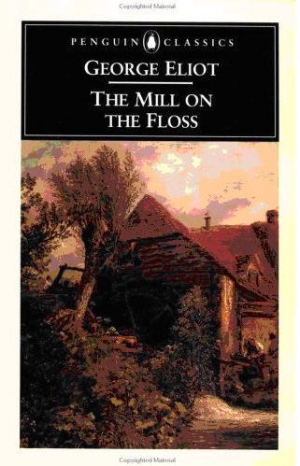
11. The Mill on the Floss by George Eliot (Classic). Of the classics I've enjoyed in the past few years, those of George Eliot are among my very favorites.
"Such an excellent classic. I had read George Eliot's Daniel Deronda last year and loved her writing style. She writes with intelligence and emotion. The Mill on the Floss tells the story of Maggie Tulliver and her family, father and mother and brother Tom. Her father owns the mill of the title. It has been in his family for generations. Due to various dealings, a lost court case and debts, he loses the mill and ends up working for the lawyer, Wakem, who he had the court case against. Maggie is a beautiful, head strong girl, a difficult way to be in the time of this story. She loves Wakem's son, Phillip, a disabled young man, but due to her father's strong feelings against that family, they must meet in secret. There are many tragedies in this story, the family's bankruptcy, the father's illness as a result of losing the court case, his death, Maggie's tragic loves, etc. The story is told in seven sub-stories, as Maggie and Tom grow up. Tom is her brother, she loves him dearly and craves his returned love. It is his intransigence, that keeps her and Phillip apart and leads to other tragedies. I liked many of the characters, especially Maggie's cousin, Lucy, who loves and cares for Maggie dearly. The story moves easily through Maggie's life and as you get used to the language of the day, and this isn't a hard prospect as Eliot writes so well, you will get into the flow of the story. The ending left me feeling very sad and bereft, especially that it took this final event to bring brother and sister back together. Excellent story..."
So there you go. My next entry will have my Top Ten.. :)
Now for an Honorable Mention.
Honorable Mention
Like many people, I've become hooked on the Scandinavian mysteries; Jo Nesbo's Harry Hole books, Stieg Larsson's Girl with the Dragon Tattoo books, Jussi Adler Olsen's Department Q series, Henning Mankell's Wallander series, etc. I'd like to mention one more writer, Swedish writer Karin Alvtegen. She is unique in that she writes stand-alone mysteries; more in the vein of Minette Walters or Margaret Millar. Five of her books have been translated so far and I've enjoyed four very much.
1. Betrayal. "By the prize-winning author of Missing Eva, a dynamic, successful young mother, is forced to reassess her marriage when her husband's apathy can no longer be ignored. Then she discovers he's been having an affair with her young son's day-care teacher and her grief and rage drive her into vengeful action. Fatefully, she comes across Jonas, an isolated young man who for the past two years has been keeping vigil beside his obstinately comatose girlfriend. Burdened with his own sinister history of betrayal and his quest for acceptance, he sees a chance to start afresh with Eva. When Jonas and Eva react to redress their wrongs, the combination proves lethal.."
2. Shame. "Two women are trapped by a past that won't let go. At first sight, Monika and Maj-Britt are as different as two people can be. They have nothing in common but the determination to obliterate their memories. But then a tragic car accident briefly brings them face to face and forces them to confront the emotional voids and secret sadnesses they have been trying to bury. A suspenseful, psychological thriller, Shame reveals the ordinary days of the odd and lonely as they twist into self-destruction—and holds out a glimmering hope of redemption and acceptance."
3. Shadow. "Gerda Persson has lain dead for three days. Her life seems to have been quite ordinary. Until the freezer in her home is opened. It is full of books, neatly stacked and wrapped in clingfilm, a thick layer of ice covering them - all by the same prize-winning author, all with handwritten dedications to Gerda. What story do these books have to tell? And what is their connection to a young boy found abandoned in an amusement park?"
4. Missing. "Karin Alvtegen -- without any training or thought of becoming a novelist - resolved to write her way out of some family tragedies: The result was her first novel, Guilt (Skuld), which was published in Sweden in 1998, to rave reviews. This was followed in 2000 by Missing (Saknad), which won Scandinavia's prestigious Glass Key award for Best Crime Novel of the Year, and went on to win an award for bestselling Scandinavian paperback. Her third novel, Betrayal (Svek) -- coming next year from Felony & Mayhem -- was shortlisted for the Glass Key award, and also for the Swedish Crime Writers Academy award for Best Swedish Crime Novel of the year. And Swedish reviewers have called Alvtegen's most recent novel, Shame (Skam) (also to come from Felony & Mayhem) her finest novel to date -- the work, in the words of one critic, of a modern-day Strindberg. Karin Alvtegen is the great-niece of Astrid Lundgren, author of the ever-popular Pippi Longstocking books."
I highly recommend her books.
#20 - 11
20. The Day of the Triffids by John Wyndham (Science Fiction). This has long been one of my favourite Science Fiction books. I remember my sister telling me about the movie when we lived in Chatham. I finally read the book and have since read it 4 or 5 times. One of the classics. There have been varied TV mini-series as well, one by the BBC being a favorite of mine.
"When a freak cosmic event renders most of the Earth's population blind, Bill Masen is one of the lucky few to retain his sight. The London he walks is crammed with groups of men and women needing help, some ready to prey on those who can still see. But another menace stalks blind and sighted alike. With nobody to stop their spread the Triffids, mobile plants with lethal stingers and carnivorous appetites, seem set to take control."
19. Peyton Place by Grace Metalious (Fiction). As a kid growing up in Chatham, New Brunswick, I remember watching Peyton Place, the TV series, which starred Ryan O'Neal, Mia Farrow and Barbara Parkins, etc. I think I had a bit of a crush on Barbara Parkins. A few years back, Jo and I watched the original movie on TCM. It made me start searching a bit and I discovered this book. I finally found a copy and when I finally got around to reading it, found it to be an excellent story. It was definitely Grace Metalious' most successful effort.
"Excellent story. I was drawn in right from the start and enjoyed it throughout. I had seen portions of the movie based on the book and also as a youngster, vaguely recall watching the TV series. Once I heard there was a book, I had to try it out and I wasn't disappointed. It was similar in some ways to books like; The Heart is a Lonely Hunter and To Kill a Mockingbird, especially in the aspect of telling a story from a small town perspective. But it was also very different, as it focused on the secrets that guide people's lives in small towns. I liked so many of the characters, but each had their flaws and their positive aspects. I liked Constance McKenzie; she was a strong independent woman and she helped Selena and her mother, providing work to them. (But she also has many faults; is three-dimensional) I liked Selena, a strong young lady, who lived on the wrong side of the tracks and had tribulations like you won't believe, but who tries to work through them and make something of herself. There were characters who you can't like, as in any community, close-minded, snappish, maybe even evil people. But it's a community and Grace Metallious tells it in such an interesting style. I like how she switches from character to character and their stories, e.g. Alison walking down the street and looking at a neighbor's house, then the story moving onto that person. I'm glad that I finally read this excellent book and I highly recommend. Fascinating and a true gem."
18. Perdido Street Station by China Mieville (Science Fiction / Fantasy). I can't exactly remember where I heard of Mieville. I may just have seen this book in one of my local book stores. But what a world Mieville has created and what fascinating beings.
"Wow! My first exposure to China Mieville's writing and I'm so very impressed. Call it a combination science fiction/ fantasy. China has created such a unique world in New Crobuzon and wonderfully described and written characters and species. New Crobuzon is a city that is built beneath the ribs of some ancient creature. It is filled with humans, other species and also remade creatures (a form of punishment) and also mechanical creatures. It's basically a dictatorship masked as a democracy. Crime is rife, the city is a maze of districts and it's all so interesting. The story is a slow - burn at first; rebel scientist Isaac is asked by a garuda (a flying creature) to help him get his wings back, as they had been removed as a punishment. Isaac's girlfriend, a khedri (an insectoid - type creature) is an artist who has been commissioned by the city's biggest criminal, to do a statue of him/ her (he is a 'remade' to the extreme). Isaac, while exploring theories of flight, has a petty thief, find him specimens of as many flying creatures as he can, including eggs, so he can explore flight and see how he can help the garuda. Unfortunately, one of the eggs contains a slake moth (one of the most horrific fictional beasts you will ever read about, I think) and when it hatches, it escapes and sets in motion the rest of the story. The City governors have had 4 other adult slake moths as prisoners. When they all escape, the whole city is in danger. This leads to the 2nd half of the story, a fascinating chase by Isaac, Derkhan, another friend and my favourite character and the garuda to try and stop the Slake Moths. I hope I haven't told too much of the story; just suffice to say it's fascinating and worth the read. 5 stars (I've since ordered the next book about the New Crobuzon world, Scar (although it's supposedly not necessarily a sequel). I can't wait!!"
17. A Death in Town by Hilary Waugh (Mystery). This is one of two mysteries by American crime writer, Hilary Waugh, since 2014 and both were excellent. A Death in Town was a clear favorite.
"Excellent, excellent! This is the second mystery I've read by Hillary Waugh and I loved both of them. Such a unique way of presenting a mystery. The first was Last Seen Wearing, which I enjoyed very much. This was no different. Basically the plot revolves around the murder and rape of a young teenage girl in a small town in Connecticut. The way this is presented is via a series of interviews of the town citizens, from the family of the murdered girl through various others. As well, there are records of meetings of the police board and the town council. He portrays small town attitudes and how they change as the investigation drags on. Racism and other attitudes of intolerance begin to come to the fore; innocents are accused and their lives turned upside down. And the ending is so surprising and almost had me out of breath. I found this to be one of those books I couldn't put down. As it developed, I had to read a few more pages, then a few more, until I had to get to the end. I can't recommend more."
16. The Soft Talkers by Margaret Millar (Mystery). I've enjoyed all of the books I've read by Canadian writer, Margaret Millar. This has been the best book of hers by far. It was also published under the name, An Air That Kills.
"I've read a couple of Margaret Millar's stories before; they can be hard to find. I enjoyed them quite a bit, as she has a very accessible writing style. The Soft Talkers, also published under the name An Air That Kills was a pleasure to read. It was a perfect little mystery. Millar has such a smooth writing style, even little details like "she buttoned up her sweater to the very top", fill the story and make it even better. The story basically deals with the disappearance of Ron Galloway, who is supposed to meet his buddies at a cabin he owns north of Toronto, Ontario, Canada. He never shows up and the rest of the story deals with the follow-on reactions of his friends and family and the follow-on search for him. The story is told from the perspective of his various friends and his wife and also even small sub-stories by side characters. Even these sub-stories are interesting and so well-written. It's a story that I just enjoyed reading and the ending had a nice surprise that I actually didn't see coming. Being Canadian, I also enjoyed the setting; the city of Toronto and cottage country north of Toronto. The story was written in 1957 and in some ways reminds me of some of the Patricia Highsmith stories I've read, just better. Such a simple but entertaining read, clear, concise and intelligently written. I highly recommend."
15. Nicholas Nickleby by Charles Dickens (Classic). When I was in high school I read Dickens' The Pickwick Papers. That was it until I decided to try this book. I must say I've kind of intimidated about trying his works as they look to be so long. I'm glad I decided to finally give it a try.
"Back during my high school days, and I shudder to think it was 50 years ago, I read The Pickwick Papers by Charles Dickens and I recall enjoying it very much. However such is my memory I may be wrong. ;0) Anyway, it took me that long to try another book by Dickens. Over the past couple of years I've been exploring the Classics more and in Jul, decided to try Nicholas Nickleby. I had an old copy of this story. Not sure when it was published but the illustrations by W.H.C. Groome lead me to believe it was published in 1907.
Anyway, enough administrative details, what about the story? Simply put, I loved it. Dickens' writing style is so accessible and entertaining. He creates wonderful characters who you find yourself becoming very invested in. The story starts off with Nicholas and his mother and sister, Kate, being placed in dire circumstances. Their father has died recently, leaving the family without income. Uncle Ralph, not a nice man, sends Nicholas off to be a teacher at a boys school in Yorkshire and then provides poor lodgings for Kate and her mother, also getting Kate a job as a dressmaker. In both instances, both Nicholas and Kate are treated horribly. Things look so very grim. Nicholas finds the treatment of the boys at the school to be abominable, especially that of Smike, a boy or more rather a young man, who has been at the school for years and is the special punching bag of Squeers and his wife. Nicholas finally can't take it anymore and after thrashing Squeers leaves with Smike to return to London.
This is the barest introduction to Nicholas Nickleby, so much more is to happen. You meet such wonderful characters as Newman Noggs, hard worked clerk for Ralph Nickleby, who does everything in his power to help the family, Vincent Crummles, leader of a roving band of actors, who takes in Nicholas and Smike, the Cheeryble brothers who provide so much generous assistance to the Nickleby family, even Miss La Creevy, the lovely lady who is such a good friend. And then the villains, the Squeers, Ralph Nickleby, and Mulberry Hawk, who wants to abuse Kate, etc.
Getting to know these characters as the story develops makes it such fascinating reading. Wanting to find out how everything will resolve makes you turn page after page. It's a very long story but it doesn't seem so. I won't say how everything turns out. There are so many varied possibilities. Ultimately I was left very satisfied. Dickens is a great writer and story teller. I will have to now try another of his books, and I'll ensure it doesn't take me 50 years to try another."
14. Behind the Scenes at the Museum by Kate Atkinson (Fiction). I've mentioned Atkinson's Jackson Brodie mysteries in a previous entry; Case Histories was listed as #24 in my Top 100. Behind the Scenes is a different kind of story and excellent.
"What a beautiful, wonderful, funny, sad, lovely novel Behind the Scenes at the Museum is. The novel was the debut for Kate Atkinson. I'd already read a couple of her Jackson Brodie mysteries and enjoyed them very much. While this novel displayed her wonderful story - telling abilities, it is so different. Basically it is the history of a family, as told by Ruby (Bunty) Lennox. It follows Ruby and her sisters as they grow up in York, England but also tracks back to her descendants, her mother, Bunty's parents and grand-parents and her siblings. That's the story at its simplest. Atkinson tells it so wonderfully, filling each page with beautifully crafted scenes and events. Some are so funny, e.g. the family road trip to Scotland. Some are desperately sad, Edmund's last minutes in a bomber over Germany. You feel each and every little story within the larger context of Ruby's growing up. After each couple of chapters, there are footnotes, where we meet the descendants, Edmund, Lillian, Lawrence. I found myself asking my wife, who is from England, what various references were, TV shows that Ruby watched, toys they played with, etc. Not crucial to enjoying the story, but still nice to add that additional texture. It's a family with secrets, as I imagine most families have, and they all tie together by the end. There are neat little path crossings of characters throughout the story and by the end, some revelations that will complete the whole story. I found myself running through the whole gamut of emotions, anger at times, sadness, happiness. I found myself chuckling at bits and having to read those portions to the missus. At the end, even as it wound up satisfactorily, I felt an ache in my heart and had to get a big hug. Wonderful story of family history, in the same vein as some of my other favorites, like The Poisonwood Bible, The Heart is a Lonely Hunter, To Kill a Mockingbird and The World According to Garp. So glad I read it finally. I will continue reading the Jackson Brodie mysteries and her other standalone books. Atkinson is a great author."
13. Jane Eyre by Charlotte Bronte (Classic). This is another of the classics I've tried the past few years that I'm enjoying so very much. I've also enjoyed Charlotte's The Professor and The Tenant of Wildfell Hall by Charlotte's sister, Anne, and even though I read Wuthering Heights in high school, I'll have to try it again.
"Great story. I had great difficulty putting it down. Jane is a fantastic character; strong, intelligent, independent. I liked how she stood up to her cousin, how well she did at the boarding school she was sent to (as an outcast) and how she performed at Rochester's home when she became governess to his ward, the lovely Adelie. Even with the 'plot device' as my wife calls it, which kind of makes you go, 'yeah right', it's a fantastic story; a love story, a Gothic romance at times, an adventure (Jane's life is an adventure) and just a great work of fiction. There were characters I liked very much; Mrs Fairfax (Rochester's house keeper), who treats Jane so caringly, after a life of much tribulation for Jane; St. John's sisters, Diana and Mary, both lovely, who take in Jane and make her part of their family; even the headmistress of the boarding school, who loves her charges, even under the strictures of the school's Master. The scenes with Rochester's 'wife' are quite intense and even spooky. The description of the north of England, where the story takes place, is well - described. The story is excellent, the characters well-developed and I'm glad that I read it finally. I guess I'll now have to try Charlotte Bronte's sister's, Wuthering Heights again now.."
12. The Far Country by Nevil Shute (Fiction). Many of Shute's later books were set in Australia. This was on such. My continued exploration of Shute's writing has uncovered a treasure trove of fascinating, wonderful stories.
"In its way, it's a relatively simple story, but I love Shute's style. He tells a story gently, lovingly and at the same time, matter of factly (Is that a proper word? :0)). At its core it's a love story, but it represents its time as well. Set after WWII, England is struggling to feed its people, life is hard; whereas in counterpoint, in Australia, the frontier so to speak, life is pretty good. Wool prices are high, money is good, there is work available. Helen goes to England at the request of her auntie, who thinks Australia might represent England more from her time in the early 1900s. Helen visits with an Aunt and her family, meets Carl, a Czech doctor, who works in the forest as a lumberman. As a Displaced Person from the war, he must work where the Australians let him, for 2 years as a sort of payment for being allowed to live in Australia. He can then work towards getting his Doctor's certificate. The two meet under very interesting circumstances, a friendship/ relationship develops. This is the simple story, but there is so much more. Shute doesn't get involved in the politics of the time, other than in the background as it affects peoples' lives, but he does present an excellent picture of the time, contrasting life in England and Australia very nicely and very simply. It's a lovely story, not one I would have picked earlier in my life, I don't think, but the more I read Nevil Shute's stories (two of my all-time favorites are his, On the Beach and Pied Piper) the more I enjoy his writing and the more of his books I want to read. Highly recommended."
11. The Mill on the Floss by George Eliot (Classic). Of the classics I've enjoyed in the past few years, those of George Eliot are among my very favorites.
"Such an excellent classic. I had read George Eliot's Daniel Deronda last year and loved her writing style. She writes with intelligence and emotion. The Mill on the Floss tells the story of Maggie Tulliver and her family, father and mother and brother Tom. Her father owns the mill of the title. It has been in his family for generations. Due to various dealings, a lost court case and debts, he loses the mill and ends up working for the lawyer, Wakem, who he had the court case against. Maggie is a beautiful, head strong girl, a difficult way to be in the time of this story. She loves Wakem's son, Phillip, a disabled young man, but due to her father's strong feelings against that family, they must meet in secret. There are many tragedies in this story, the family's bankruptcy, the father's illness as a result of losing the court case, his death, Maggie's tragic loves, etc. The story is told in seven sub-stories, as Maggie and Tom grow up. Tom is her brother, she loves him dearly and craves his returned love. It is his intransigence, that keeps her and Phillip apart and leads to other tragedies. I liked many of the characters, especially Maggie's cousin, Lucy, who loves and cares for Maggie dearly. The story moves easily through Maggie's life and as you get used to the language of the day, and this isn't a hard prospect as Eliot writes so well, you will get into the flow of the story. The ending left me feeling very sad and bereft, especially that it took this final event to bring brother and sister back together. Excellent story..."
So there you go. My next entry will have my Top Ten.. :)
Now for an Honorable Mention.
Honorable Mention
Like many people, I've become hooked on the Scandinavian mysteries; Jo Nesbo's Harry Hole books, Stieg Larsson's Girl with the Dragon Tattoo books, Jussi Adler Olsen's Department Q series, Henning Mankell's Wallander series, etc. I'd like to mention one more writer, Swedish writer Karin Alvtegen. She is unique in that she writes stand-alone mysteries; more in the vein of Minette Walters or Margaret Millar. Five of her books have been translated so far and I've enjoyed four very much.
1. Betrayal. "By the prize-winning author of Missing Eva, a dynamic, successful young mother, is forced to reassess her marriage when her husband's apathy can no longer be ignored. Then she discovers he's been having an affair with her young son's day-care teacher and her grief and rage drive her into vengeful action. Fatefully, she comes across Jonas, an isolated young man who for the past two years has been keeping vigil beside his obstinately comatose girlfriend. Burdened with his own sinister history of betrayal and his quest for acceptance, he sees a chance to start afresh with Eva. When Jonas and Eva react to redress their wrongs, the combination proves lethal.."
2. Shame. "Two women are trapped by a past that won't let go. At first sight, Monika and Maj-Britt are as different as two people can be. They have nothing in common but the determination to obliterate their memories. But then a tragic car accident briefly brings them face to face and forces them to confront the emotional voids and secret sadnesses they have been trying to bury. A suspenseful, psychological thriller, Shame reveals the ordinary days of the odd and lonely as they twist into self-destruction—and holds out a glimmering hope of redemption and acceptance."
3. Shadow. "Gerda Persson has lain dead for three days. Her life seems to have been quite ordinary. Until the freezer in her home is opened. It is full of books, neatly stacked and wrapped in clingfilm, a thick layer of ice covering them - all by the same prize-winning author, all with handwritten dedications to Gerda. What story do these books have to tell? And what is their connection to a young boy found abandoned in an amusement park?"
4. Missing. "Karin Alvtegen -- without any training or thought of becoming a novelist - resolved to write her way out of some family tragedies: The result was her first novel, Guilt (Skuld), which was published in Sweden in 1998, to rave reviews. This was followed in 2000 by Missing (Saknad), which won Scandinavia's prestigious Glass Key award for Best Crime Novel of the Year, and went on to win an award for bestselling Scandinavian paperback. Her third novel, Betrayal (Svek) -- coming next year from Felony & Mayhem -- was shortlisted for the Glass Key award, and also for the Swedish Crime Writers Academy award for Best Swedish Crime Novel of the year. And Swedish reviewers have called Alvtegen's most recent novel, Shame (Skam) (also to come from Felony & Mayhem) her finest novel to date -- the work, in the words of one critic, of a modern-day Strindberg. Karin Alvtegen is the great-niece of Astrid Lundgren, author of the ever-popular Pippi Longstocking books."
I highly recommend her books.
Thursday, 8 March 2018
Bill's Scientifically Calculated Top 100 Books of All-Time Part 8
The puppies survived their trip to the groomers yesterday. They once again look like dogs rather than little sheep. They were definitely exhausted after their day away from us. Of course now that they have their spring hair cuts, today it's raining... Typical, eh?
Anyway now to move on to my All-Time Top 100 Books list. Today I'll be listing those in the Top 20.
#30 - 21
30. Kittyhawk Down by Garry Disher (Mystery). This is the 2nd book in the Inspector Hal Challis Aussie mystery series. I enjoyed the first book, The Dragon Man, very much. In fact I had it listed at 94 in my Top 100. This second book was even more enjoyable. Great series so far. Next book in line is Snapshot, currently sitting on my bookshelf.
"Kittyhawk Down is the 2nd book in the Inspector Hal Challis Australian police series by Garry Disher. I've enjoyed both immensely. It's a simple premise really, following the investigation of a variety of crimes by the Australian police of the Mornington Peninsula Police Force. The Criminal Investigation Bureau is led by Homicide Squad Inspector Hal Challis, in which he is assisted by Sgts Ellen Destry and Scobie Sutton. In this story we also follow to uniformed cops, John Tankard and Pam Murphy.
There are various crimes being investigated; the disappearance of a two-year old baby, the discovery of a dead body that washed ashore and over the course of the story, various murders. You follow the cops and also various of the suspects and other characters, including Challis' girlfriend, reporter Tessa Klein. Each cop has their own problems which makes them human and likable. The progression of the case, the various suspects and the community in which the story takes place makes it even more interesting. It's not a perfect story by any means, but then again, neither is life.
I just found everything about this story enjoyable and refreshing and I liked how the crimes were eventually worked out. All in all it was as satisfying as the first book, The Dragon Man."
29. Downbelow Station by C.J. Cherryh (Science Fiction). Last year in this BLog I did a series of posts where I listed the top songs and top books from various sources, e.g. Pulitzer Prize, Hugo Award, etc, for each year starting with the year of my birth, 1955. (Yup, I'm an oldie but goodie). Anyway, Downbelow Station won the Hugo Award in 1981. I'd never tried anything by her before so thought it might be the time to see if I liked this book, especially as my interest in Science Fiction has been rekindled in the past couple of years. Well, it was worth trying. My review is below.
"My first comment about Downbelow Station by C.J. Cherryh is Wow! I've never read anything by Cherryh before. I was aware of her books when I'd rooted through the SciFi section of my book stores but I'd not tried anything. Recently, I was running through the years in my BLog and for each year listing various book award titles. Downbelow Station won the Hugo Award for best SciFi novel in 1981. So I thought I should check it out... So with that preamble...
This is such a fantastic book! I readily admit that it took me a few chapters to start understanding the various people, worlds, etc but once I got into the flow, it just got better and better.
How to summarize? Over centuries Earth began to expand into the stars to keep Earth's economy moving. They set up stations floating around various worlds and from there continued their expansion outward to the Fringes. Downbelow Station circles the planet Pell and it is sort of the hub between Earth and the stars. On the planet are the Downers, beings sort of like Ewoks or Fuzzies (from H Beam Piper's Fuzzy books). Earth men work the planet in concert with the Downers, passing supplies up to the station for the stations use and trade.
War is brewing between Earth's old fleet run by a hard leader, Mazian and the fringes, Union and Pell finds itself caught in the middle, trying to be neutral but at great risk. Throw in the Merchanters, those ships that travel between the stars and you've got an interesting mix of great characters.
Pell is run by various families with the Konstantin's one of the main ones and they also provide the major characters. This family must tread carefully and try to keep Pell safe from all. Stations all around are being destroyed and refugees flocking to Pell and overloading the station. There are plots and subplots galore. I found myself being drawn into the characters and the excellent story. It starts a bit slowly but then moves along at breakneck speed until the excellent, satisfying ending. I truly loved this story and world that CJ Cherryh created. I can't recommend the story more."
28. Smallbone Deceased by Michael Gilbert (Mystery). I listed Gilbert's Petrella at Q in the 35 position in yesterday's post. Smallbone Deceased was another gem from author, Michael Gilbert. It's the 4th book in his Inspector Hazelrigg series.
"I've read a couple of other books by Michael Gilbert and have enjoyed them all so far. Smallbone Deceased ranks up there with Petrella at Q as my favorites of his. Smallbone is a perfect little mystery. It's billed as an Inspector Hazelrigg mystery and, indeed, the good Inspector does play a prominent role.
But the supporting cast also adds very much to the story, especially poor Sgt Plumbtree who has to wander around London interviewing possible witnesses. He is an inexhaustible man, a credit to the London Police Force. As well, there is Henry Bohun, the newest member of the offices of Horniman, Birley and Craine, who finds himself helping Inspector Hazelrigg with his investigation to a great extent.
The basic story is that a body, that of Mr. Smallbone, a client of the firm, is found in one of the firm's deed boxes, having resided there for a few weeks. This starts up the investigation, which I enjoyed following very much. There was an interesting steadiness to the investigation; I've mentioned Sgt Plumbtree already, but the rest of the team of investigators are all excellent. I'll highlight Mr. Hoffman who works through the paperwork, checking the firm's finances to try and find reasons for the murder.
The investigation moves at a nice, steady pace, allowing all of the characters time to inculcate themselves into your memory. They all are enjoyable; there is a nice humour at times that keeps the story light. All in all, the book was so very enjoyable, even the ending was satisfying. I will definitely continue to find more books by Gilbert to enjoy."
27. Station Eleven by Emily St. John Mandel (Dystopian). I took a chance on this story by Canadian author Mandel in 2016 and it ended up being one of my favorites of the year. I've since read one of her earlier books, Last Night in Montreal, quite different but also excellent.
"I loved Station Eleven. It was one of those books that I wanted to finish to see how it ended, but, at the same time, I wanted to continue exploring the lives of the characters. Does that make sense?
It brought out so many emotions; sadness, anger, tears (in both a good and bad way), happiness, encouragement, etc. In some ways it reminded me of The Road by Cormac McCarthy, but it wasn't so consistently dour and scary. Probably part of the reason for that may be that Station Eleven had more characters and it also didn't just situate itself solely in the dystopian (am I spelling this right?) future.
I particularly liked how the story moved along, starting in their present (our future), introducing the Traveling Symphony and highlighting the new way of life of people trying to survive, then wandering to other characters, explaining where they were when the Georgia Flu caused this world-wide destruction and following their adjustments to the post-flu life.
I liked how the main characters are slowly linked up, such as how Kirsten came to be in possession of Miranda's comic, Station Eleven, even how this comic may have impacted The Prophet. The Prophet introduced a very scary element into the whole story. Was he not utilized enough? Maybe, but, personally, I think his appearances were just sufficient enough to provide a negative counterpoint to those trying to live safe lives. More of him might have put a completely different tone to the overall story. How people coped with this new future is what was most interesting.
There were so many nice touches. I liked Kirsten especially but every character was excellent and their personalities developed just to the right amount. I could go on and on. Suffice it to say, it's an excellent story and well worth reading. I think the ending left the story open - ended enough to provide a continuation story to show us how the future continues to unfold, should Emily St. John Mandel so desire. Maybe?? Please.."
26. The League of Frightened Men by Rex Stout (Mystery). Stout is the author of the classic mystery series featuring famous sleuth Nero Wolfe. I started by reading one of his later books, a collection of 3 short stories. This was his 2nd story in the series. I know that I will continue this unique series.
"Rex Stout is another of those authors that I have come to late in my reading life. My first experience was with one of his last books, a short story collection, Death Times Three, which I enjoyed quite a bit. I've been trying to find his first book, Fer de Lance (1934) but so far with no luck. But I did find this book, The League of Frightened Men, his second book, originally published in 1935.
From being someone who enjoyed my first experience of the great detective, Nero Wolfe, I now find my self an unabashed fan. This book was excellent, a fascinating, entertaining, great mystery. Nero Wolfe and his partner, Archie Goodwin are a great team and both interesting in their own rights. Wolfe is an oversize detective, basically housebound, whose life, while he works to solve mysteries, is quite regimented. Each morning and each afternoon, he works upstairs in his home, tending his multitude of orchids. While he can be visited, no business is conducted. He settles the remainder of his day, in his office, tending to business.
Archie is his eyes, ears, arms and legs. Archie conducts the investigations, travels around New York and local environs, interviewing, gathering information. He can be Wolfe's strong arm man if necessary. The stories are told in Archie's voice, from his perspective. (Oddly enough, Wolfe does sometime leave his home, this I discovered in this story. But this seems to be a rarity, not the norm)
So this story; a group of men, Harvard classmates have a secret past. While in university, they hazed another classmate and as a result caused him to have severe injuries. Out of guilt, they have banded together to pay medical bills, etc. Now two have died, or maybe been murdered. They think that Paul Chapin is involved and that he plans to kill them all. Wolfe is hired and so the story begins.
I enjoyed so much how the story is presented; small details like how Wolfe decides how to bill each of the different members of the group, and so many other aspects. The story has a surprising menace throughout and the case is so very interesting (even when Archie and Wolfe seem to be grinding their heels trying to get information.) I love Archie's manner of presenting the case, his thoughts on Wolfe; a combination of affection and anger. Great story and now I will have to read the whole series. An excellent story and mystery. Can you figure out the ending?"
25. Disordered Minds by Minette Walters (Mystery). Walters is one of my favorite mystery writers. Her stories are stand-alone mysteries and each is unique and so interesting.
"Excellent 'mystery' by Minette Walters. I think she is one of the unique mystery writers I've ever read. Each story I've read is unique in its own right and covers different aspects of human behavior. In this story, two investigators, one a university professor and the other a town councilor, Jonathan and George, delve into the past to try and prove that a convicted murderer, a young man with mental difficulties, who committed suicide in prison, was, in fact, innocent of the murder. The trail of their investigation is an interesting one, involving many twists and turns, potential suspects, deceit, etc. As well, they both must deal with their own issues, that may or may not colour their investigation. Walters has a unique style of writing, this story is partly written in emails, case transcripts, etc. I liked both Jonathan and George and their book editor, Andrew Spicer and the other characters are interesting and full of mystery. Excellent story and highly recommended."
24. Case Histories by Kate Atkinson (Mystery). I first became aware of this series when Jo and I watched the British TV series based on the books, with Jason Isaacs starring as Scottish PI, Jackson Brodie. I tried this first book and loved it as much as the TV series.
"It's a toss-up as to whether I gave this story 4 or 5 stars. Such an excellent book and definitely my favourite of 2013. I had seen the BBC TV series starring Jason Isaacs as Jackson Brodie, which I'd enjoyed immensely. So I approached this with both trepidation and excitement. I did find it somewhat odd that the book is set in Cambridge, whereas the TV series was set in Scotland, but once I'd accepted the difference, I enjoyed the book so very much. Kate Atkinson draws you in immediately, introducing the various Case Histories, then Jackson Brodie, then meanders through each, tying them together when felt necessary. Every character is interesting and well-presented, Jackson Brodie is super, witty but with his own issues. The story isn't really tense, even though there are awful crimes involved, but it's more of a character study. The writing is subtle, intelligent, funny at times. Loved it so very much. I look forward to reading more of Kate Atkinson's work. Thanks to the BBC to introducing me to her and making me search out her books."
23. The Big Sleep by Raymond Chandler (Mystery). I saw these excellent copies of Chandler's mystery series featuring PI Philip Marlowe and thought that it was time to try this classic series. Marlowe is like Dashiell Hammett's Sam Spade and Ross MacDonald's Lew Archer, those classic noir gumshoes. The Big Sleep was the first book in the series. I'm glad I finally tried it.
"The Big Sleep by Raymond Chandler is my first exposure to this excellent writer of the noir genre. Chandler created Private Investigator Philip Marlowe, who worked the streets of San Francisco. There was a movie made of this story starring Humphrey Bogart as Philip Marlowe. I think I've seen it but will now have to watch it again.
Marlowe is hired by a wealthy San Francisco family to try to sort out a black-mailing situation. The wealthy senior of the family has two wild daughters, especially Carmen, who is the subject of 'personal' photos. The investigation moves Marlowe into the criminal underworld and into close contact with various criminals and also murders. It's a nicely confusing plot, with many twists and turns and enough action to keep you very interested in the story.
Chandler has a way with telling his story. His characters are so well-described that you can picture them clearly. They have unique personalities and you do find yourself drawn to some and repulsed or afraid of others. His story telling is straight-forward, with a touch of humour and also a nice flair for the written word. I love this line, "I went back to the office and sat in my swivel chair and tried to catch up on my foot-dangling." I know it's just one small sample but it's so perfect and the story is filled with such perfection.
You don't necessarily get to know a great deal of Marlowe's past but you definitely get a feel for the type of character he is. Even though a private eye, he's got friends in the police force who respect him. He's similar to Ross MacDonald's Lew Archer, John D. MacDonald's Travis McGee, a loner private eye with standards. I don't know that I see Humphrey Bogart as Marlowe but I'll have to think more on that subject. I do know I am looking forward to reading the other books in this short series. Excellent and for lovers of great mystery, must-reads."
22. The Chequer Board by Nevil Shute (Fiction). For the longest time the only books by Nevil Shute that I read were On the Beach and Pied Piper, two of my favorites of all-time. In the past few years, I've begun to explore his other works. What a fantastic story teller. This story is no exception. (by the way, you may see a few others in the upcoming lists).
"The more books by Nevil Shute that I read, the more I come to recognize that he is one of the best story-tellers ever. I've enjoyed so many of his books so far; The Far Country, On the Beach, Pied Piper, etc and as I've been slowly exploring his other works, I'm enjoying him more than ever.
The Chequer Board, published originally in 1947 was no exception. It is set after WWII and tells the story of Capt (Ret'd) Turner. Turner was injured during the war, while on a flight from Africa to England to be tried for black marketeering. On the flight were other personnel, including a Negro American soldier (on his way to be tried for attempted rape), a young English Commando (on his way to be court martialed for murder) and the English co-pilot. These four survive an attack by German fighters.
After the war, Turner is now being treated for the effects caused by his injuries (pieces of shrapnel still lodged in his brain). He is told that nothing can be done due to the location of the shrapnel and he has maybe a year to live. This starts Turner on a journey to find the other three men, all of whom kept him company while he recovered from his surgeries, and all of whom have moved on.
It's a simple story but the journey to find out what happened to these men and the internal journey of Turner, his past, his relationship with his wife, etc, makes for a fascinating and at times very emotional story.
There are other issues that are touched on; the treatment of African - Americans in the US military, how the English impacted those countries that they ruled over, etc, but it is the stories of each man that is so interesting and the emotional stories as well. Shute has such a knack for addressing these emotional touches, that you probably don't realize how much you have found yourself becoming involved in the sub-stories, until the end. I do find that this story, like so many others Shute stories I've read, always strike my heart and soul, lovely to read and to think about."
21. The House on the Strand by Daphne du Maurier (Fiction). I originally read this while I was at university. It was my first book by du Maurier. I've since read 2 or 3 more times and it's still an excellent fantasy.
"Richard Young, tired of his life as a publisher, bored with his wife Vita and his two stepsons, is staying in his scientist friend Magnus' house in Cornwall. Magnus has developed a new hallucinogenic drug which Richard tries. His trips on this drug take him back 600 years as invisible witness to lives more exciting than his own, whose fascination begins to have repercussions in the "real" world.
Daphne du Maurier skillfully intertwines the lives of Richard in the present and Roger Kylmerth, his alter ego, in the past, so that two stories unfold simultaneously, both leading to separate, but related, deaths and disasters. Her description of the Parish of Tywardreath in Cornwall in the present and in the past possess an unforgettable vividness."
Honorable Mention
Graham Greene is one of my favorite writers. Many years ago I went through a phase of reading his books. I'm sure I took at least one in my many English courses at university. I remember reading Our Man in Havana and The Tenth Man. In the past few years I've been exploring his books more and more and have enjoyed trying his earliest books and some of his non-fiction works. I've been trying to find his earliest works and have a fair collection now. Below are some of those I've enjoyed in the past few years.
1. Our Man in Havana (Spy) - "First published in 1959, Our Man in Havana is an espionage thriller, a penetrating character study, and a political satire that still resonates today. Conceived as one of Graham Greene's "entertainments," it tells of MI6's man in Havana, Wormold, a former vacuum-cleaner salesman turned reluctant secret agent out of economic necessity. To keep his job, he files bogus reports based on Lamb's Tales from Shakespeare and dreams up military installations from vacuum-cleaner designs. Then his stories start coming disturbingly true."
2. The Lawless Roads (Travel) - "I've been exploring more of Graham Greene's work the past few years and I enjoy his writing very much. This book is the second of his non-fiction works that I've read. Written originally in 1939, the story follows Greene as he explores Mexico, especially the Chiapas and Tabasco regions, in the wake of the destruction of the Catholic churches and teachings by the Mexican rulers. At the time of this visit, the Mexican government is also in the process of nationalizing the petroleum industry, making life uncomfortable for gringos. Greene travels through a primitive, backward region by plane and donkey. I enjoy his observations of the people and life and admire his spirit. I found the memoir kind of lost its way as he came to the end and headed back to England, but overall found the story quite interesting."
3. Journey without Maps (Travel). "I've read a few of Graham Greene's works and have enjoyed them. I like his style of writing. This is the first book of non-fiction I've read. Journey without Maps was a memoir of Greene's first trip away from England and was written in 1936. His journey is through the wilderness of Liberia on the coast of Africa. He is accompanied by his cousin, Barbara Greene, although he never mentions her by name or gender, rather refers to her only as 'my cousin'. I would have found it interesting if we'd learned more about her as he often in his travels left her alone with her porters. I found it interesting learning a bit about a portion of Africa that I really knew nothing about and also from a time frame when basically not much was known about it in the Western world. But ultimately, even though I enjoyed the story overall, it didn't necessarily wow me. If you aren't familiar with Greene's writings, it's worthwhile to take a gander at this earlier work and still an interesting story."
4. Getting to Know the General (Travel). "I've been reading quite a few books by Graham Greene over the past few years. Getting to Know the General: The Story of an Involvement was one of his later books and the 3rd book of non-fiction of his that I've read. It is about General Omar Torrijos Herrera, the leader of Panama in the '70s, who was killed in a plane crash in 1981. Greene was invited to Panama to meet him, in 1976 and the two became friends over the next years. As well, it is also a book about Torrijos, friend and confidante, Chucho, who is the go-between and constant companion of Greene on his visits to Panama. Greene has a wonderful way of telling stories, whether fiction or non-fiction. You can feel the genuine affection he feels for the country and Torrijos and Chucho. He travels considerably during his brief visits to Panama, often accompanying Torrijos to other countries or representing him; to Nicaragua, Cuba, even the US. I'm constantly amazed at the access that he gains in this book and the places he has visited over the course of his life. Most interesting book."
5. A Gun for Sale (Fiction). "A Gun for Sale was Graham Greene's 7th novel, published originally in 1936. I've been slowly going through his books, especially his earlier works and he's become a favourite of mine. I can see inspirations for books like Brighton Rock in this book. In fact, it was his next published work.
The story is about Raven, a gun for hire, is sent to kill a foreign war minister. He is paid with stolen money, which makes him the subject of a police investigation by Scotland Yard (who don't know about his assassination). The officer in charge, Inspector Mather, is engaged to Anne, an aspiring actress about to go to Nottwich for a job in a panto show. Coincidentally, the man, Davis / Cholomondeley (he does go by various names) who paid Raven is on the train and being followed by Raven who wants to exact revenge for how he was tricked.
An undercurrent throughout the story is the ominous threat of war, partly due to the assassination, which is causing stress and mistrust within Europe.
The story is a string of coincidences; Anne is kidnapped by Raven as he tries to avoid the police; Anne goes to dinner with Davis and has her life threatened; Mather is assigned the case of trying to track down Raven; etc. It sounds convoluted but the story is presented in a straight-forward manner, tying up many aspects of the coincidences and making for an entertaining, interesting, tense story. The characters are well-crafted and you do get a good sense of who they are and why they are. All in all, a most enjoyable story."
6. Brighton Rock (Fiction). "Pinkie, a boy gangster in the pre-war Brighton underworld, is a Catholic dedicated to evil and damnation. In a dark setting of double-crossing and razor slashes, his ambitions and hatreds are horribly fulfilled ... until Ida determines to convict him of murder. But Pinkie, on the run from her pursuing fury, becomes even more dangerous ..."
7. The Man Within (Fiction). "The Man Within was Graham Greene's first published work, published in 1929 when he was 25 years old. Over the past couple of years, I've begun to explore his writing more and more; both his fiction and non-fiction. It was interesting to finally get a copy of his first book and see how it all started.
The story revolves around an English smuggler, who wanting to get out of the 'business', turns in his crew mates with an anonymous letter to the police. In the struggle to arrest the smugglers, one of the police is killed. Andrews, who was the person who turned in the smugglers, goes on the run to escape from the others. He is a self-professed coward, who in his escape, comes across a hut on the Sussex moors and meets a woman who will change his life. He is encouraged to give evidence against his comrades, an act that might have disastrous consequences.
I quite liked this story. It took a few pages to get into the flow, but it became a story I couldn't put down. Unlike Greene's later work, which acquired a finesse in his writing style, this story was very raw, emotional. Andrews is an introspective person, filled with self-loathing for his life style, his cowardice, but who falls in love deeply with Elizabeth, and who wants to change for her. The story moves quickly, building in tension; it's definitely difficult to put down as you get into the flow. Excellent first story. I've got a number of Greene's other books still on my bookshelves and look forward to continuing my exploration with his writing."
8. Stamboul Train: An Entertainment (Spy). "As the Orient Express hurtles across Europe on its three-day journey from Ostend to Constantinople, the driven lives of several of its passengers become bound together in a fateful interlock. The menagerie of characters include Coral Musker, a beautiful chorus girl; Carleton Myatt, a rich Jewish businessman; Richard John, a mysterious and kind doctor returning to his native Belgrade; the spiteful journalist Mabel Warren; and Josef Grunlich, a cunning, murderous burglar.
What happens to these strangers as they put on and take off their masks of identity and passion, all the while confessing, prevaricating, and reaching out to one another in the "veracious air" of the onrushing train, makes for one of Graham Greene's most exciting and suspenseful stories. Originally published in 1933, Orient Express was Greene's first major success. This Graham Greene Centennial Edition features a new introductory essay by Christopher Hitchens."
There you go. I've still got another nine of his books on my bookshelf awaiting my attention so I'll be enjoying his stories for a while in the future.
So there you go, the 20s finished. Tomorrow I'll be listing 11 - 20 of my favorites. I hope you've been enjoying.
Anyway now to move on to my All-Time Top 100 Books list. Today I'll be listing those in the Top 20.
#30 - 21
30. Kittyhawk Down by Garry Disher (Mystery). This is the 2nd book in the Inspector Hal Challis Aussie mystery series. I enjoyed the first book, The Dragon Man, very much. In fact I had it listed at 94 in my Top 100. This second book was even more enjoyable. Great series so far. Next book in line is Snapshot, currently sitting on my bookshelf.
"Kittyhawk Down is the 2nd book in the Inspector Hal Challis Australian police series by Garry Disher. I've enjoyed both immensely. It's a simple premise really, following the investigation of a variety of crimes by the Australian police of the Mornington Peninsula Police Force. The Criminal Investigation Bureau is led by Homicide Squad Inspector Hal Challis, in which he is assisted by Sgts Ellen Destry and Scobie Sutton. In this story we also follow to uniformed cops, John Tankard and Pam Murphy.
There are various crimes being investigated; the disappearance of a two-year old baby, the discovery of a dead body that washed ashore and over the course of the story, various murders. You follow the cops and also various of the suspects and other characters, including Challis' girlfriend, reporter Tessa Klein. Each cop has their own problems which makes them human and likable. The progression of the case, the various suspects and the community in which the story takes place makes it even more interesting. It's not a perfect story by any means, but then again, neither is life.
I just found everything about this story enjoyable and refreshing and I liked how the crimes were eventually worked out. All in all it was as satisfying as the first book, The Dragon Man."
29. Downbelow Station by C.J. Cherryh (Science Fiction). Last year in this BLog I did a series of posts where I listed the top songs and top books from various sources, e.g. Pulitzer Prize, Hugo Award, etc, for each year starting with the year of my birth, 1955. (Yup, I'm an oldie but goodie). Anyway, Downbelow Station won the Hugo Award in 1981. I'd never tried anything by her before so thought it might be the time to see if I liked this book, especially as my interest in Science Fiction has been rekindled in the past couple of years. Well, it was worth trying. My review is below.
"My first comment about Downbelow Station by C.J. Cherryh is Wow! I've never read anything by Cherryh before. I was aware of her books when I'd rooted through the SciFi section of my book stores but I'd not tried anything. Recently, I was running through the years in my BLog and for each year listing various book award titles. Downbelow Station won the Hugo Award for best SciFi novel in 1981. So I thought I should check it out... So with that preamble...
This is such a fantastic book! I readily admit that it took me a few chapters to start understanding the various people, worlds, etc but once I got into the flow, it just got better and better.
How to summarize? Over centuries Earth began to expand into the stars to keep Earth's economy moving. They set up stations floating around various worlds and from there continued their expansion outward to the Fringes. Downbelow Station circles the planet Pell and it is sort of the hub between Earth and the stars. On the planet are the Downers, beings sort of like Ewoks or Fuzzies (from H Beam Piper's Fuzzy books). Earth men work the planet in concert with the Downers, passing supplies up to the station for the stations use and trade.
War is brewing between Earth's old fleet run by a hard leader, Mazian and the fringes, Union and Pell finds itself caught in the middle, trying to be neutral but at great risk. Throw in the Merchanters, those ships that travel between the stars and you've got an interesting mix of great characters.
Pell is run by various families with the Konstantin's one of the main ones and they also provide the major characters. This family must tread carefully and try to keep Pell safe from all. Stations all around are being destroyed and refugees flocking to Pell and overloading the station. There are plots and subplots galore. I found myself being drawn into the characters and the excellent story. It starts a bit slowly but then moves along at breakneck speed until the excellent, satisfying ending. I truly loved this story and world that CJ Cherryh created. I can't recommend the story more."
28. Smallbone Deceased by Michael Gilbert (Mystery). I listed Gilbert's Petrella at Q in the 35 position in yesterday's post. Smallbone Deceased was another gem from author, Michael Gilbert. It's the 4th book in his Inspector Hazelrigg series.
"I've read a couple of other books by Michael Gilbert and have enjoyed them all so far. Smallbone Deceased ranks up there with Petrella at Q as my favorites of his. Smallbone is a perfect little mystery. It's billed as an Inspector Hazelrigg mystery and, indeed, the good Inspector does play a prominent role.
But the supporting cast also adds very much to the story, especially poor Sgt Plumbtree who has to wander around London interviewing possible witnesses. He is an inexhaustible man, a credit to the London Police Force. As well, there is Henry Bohun, the newest member of the offices of Horniman, Birley and Craine, who finds himself helping Inspector Hazelrigg with his investigation to a great extent.
The basic story is that a body, that of Mr. Smallbone, a client of the firm, is found in one of the firm's deed boxes, having resided there for a few weeks. This starts up the investigation, which I enjoyed following very much. There was an interesting steadiness to the investigation; I've mentioned Sgt Plumbtree already, but the rest of the team of investigators are all excellent. I'll highlight Mr. Hoffman who works through the paperwork, checking the firm's finances to try and find reasons for the murder.
The investigation moves at a nice, steady pace, allowing all of the characters time to inculcate themselves into your memory. They all are enjoyable; there is a nice humour at times that keeps the story light. All in all, the book was so very enjoyable, even the ending was satisfying. I will definitely continue to find more books by Gilbert to enjoy."
27. Station Eleven by Emily St. John Mandel (Dystopian). I took a chance on this story by Canadian author Mandel in 2016 and it ended up being one of my favorites of the year. I've since read one of her earlier books, Last Night in Montreal, quite different but also excellent.
"I loved Station Eleven. It was one of those books that I wanted to finish to see how it ended, but, at the same time, I wanted to continue exploring the lives of the characters. Does that make sense?
It brought out so many emotions; sadness, anger, tears (in both a good and bad way), happiness, encouragement, etc. In some ways it reminded me of The Road by Cormac McCarthy, but it wasn't so consistently dour and scary. Probably part of the reason for that may be that Station Eleven had more characters and it also didn't just situate itself solely in the dystopian (am I spelling this right?) future.
I particularly liked how the story moved along, starting in their present (our future), introducing the Traveling Symphony and highlighting the new way of life of people trying to survive, then wandering to other characters, explaining where they were when the Georgia Flu caused this world-wide destruction and following their adjustments to the post-flu life.
I liked how the main characters are slowly linked up, such as how Kirsten came to be in possession of Miranda's comic, Station Eleven, even how this comic may have impacted The Prophet. The Prophet introduced a very scary element into the whole story. Was he not utilized enough? Maybe, but, personally, I think his appearances were just sufficient enough to provide a negative counterpoint to those trying to live safe lives. More of him might have put a completely different tone to the overall story. How people coped with this new future is what was most interesting.
There were so many nice touches. I liked Kirsten especially but every character was excellent and their personalities developed just to the right amount. I could go on and on. Suffice it to say, it's an excellent story and well worth reading. I think the ending left the story open - ended enough to provide a continuation story to show us how the future continues to unfold, should Emily St. John Mandel so desire. Maybe?? Please.."
26. The League of Frightened Men by Rex Stout (Mystery). Stout is the author of the classic mystery series featuring famous sleuth Nero Wolfe. I started by reading one of his later books, a collection of 3 short stories. This was his 2nd story in the series. I know that I will continue this unique series.
"Rex Stout is another of those authors that I have come to late in my reading life. My first experience was with one of his last books, a short story collection, Death Times Three, which I enjoyed quite a bit. I've been trying to find his first book, Fer de Lance (1934) but so far with no luck. But I did find this book, The League of Frightened Men, his second book, originally published in 1935.
From being someone who enjoyed my first experience of the great detective, Nero Wolfe, I now find my self an unabashed fan. This book was excellent, a fascinating, entertaining, great mystery. Nero Wolfe and his partner, Archie Goodwin are a great team and both interesting in their own rights. Wolfe is an oversize detective, basically housebound, whose life, while he works to solve mysteries, is quite regimented. Each morning and each afternoon, he works upstairs in his home, tending his multitude of orchids. While he can be visited, no business is conducted. He settles the remainder of his day, in his office, tending to business.
Archie is his eyes, ears, arms and legs. Archie conducts the investigations, travels around New York and local environs, interviewing, gathering information. He can be Wolfe's strong arm man if necessary. The stories are told in Archie's voice, from his perspective. (Oddly enough, Wolfe does sometime leave his home, this I discovered in this story. But this seems to be a rarity, not the norm)
So this story; a group of men, Harvard classmates have a secret past. While in university, they hazed another classmate and as a result caused him to have severe injuries. Out of guilt, they have banded together to pay medical bills, etc. Now two have died, or maybe been murdered. They think that Paul Chapin is involved and that he plans to kill them all. Wolfe is hired and so the story begins.
I enjoyed so much how the story is presented; small details like how Wolfe decides how to bill each of the different members of the group, and so many other aspects. The story has a surprising menace throughout and the case is so very interesting (even when Archie and Wolfe seem to be grinding their heels trying to get information.) I love Archie's manner of presenting the case, his thoughts on Wolfe; a combination of affection and anger. Great story and now I will have to read the whole series. An excellent story and mystery. Can you figure out the ending?"
25. Disordered Minds by Minette Walters (Mystery). Walters is one of my favorite mystery writers. Her stories are stand-alone mysteries and each is unique and so interesting.
"Excellent 'mystery' by Minette Walters. I think she is one of the unique mystery writers I've ever read. Each story I've read is unique in its own right and covers different aspects of human behavior. In this story, two investigators, one a university professor and the other a town councilor, Jonathan and George, delve into the past to try and prove that a convicted murderer, a young man with mental difficulties, who committed suicide in prison, was, in fact, innocent of the murder. The trail of their investigation is an interesting one, involving many twists and turns, potential suspects, deceit, etc. As well, they both must deal with their own issues, that may or may not colour their investigation. Walters has a unique style of writing, this story is partly written in emails, case transcripts, etc. I liked both Jonathan and George and their book editor, Andrew Spicer and the other characters are interesting and full of mystery. Excellent story and highly recommended."
24. Case Histories by Kate Atkinson (Mystery). I first became aware of this series when Jo and I watched the British TV series based on the books, with Jason Isaacs starring as Scottish PI, Jackson Brodie. I tried this first book and loved it as much as the TV series.
"It's a toss-up as to whether I gave this story 4 or 5 stars. Such an excellent book and definitely my favourite of 2013. I had seen the BBC TV series starring Jason Isaacs as Jackson Brodie, which I'd enjoyed immensely. So I approached this with both trepidation and excitement. I did find it somewhat odd that the book is set in Cambridge, whereas the TV series was set in Scotland, but once I'd accepted the difference, I enjoyed the book so very much. Kate Atkinson draws you in immediately, introducing the various Case Histories, then Jackson Brodie, then meanders through each, tying them together when felt necessary. Every character is interesting and well-presented, Jackson Brodie is super, witty but with his own issues. The story isn't really tense, even though there are awful crimes involved, but it's more of a character study. The writing is subtle, intelligent, funny at times. Loved it so very much. I look forward to reading more of Kate Atkinson's work. Thanks to the BBC to introducing me to her and making me search out her books."
23. The Big Sleep by Raymond Chandler (Mystery). I saw these excellent copies of Chandler's mystery series featuring PI Philip Marlowe and thought that it was time to try this classic series. Marlowe is like Dashiell Hammett's Sam Spade and Ross MacDonald's Lew Archer, those classic noir gumshoes. The Big Sleep was the first book in the series. I'm glad I finally tried it.
"The Big Sleep by Raymond Chandler is my first exposure to this excellent writer of the noir genre. Chandler created Private Investigator Philip Marlowe, who worked the streets of San Francisco. There was a movie made of this story starring Humphrey Bogart as Philip Marlowe. I think I've seen it but will now have to watch it again.
Marlowe is hired by a wealthy San Francisco family to try to sort out a black-mailing situation. The wealthy senior of the family has two wild daughters, especially Carmen, who is the subject of 'personal' photos. The investigation moves Marlowe into the criminal underworld and into close contact with various criminals and also murders. It's a nicely confusing plot, with many twists and turns and enough action to keep you very interested in the story.
Chandler has a way with telling his story. His characters are so well-described that you can picture them clearly. They have unique personalities and you do find yourself drawn to some and repulsed or afraid of others. His story telling is straight-forward, with a touch of humour and also a nice flair for the written word. I love this line, "I went back to the office and sat in my swivel chair and tried to catch up on my foot-dangling." I know it's just one small sample but it's so perfect and the story is filled with such perfection.
You don't necessarily get to know a great deal of Marlowe's past but you definitely get a feel for the type of character he is. Even though a private eye, he's got friends in the police force who respect him. He's similar to Ross MacDonald's Lew Archer, John D. MacDonald's Travis McGee, a loner private eye with standards. I don't know that I see Humphrey Bogart as Marlowe but I'll have to think more on that subject. I do know I am looking forward to reading the other books in this short series. Excellent and for lovers of great mystery, must-reads."
22. The Chequer Board by Nevil Shute (Fiction). For the longest time the only books by Nevil Shute that I read were On the Beach and Pied Piper, two of my favorites of all-time. In the past few years, I've begun to explore his other works. What a fantastic story teller. This story is no exception. (by the way, you may see a few others in the upcoming lists).
"The more books by Nevil Shute that I read, the more I come to recognize that he is one of the best story-tellers ever. I've enjoyed so many of his books so far; The Far Country, On the Beach, Pied Piper, etc and as I've been slowly exploring his other works, I'm enjoying him more than ever.
The Chequer Board, published originally in 1947 was no exception. It is set after WWII and tells the story of Capt (Ret'd) Turner. Turner was injured during the war, while on a flight from Africa to England to be tried for black marketeering. On the flight were other personnel, including a Negro American soldier (on his way to be tried for attempted rape), a young English Commando (on his way to be court martialed for murder) and the English co-pilot. These four survive an attack by German fighters.
After the war, Turner is now being treated for the effects caused by his injuries (pieces of shrapnel still lodged in his brain). He is told that nothing can be done due to the location of the shrapnel and he has maybe a year to live. This starts Turner on a journey to find the other three men, all of whom kept him company while he recovered from his surgeries, and all of whom have moved on.
It's a simple story but the journey to find out what happened to these men and the internal journey of Turner, his past, his relationship with his wife, etc, makes for a fascinating and at times very emotional story.
There are other issues that are touched on; the treatment of African - Americans in the US military, how the English impacted those countries that they ruled over, etc, but it is the stories of each man that is so interesting and the emotional stories as well. Shute has such a knack for addressing these emotional touches, that you probably don't realize how much you have found yourself becoming involved in the sub-stories, until the end. I do find that this story, like so many others Shute stories I've read, always strike my heart and soul, lovely to read and to think about."
21. The House on the Strand by Daphne du Maurier (Fiction). I originally read this while I was at university. It was my first book by du Maurier. I've since read 2 or 3 more times and it's still an excellent fantasy.
"Richard Young, tired of his life as a publisher, bored with his wife Vita and his two stepsons, is staying in his scientist friend Magnus' house in Cornwall. Magnus has developed a new hallucinogenic drug which Richard tries. His trips on this drug take him back 600 years as invisible witness to lives more exciting than his own, whose fascination begins to have repercussions in the "real" world.
Daphne du Maurier skillfully intertwines the lives of Richard in the present and Roger Kylmerth, his alter ego, in the past, so that two stories unfold simultaneously, both leading to separate, but related, deaths and disasters. Her description of the Parish of Tywardreath in Cornwall in the present and in the past possess an unforgettable vividness."
Honorable Mention
Graham Greene is one of my favorite writers. Many years ago I went through a phase of reading his books. I'm sure I took at least one in my many English courses at university. I remember reading Our Man in Havana and The Tenth Man. In the past few years I've been exploring his books more and more and have enjoyed trying his earliest books and some of his non-fiction works. I've been trying to find his earliest works and have a fair collection now. Below are some of those I've enjoyed in the past few years.
1. Our Man in Havana (Spy) - "First published in 1959, Our Man in Havana is an espionage thriller, a penetrating character study, and a political satire that still resonates today. Conceived as one of Graham Greene's "entertainments," it tells of MI6's man in Havana, Wormold, a former vacuum-cleaner salesman turned reluctant secret agent out of economic necessity. To keep his job, he files bogus reports based on Lamb's Tales from Shakespeare and dreams up military installations from vacuum-cleaner designs. Then his stories start coming disturbingly true."
2. The Lawless Roads (Travel) - "I've been exploring more of Graham Greene's work the past few years and I enjoy his writing very much. This book is the second of his non-fiction works that I've read. Written originally in 1939, the story follows Greene as he explores Mexico, especially the Chiapas and Tabasco regions, in the wake of the destruction of the Catholic churches and teachings by the Mexican rulers. At the time of this visit, the Mexican government is also in the process of nationalizing the petroleum industry, making life uncomfortable for gringos. Greene travels through a primitive, backward region by plane and donkey. I enjoy his observations of the people and life and admire his spirit. I found the memoir kind of lost its way as he came to the end and headed back to England, but overall found the story quite interesting."
3. Journey without Maps (Travel). "I've read a few of Graham Greene's works and have enjoyed them. I like his style of writing. This is the first book of non-fiction I've read. Journey without Maps was a memoir of Greene's first trip away from England and was written in 1936. His journey is through the wilderness of Liberia on the coast of Africa. He is accompanied by his cousin, Barbara Greene, although he never mentions her by name or gender, rather refers to her only as 'my cousin'. I would have found it interesting if we'd learned more about her as he often in his travels left her alone with her porters. I found it interesting learning a bit about a portion of Africa that I really knew nothing about and also from a time frame when basically not much was known about it in the Western world. But ultimately, even though I enjoyed the story overall, it didn't necessarily wow me. If you aren't familiar with Greene's writings, it's worthwhile to take a gander at this earlier work and still an interesting story."
4. Getting to Know the General (Travel). "I've been reading quite a few books by Graham Greene over the past few years. Getting to Know the General: The Story of an Involvement was one of his later books and the 3rd book of non-fiction of his that I've read. It is about General Omar Torrijos Herrera, the leader of Panama in the '70s, who was killed in a plane crash in 1981. Greene was invited to Panama to meet him, in 1976 and the two became friends over the next years. As well, it is also a book about Torrijos, friend and confidante, Chucho, who is the go-between and constant companion of Greene on his visits to Panama. Greene has a wonderful way of telling stories, whether fiction or non-fiction. You can feel the genuine affection he feels for the country and Torrijos and Chucho. He travels considerably during his brief visits to Panama, often accompanying Torrijos to other countries or representing him; to Nicaragua, Cuba, even the US. I'm constantly amazed at the access that he gains in this book and the places he has visited over the course of his life. Most interesting book."
5. A Gun for Sale (Fiction). "A Gun for Sale was Graham Greene's 7th novel, published originally in 1936. I've been slowly going through his books, especially his earlier works and he's become a favourite of mine. I can see inspirations for books like Brighton Rock in this book. In fact, it was his next published work.
The story is about Raven, a gun for hire, is sent to kill a foreign war minister. He is paid with stolen money, which makes him the subject of a police investigation by Scotland Yard (who don't know about his assassination). The officer in charge, Inspector Mather, is engaged to Anne, an aspiring actress about to go to Nottwich for a job in a panto show. Coincidentally, the man, Davis / Cholomondeley (he does go by various names) who paid Raven is on the train and being followed by Raven who wants to exact revenge for how he was tricked.
An undercurrent throughout the story is the ominous threat of war, partly due to the assassination, which is causing stress and mistrust within Europe.
The story is a string of coincidences; Anne is kidnapped by Raven as he tries to avoid the police; Anne goes to dinner with Davis and has her life threatened; Mather is assigned the case of trying to track down Raven; etc. It sounds convoluted but the story is presented in a straight-forward manner, tying up many aspects of the coincidences and making for an entertaining, interesting, tense story. The characters are well-crafted and you do get a good sense of who they are and why they are. All in all, a most enjoyable story."
6. Brighton Rock (Fiction). "Pinkie, a boy gangster in the pre-war Brighton underworld, is a Catholic dedicated to evil and damnation. In a dark setting of double-crossing and razor slashes, his ambitions and hatreds are horribly fulfilled ... until Ida determines to convict him of murder. But Pinkie, on the run from her pursuing fury, becomes even more dangerous ..."
7. The Man Within (Fiction). "The Man Within was Graham Greene's first published work, published in 1929 when he was 25 years old. Over the past couple of years, I've begun to explore his writing more and more; both his fiction and non-fiction. It was interesting to finally get a copy of his first book and see how it all started.
The story revolves around an English smuggler, who wanting to get out of the 'business', turns in his crew mates with an anonymous letter to the police. In the struggle to arrest the smugglers, one of the police is killed. Andrews, who was the person who turned in the smugglers, goes on the run to escape from the others. He is a self-professed coward, who in his escape, comes across a hut on the Sussex moors and meets a woman who will change his life. He is encouraged to give evidence against his comrades, an act that might have disastrous consequences.
I quite liked this story. It took a few pages to get into the flow, but it became a story I couldn't put down. Unlike Greene's later work, which acquired a finesse in his writing style, this story was very raw, emotional. Andrews is an introspective person, filled with self-loathing for his life style, his cowardice, but who falls in love deeply with Elizabeth, and who wants to change for her. The story moves quickly, building in tension; it's definitely difficult to put down as you get into the flow. Excellent first story. I've got a number of Greene's other books still on my bookshelves and look forward to continuing my exploration with his writing."
8. Stamboul Train: An Entertainment (Spy). "As the Orient Express hurtles across Europe on its three-day journey from Ostend to Constantinople, the driven lives of several of its passengers become bound together in a fateful interlock. The menagerie of characters include Coral Musker, a beautiful chorus girl; Carleton Myatt, a rich Jewish businessman; Richard John, a mysterious and kind doctor returning to his native Belgrade; the spiteful journalist Mabel Warren; and Josef Grunlich, a cunning, murderous burglar.
What happens to these strangers as they put on and take off their masks of identity and passion, all the while confessing, prevaricating, and reaching out to one another in the "veracious air" of the onrushing train, makes for one of Graham Greene's most exciting and suspenseful stories. Originally published in 1933, Orient Express was Greene's first major success. This Graham Greene Centennial Edition features a new introductory essay by Christopher Hitchens."
There you go. I've still got another nine of his books on my bookshelf awaiting my attention so I'll be enjoying his stories for a while in the future.
So there you go, the 20s finished. Tomorrow I'll be listing 11 - 20 of my favorites. I hope you've been enjoying.
Subscribe to:
Posts (Atom)