Showing posts with label Feature. Show all posts

Sunday, 4 June 2017

Manchester/ London, the Music Challenge, and other items

Well, it's been a beautiful day here in the Valley. Better news on the puppy front. Bonnie went for two walks today and only needed a bit of coaxing. She still doesn't do a whole lot else, but at least she's not averse to going for a walk. I'll keep walking them separately so Clyde, even with his sore foot, he still likes to go for a longer walk. Anyway, it's moving along nicely that way.

My neighbours will be happy and stop painting rude notes on my garage door. I mowed the lawn today. Not that it was that bad, but the sheep that I had hired to graze seemed to get lost. OK, I'm kidding, but it was nice to finally get it done. :0)

I try to avoid political items in this BLog, but I do have to say that I was very distressed by the recent events in Manchester, UK, Portland, Oregon and then London yesterday. But I have to say that I admire how these events have brought people together. I think that young Ariana Grande has been wonderful, considering that the Manchester attack happened after her concert there. We watched the concert she organised today for the people of Manchester. It was a wonderful uplifting event. It's just too bad that the US also has such awful man leading the country, trying to use the London incident to espouse his cause and to sow more hatred. Anyway, enough of that; I'll just think the good thoughts that came as a result of all the wonderful people that provided positive support after these awful attacks.

The Missus' Music Challenge

Yesterday's challenge was Your Favourite 70's Song. It's a very wide category. For me, I went through various phases of my life during the 70's; finishing High School, 4 years at University, my first military jobs, working as a DJ, etc. I ended up picking a song from my early time at university, Free Man in Paris by Joni Mitchell, from her Court and Spark album of 1974. Other songs selected included Follow You, Follow Me by Genesis (the missus's choice), Never Let Her Slip Away by Andrew Gold, Quiet Life by Japan, September by Earth, Wind and Fire, etc.

Today's challenge was Songs that Were Played at your Wedding or Songs You Would have Liked to have Played at your Wedding, appropriate given that most of the people providing suggestions are already married. Anyway, I chose Just the Way You Are by Billy Joel. Other selection were In Your Eyes by Peter Gabriel (the missus), Stars by Simply Red, The Look of Love by Dusty Springfield (chosen by my sis-in-law Sue), Here and Now by Luther Vandross, etc.

Next category will be a Song that is Covered by Another Artist. I have a few in mind.

Feature Novelist - Georges Simenon

The Blue Room / Maigret Mystified
I'm taking a short break from the History and Science items that I normally post about to talk about an author I'm reading at the moment. Georges Simenon was a Belgian writer who lived from 1903 - 1989. He wrote over 500 novels and is best known for his Inspector Maigret. He wrote 75 novels and 28 short stories featuring Commissaire Maigret.


Maigret in Exile / Maigret Meets a Milord

I've been slowly collecting and reading them over the past 6 or 7 years. So far I've purchased 16 of the Simenon's books, of which one is a standalone mystery, The Blue Room.

I just today finished Maigret in Exile, originally published in 1942 and am starting Maigret Meets a Milord, the 2nd Maigret mystery. My review of Maigret in Exile is below if you wish -


"I've enjoyed the Inspector Maigret mysteries I've read so far. Maigret in Exile, originally published in 1942, finds the irrepressible inspector banished from Paris to a small coastal town for some unknown reason. An elderly woman shows up at his office and tells him that there is a body at her neighbour's house in a nearby town.
In his meandering way, Maigret begins his investigation. There seems to be no particular reason for what he is doing, but in his way, he slowly gathers the inspiration to solve the crime.
Maigret relies more on instinct than facts in working through the crime. There are many interesting characters in the story, especially the neighbour, Didine, and her husband, who seem to know everything that goes on in the village.
Maigret is a grumpy soul but also very intuitive. As he investigates he pretty well has everything sorted out but seems also to fly by the seat of his pants. It's interesting how he works through things, basically keeping things to himself until he comes to his resolution. An enjoyable series and story. (3.5 stars)"


Maigret Loses his Temper/ the Saturday Caller / the Spinster

Since I started collecting the books, I've read 7 of the books. There have been so many different publishers. I particularly the Harcourt books, such as those on the right. It has an excellent look to it, nice glossy covers and great cover photos.

I have read all of those three so far and enjoyed them very much. I found them at a Mystery book store in Victoria, The Chronicles of Crime, when I was stationed in Victoria.


Maigret and the Nahour Case/ Maigret and the Killer
My favourite so far was the first book in the series, Maigret and the Enigmatic Lett. (For some reason, I didn't keep that copy when I'd finished it. I am just starting the second book in the series, as mentioned above. My review of the first novel is below.

"This is the first in the Inspector Maigret mystery series. It's one of those books that you can sit down and read in a day, it's that entertaining and interesting. The case involves the mysterious Pieter the Lett, who has made his way from Russia to Paris. Little is known about him, other than a brief description. As Maigret arrives at the train station to meet him, he finds instead a murdered man. This begins a chase across France as Maigret tries to sort out who Lett is and what he's up to. Maigret is an interesting character, grumpy, a bit of a loner and intelligent. He seems to work without sleep and food, in all weather conditions. It's a nicely, fast-paced case and a page-turner, one you'll find difficult to put down until the very end. A super introduction to Inspector Maigret."

Maigret and the Wine Merchant / Maigret has Scruples
From what I've read, Simenon was able to produce 60 to 80 pages a day. His catalogue contained nearly 200 novels, over 150 novellas and other work. A number of his Maigret novels have been turned into TV series; 1960 - 63 with Rupert Davies in the lead role and 1992 - 93 with Michael Gambon. Most recently, Rowan Atkinson has reprised the role in a series of 4 TV movies, so far anyway. They include - Maigret Sets a Trap, Maigret's Dead Man, Maigret: Night at the Crossroads and Maigret in Montmartre.


Interestingly, Simenon spent 10 years, from 1945 - 1955 in the United States and Canada. He returned to Europe in 1955 and lived there until his death in Lausanne in 1989 of natural causes in his sleep.

My most recent purchase
He is one of the classics of the crime genre and worth trying out. I don't know that it's necessary to start at the beginning. I've jumped all over the place in my reading and it hasn't lessened the enjoyment. So far I've completed; The Strange Case of Peter the Lett (1931), Maigret Mystified (1932), Maigret in Exile (1940), Maigret and the Spinster (1942), Maigret and the Saturday Caller (1962) and Maigret Loses his Temper (1962). I've got a long way to go, but I'm anticipating an enjoyable journey.

You know, I think I'm going to stop here today and check the doggies' feet and then spend the rest of the evening enjoying some reading and TV, if anything good is on. Enjoy your week and stay safe!

Wednesday, 26 April 2017

Renos and the Other Daily Updates

It's mid-week and the puppies are at Doggie - Day - Care. The sun is shining into the house and everything looks very nice. Since we had some of our big fir trees removed last fall, the morning sun shining into the master bedroom and the bathroom on that side of the house is fantastic. It really brightens up everything.


Original front door


When we first moved into our home, that was the front door. At one point when we were doing our first batch of renovations, one of the things we did was update that front door and basically replace all of the other doors in the house.


Updated front door and closet door


It was a relatively simple change to the front door. A local contractor, took out the double windows on the door itself and also the window beside the door and replaced with new ones we saw in his shop. It added a nice quality to the door and also helped brighten the front hallway. It's kind of neat looking out the window as well. It's like looking through a prism

You can also see one of the new closet doors we had added. Basically we replaced all the doors to the rooms and where we had bi-fold doors, we replaced with normal doors.


Finally painted, just like new


One thing we never really ever got around to doing was painting the new doors. Yesterday as part of our last bit of painting before the floor guy arrives today, we did all of the doors in the downstairs hallway.


At least, we finished that portion that faces outward. Jo got a bit brave with the colour selection for the front door. I think it looks great, adds a really nice splash of colour to the front hallway. We're going to put a different clock above the door now, one that is a similar colour to the door. We bought it a couple of years ago and never found the perfect spot for it.


So things are progressing nicely so far. Dean is a bit late today as he was delayed on another flooring job he was working on. The puppies are enjoying themselves (of course they are!) at day care for today and Dean is supposed to show up at noon to start on the floors. One step at a time and things progress a bit each day. While he's working on the floors downstairs, we'll probably continue painting upstairs in preparation for the new carpeting to be installed next week.

OK, now onto other things.

Great Historical Events

Today's excerpt begins in 1690.

"First Paper Money

1690. First paper money issued in Massachusetts.
1691. Trial and execution of Leisler and Milbourne, at New York, on a charge of treason.
(Ed. Note - Jacob Leisler and a group of associates took control of New Amsterdam and the whole province in what became known as Leisler's Rebellion.  When the rebellion was overthrown, he and his son-in-law, Milbourne were tried and executed.)
New England contained 150,000 inhabitants

1692. Massachusetts made a royal province, and Pennsylvania taken from William Penn.

A Plague Ascribed to Witchcraft
Witchcraft in Salem, and many people put to death. A strange and epidemical distemper, resembling epilepsy, appeared in Salem, which baffled the skill of physicians, who, failing to account for it, or produce a cure, persuaded the poor victims to ascribe it to 'Witchcraft'. Impelled by a dark and cruel superstition, the 'Christian people,' declared these unfortunate creatures to be 'possessed of the devil.' Accordingly, solemn fasts and assemblies for extraordinary prayer were held by the clergy. Inflamed by a fanatical zeal, and inspired by a spirit which was a relic of the dark and barbarous ages they were just emerging from, these deluded yet truly conscientious and pious people, resorted to the most cruel punishments and death, to exterminate a plague which their solemn fasts and long-continued prayers and protestations had failed to cure." (Ed. Note. Interesting stuff, eh?)

Letters of Condolence - The excerpt which follows is a letter from Thomas Jefferson to John Adams on the death of Mrs. Adams.

"[The following is probably one of the finest models of a letter of condolence that this kind of literature affords.]

Monticello, November 13, 1818.

The public papers, my dear friend, announce the fatal event of which your letter of October the 20th had given me ominous foreboding. Tried myself in the school of affliction, by the loss of every form of connection which can rive the human heart, I know well, and feel what you have lost, what you have suffered, are suffering, and yet have to endure. The same trials have taught me that for ills so immeasurable time and silence are the only medicine. I will not, therefore, by useless condolences, open afresh the sluices of your grief, nor, although mingling sincerely my tears with yours, will I say a word more where words are in vain, but that it is of some comfort to us both that the time is not very distant at which we are to deposit in the same cerement our sorrows and suffering bodies, and to ascend in essence to an ecstatic meeting with the friends we have loved and lost, and whom we shall still love and never lose again. God bless you and support you under your heavy affliction.

TH. Jefferson"

(Ed. Note. I'd like to see something as heartfelt and honest be put down in a Tweet. Ain't gonna happen.)

The Birth Day Thing - 10 November 1969

US Billboard #1 Single - 10 November 1969

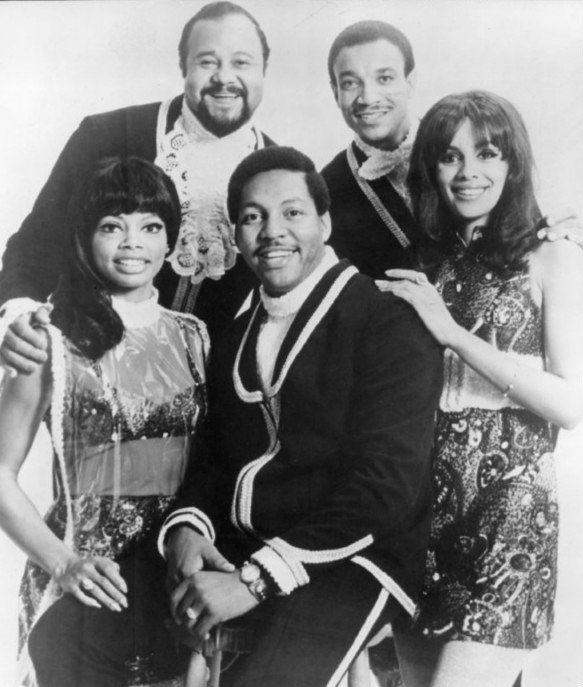
Wedding Bell Blues by The Fifth Dimension.  The Fifth Dimension formed in 1965 as The Versatiles and changed to their more popular name in 1966. They were well-known in the '60s for such great hits as Up, Up and Away, (Last Night) I Didn't Get to Sleep at All and Wedding Bell Blues, amongst others. The group consisted of Billy Davis, Jr., Marilyn McCoo, Florence LaRue, Lamonte McLemore and Ronald Townson. Wedding Bell Blues was their second #1 single in 1969, after Aquarius / Let The Sun Shine In. I love Wedding Bell Blues. It was written by the great Laura Nyro and both versions, hers and The Fifth Dimensions are wonderful.

UK #1 Single - 10 November 1969

Sugar, Sugar by The Archies. The Archies were a fictional band based on the Archie comics. The band that actually performed the songs had reasonable success. Sugar, Sugar was their only #1 hit in the UK. Jingle, Jingle was also a #1 for them, in Canada. Sugar, Sugar was written by Andy Kim and Jeff Barry. I readily admit that this was one of the first '45s I ever bought. I was only 14 years old!!

New York Times #1 Fiction Best Seller - 10 November 1969


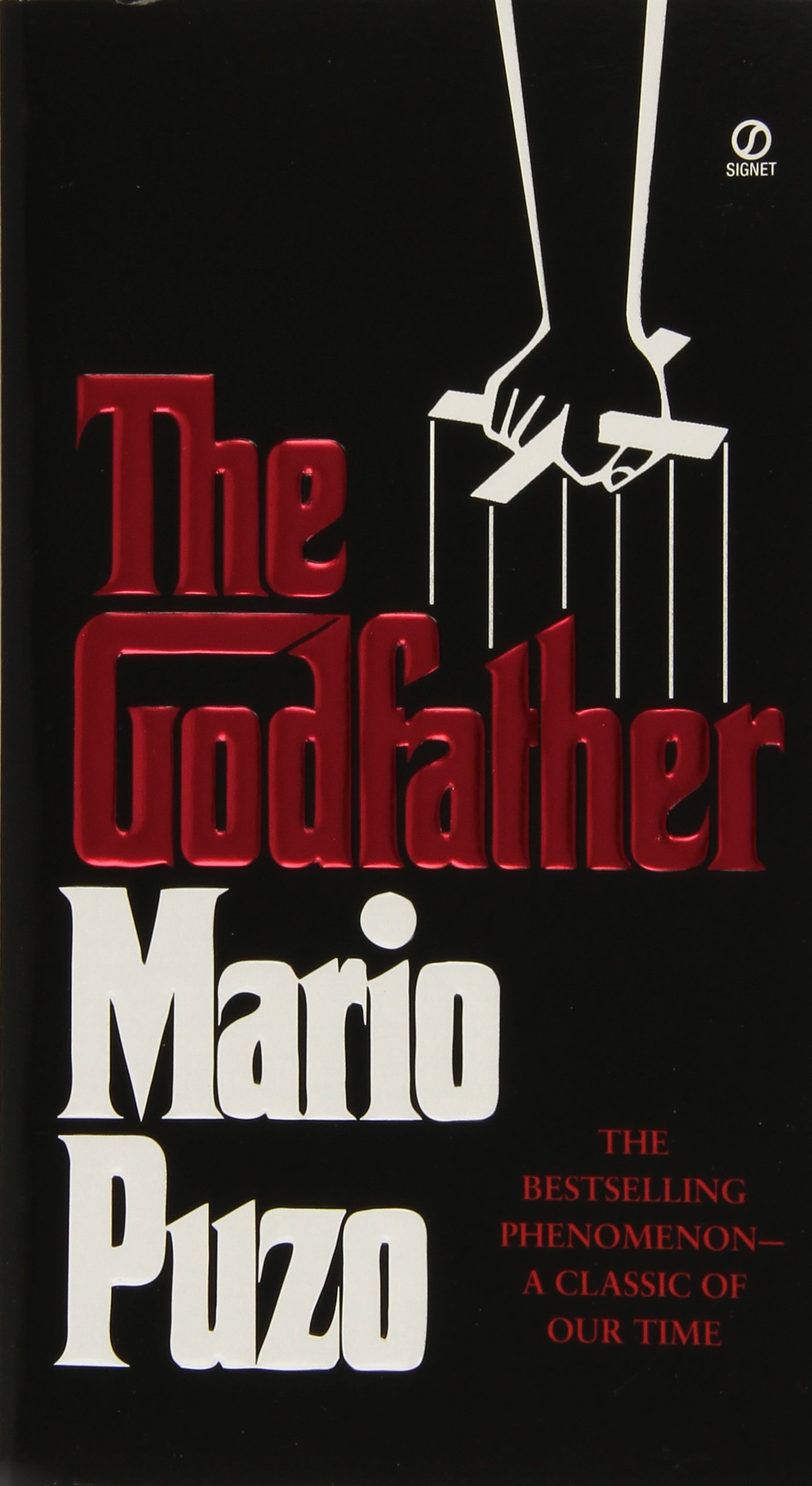
The Godfather by Mario Puzo. I've never read any other books by Mario Puzo but I enjoyed (if that is the word to use for a crime book) this one very much. It's a fascinating look at the world of the Mafia in New York.


The book was also turned into a successful, acclaimed movie, which was nominated for 7 Golden Globe awards and 11 Oscars, amongst others. I think it is one of those rare combinations where the book and the movie were both excellent.

Mario Puzo lived from 1920 - 1999. He wrote 11 fiction novels and other non-fiction and short stories.


Pulitzer Prize Winner - 1970

My wife asked me what a Hugo Award was yesterday and it made me realise that I had neglected to actually say what the various book awards I'm checking out are for. Let me correct that today. I take the description of the Pulitzer Prize. "The Pulitzer Prize is an award for achievements in newspaper, magazine and online journalism, literature and musical composition in the United States." It was established in 1917 by provisions of the will of American, Joseph Pulitzer, who made his fortune as a newspaper publisher and it is administered by Columbia University. Prizes are awarded yearly in 21 categories and a prize of $15,000 is given in 20 of them, with a gold medal being awarded for the public service category of the journalism award. I am focused on the Pulitzer prize for Fiction.


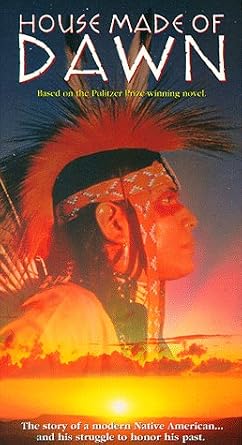
House Made of Dawn by N. Scott Momaday. This novel was credited with opening the doorway for Native American fiction into the mainstream.

It was initially conceived of as poems, then as a collection of stories and finally turned into a novel. It is focused on life on the reservation and outside, with the protagonist growing up on the reservation and attending school and university outside.

N. Scott Momaday is a Kiowa born in 1934 in Lawton, Oklahoma.


Nobel Prize Laureate for Literature - 1969

The Nobel Prizes are awarded annually in Sweden. They are awarded in six disciplines including Literature. The Nobel Prize for Literature is awarded by the Academy to authors for outstanding contributions in the field of literature.

Samuel Beckett (Ireland) - Samuel Beckett was an Irish avant-garde playwright and novelist who lived from 1906 - 1989. His Nobel Prize was awarded 'for his writing, which—in new forms for the novel and drama—in the destitution of modern man acquires its elevation.'

 Hugo Award Winner - 1969

The Hugo Awards are a set of awards given annually for the best science fiction or fantasy works and achievements of the previous year. The awards are named after Hugo Gernsback who founded the Amazing Stories magazine. Currently the Hugo Awards are given in more than a dozen categories. I am focused on Best Novel, which started in 1953 and consists of stories of 40,000 words or more.


 Stand on Zanzibar by John Brunner. This is one of my favourite Science Fiction novels. I've read at least twice. I have tried to read it in various ways; as a traditional novel, from beginning to end and also by sticking to the various chapter sub-headings - context, the happening world, tracking with close-ups, etc. Either way, it is a fantastic story.

Brunner was an English author who lived from 1934 - 1995. I've read many of his books and enjoyed most of them; especially The Shockwave Rider, The Sheep Look Up and The Whole Man.


Edgar Award Winner - 1969

The Edgar Allan Poe Awards (commonly called the Edgars) are awarded each spring by the Mystery Writers of America. They honor mystery fiction, non-fiction, television, film and theatre from the previous year.


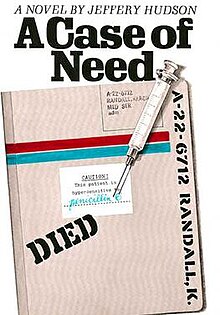
A Case of Need by Jeffery Hudson (AKA Michael Crichton). This was Michael Crichton's 4th novel. It was adapted into a 1972 movie, The Carey Treatment, starring James Coburn and Jennifer O'Neill. The book was re-released under Crichton's own name in 1993.

I've seen the movie but never read the book. The novel tackles the issues of abortion and racism as they were in the US in the 1960s.


Man Booker Award

The Man Booker Prize for Fiction is a literary prize awarded each year for the best original novel, written in the English language and published in the United Kingdom. From its inception, only Commonwealth, Irish and South African (later Zimbabwean) citizens were eligible. In 2014, any English - language novel was accepted. 1969 is the first year of the award.


Something To Answer For by P.H. Newby. This novel by English writer P.H. Newby was the first Man Booker Prize winner. It is the only Booker prize winning novel currently not in print.

Newby lived from 1918 - 1997 and was an English novelist and broadcast administrator. His fiction work spans 1945 - 1995. This is the synopsis.

"It was 1956 and Townrow was in Port Said - of these two facts he is reasonably certain. He had been summoned by the widow of his deceased friend Elie Khoury. She is convinced Elie was murdered, but nobody seems to agree with her. What of Leah Strauss, the mistress? And of the invading British paratroops? Only an Englishman, surely, would take for granted that the British would have behaved themselves. In this disorientating world Townrow must reassess the rules by which he has been living his life - to wonder whether he, too, may have something to answer for?"  

So there you go. As an update, it turns out the flooring guy can't come until tomorrow. The puppies are probably having fun but ultimately didn't need to spend the day at Day Care. Ah well.. It's been a nice relaxing day so far. Tomorrow I move on to the '70s.

Sunday, 12 July 2015

Small Town Books


On Jul 14th, I will head down to my local book store, The Laughing Oyster, and pick up the copy of Go Set a Watchman, the sequel to Harper Lee's masterpiece, To Kill a Mockingbird, the book she released in 1960, 55 years ago. I have to say, I'm very nervous about this as Mockingbird has long been my favourite book and also movie. From what I've read Mockingbird actually formed part of Go Set a Watchman, sort of a sequence of flashbacks within the story and her publisher suggested she pull out the flashbacks to make Mockingbird. Genius if that story is true. Go Set a Watchman follows Scout, now a woman and living in New York, as she begins a journey back to her hometown of Maycomb, Alabama. I think if this book is even half as good as Mockingbird, then I'll be very happy. Will I start reading it right away? Good question, but I might just do that. Screw my challenges.. lol

Last night on PBS, they had a special feature on Harper Lee; interviews with other authors, with Harper's sister, discussions about racism and the possible impact of the book, discussions about the characters and how they related to Harper's life. It was very interesting and sometimes emotional for me as this book always strikes a deep chord with me. Seeing scenes from the movie and hearing parts of the book read out loud got me quite choked up. I say it strikes a chord with, but I'm not quite sure why. Life in rural Alabama in the 1930's isn't something I can relate to at all, maybe it's that it has to do with growing up, with family and is just a great emotional story.

It did get me thinking of other similar types of stories, difficult to label, but I'm going to call them 'small town' stories', stories for the most part set in small towns, or close areas and stories involving family life.  Once again, I don't necessarily relate my growing up to these scenes as I was a military brat. In a way, living on a military base can be similar to small town living, in that it's a closed, small  community. The big difference is that you don't necessarily grow up with the same people as you are always on the move and starting life in a new, small, close community. Maybe that is what strikes a chord with me, the  people in these stories grow up with each other, their lives are affected by these people and their families. It's a life I haven't really lived and at times am envious of.

Anyway, this isn't really a top ten list, but the stories below have struck a chord with me and have many similarities. See what you think of these 'Small Town' stories.

1. To Kill a Mockingbird by Harper Lee (1960) - This is the book that's started this discussion. I've written Blog entries about it before, particularly when I went through my All - Top Ten favourite books. It's been my favourite for many years and will always be my favourite book. I don't know when I first read it, it may have been for school, was at least a library book that I signed out. I've read it 3 or 4 times over the years and I've seen the movie at least as many times if not more. It's a beautifully written book, touching, emotional and a story that draws you in. It's a story told from the perspective of Scout, daughter of one Atticus Finch, and is about her family relationships, with her father, her brother Jem, their maid, Calpurnia and her neighbours and friends. It's about how these relationships affect her life and help her grow up. It's also about much bigger things, large in scope, racism in the South, relationships between blacks and whites, about heroism and civilisation. It's a simple story, but one that even today, 55 years later, still strikes a chord.

2. The Heart is a Lonely Hunter by Carson McCullers (1940) - Oddly enough this book also fits into my All-time Top Ten list and is also set in the South, this time in Georgia. There are obvious differences between this and Mockingbird. For one, the focus is on a deaf man, Mr. Singer, but having said that, one of the people he meets and who affects his life is Mick, a tomboyish girl, whose parents own the rooming house where Mr. Singer resides. Mick is one of the characters around whom the story revolves, her fears, her desires and how they are impacted by Mr. Singer, by her family's poverty and the other characters that infiltrate Mr. Singer's life. Once again, it deals with other bigger issues, racism, poverty, treatment of handicapped. It features life in this smallish southern town, the relationships of the people who live there and how they all impact each others lives and futures. This book was also made into a movie, starring Alan Arkin as Mr. Singer and Sondra Locke as Mick, another movie that treated the book and story with respect and love and was just as good.

3. Peyton Place by Grace Metalious (1956) - Once again, a small town story, this time set in the US Northeast, but of a much bigger scope time-framewise than the first two. The children in this book grow up, some move away and come back. It is a fascinating story of secrets that affect the lives of the people of this small town. Everybody has one or two and as the story unfolds, these secrets affect lives, futures, even to a drastic degree. The people are drawn in a manner that you can see them, know them. I don't know if it's odd or appropriate that these first three stories were written by women, but they are and each is an expert craftsman, describing the people, the lives, the towns with care and skillful technique. Each book was also the first released by either author and in some cases, as in Lee's, she never wrote another book (until now) and in Metalious', she wrote a few others, but never achieved the success of Peyton Place. McCullers did achieve success with other novels, but I can see the difficulty of matching a book that is so instantaneously successful, with another.

4. A Tree Grows in Brooklyn by Betty Smith (1943) - Now wait just a darn-tootin' minute, I hear you growl. Since when is Brooklyn a small town! You're quite right, Brooklyn isn't a small town, but hear me out. This is the story of 11-year old Francie Nolan, who lives in a Brooklyn tenement house with her brother, Neely, and her family. Their life revolves around their street, their 'small town'. It focuses on Francie's dreams, dreams of going to a good school. It deals with so many issues, poverty, of course, the family's struggle to make ends meet on their mother's earnings because the father is a drunk and a layabout dreamer. It's a series of vignettes, portrayed with care and attention by Betty Smith and it's about growing up, trying to attain your dreams. A lovingly, caring story and once again, another great movie. Funny how these movie producers find such excellent books to make great movies out of.

5. Who Has Seen the Wind by W.O. Mitchell (1947) - I first heard of this book and read it while taking a Canadian Literature course at University of Toronto. It is set in the Prairies of Saskatchewan in the 1930s and tells the story or the growing up of young Bryan O'Connal in a prairie community. It's a story of family, of life and death, told in vignettes in a touching, wonderful way. This book was also made into a movie, starring Gorden Pinsent and Helen Shaver and it's a slow-paced, lovely story and there are scenes that never fail to make me laugh or cry.

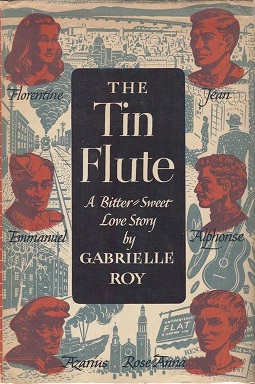
6. The Tin Flute by Gabrielle Roy (1945) - A French Canadian classic, the story is set in the slums of Montreal, Quebec. The characters are a bit older than those in the other stories. The focus is Florentine Lacasse, a young woman who works in the local five-and-dime store, supporting her family. But the themes are similar, she had dreams, desires to improve her situation and move onto better things, but finds herself dealing with family poverty and supporting her family with her earnings. This story also covers bigger issues, it is set during the war and covers relationships between the French Quebecers and their English compatriots. A profound, unsettling, strong story.

There are many other Canadian authors that dealt successfully and powerfully with these small-town lives and stories. To name a couple, there is Margaret Laurence, one of the major figures in Canadian literature. Her books have been successfully translated to the big screen, especially The Stone Angel, starring Ellen Burstyn and A Jest of God, which was translated to a movie under the title Rachel, Rachel starring Joanne Woodward.  The other author I wanted to mention was Alice Munro and especially her book of short stories, Lives of Girls and Women, which chronicle the life of Del Jordan as she grows up in the small southern Ontario town of Jubilee.

Well, there you have it, definitely an incomplete list, but a starting point if you're looking for this type of story. Every one is a joy to read and will enhance your reading experience and maybe even your life perspective.

Monday, 27 February 2012

Simon Winchester - Writer, Traveller, Historian

Simon Winchester is a British-born author, who now resides for the most part in the United States. He is a well-travelled person who has shared his experiences in 22 books over the period from 1976 to the present. His books range from travel-related stories such as my current book, Outposts - Journeys to the Surviving Relics of the British Empire to fascinating histories of events and individuals.


Professor and the Madman
 Of the six books of his that I have, I've read four so far and am half way through Outposts. I was first introduced to his writings by my wife when she bought me two of his books for Christmas in 2008. I had never heard of Simon Winchester before but she thought the subject matter might interest me as we are always teasing each other about spelling and definitions. The Professor and the Madman; A Tale of Murder, Insanity and the Making of the Oxford English Dictionary is a fascinating story. While the premise is the making of the first Oxford English Dictionary (OED), which took 70 years to complete, from 1857, this story focusses mainly on one individual, an American Civil War veteran, Dr. W.C. Minor.
The making of the OED was the brain child of Dr. James Murray, who oversaw the project. The actual finding of words and meanings was assisted by over 1,000 contributors from all over the world, who provided words, origins and definitions to Minor and his group.
One of the most prolific contributors was Dr. Minor, a very mysterious contributor. Dr. Murray tried to visit or communicate with most of his contributors but had no luck getting any information from or about Dr. Minor. They maintained a correspondence for over ten years, but finally after having received nearly 10,000 definitions from Dr. Minor, Murray set out to meet him.
He discovered a fascinating individual living at a surprising location. Dr. Minor, an amazing wordsmith, was also a murderer and living in the insane asylum at Broadmoor, England's asylum for criminal lunatics.
So there you have the premise for my introduction to Simon Winchester. The Professor and the Madman, was published in 1998 and is a fascinating story, detailing the lives of two fascinating, obsessed individuals, Dr. James Murray and one of his most prolific contributors to the publication of the first ever OED, Dr. William Chester Minor. My wife hit a home run with this gift; I enjoyed every word of it; the fascinating characters, the enthralling process involved with the making of the OED.


Making the OED
 The other book, of Simon Winchester's which I received that year was on the same topic, The Meaning of Everything; The Story of the Oxford English Dictionary. Winchester published this book in 2003; it's a bit of a follow-on to the story of Chester Minor. This book doesn't focus on specific individuals, but is a history of the book itself; how it was thought out; how it was approved, funded; the individuals who spent the days, months and years researching and crafting it. It's a fascinating story and of such a great scope and so well-written. The people who worked so hard, spending so many years of their lives dedicated to this book, which benefitted so many people, were dedicated and even, somewhat obsessed. I find it fascinating how many people contributied to it, dedicatdely researching words; their origins, spellings and definitions and sending their research to the crafters of the OED itself, those people who worked hours on end at the Scriptorium near Oxford putting this book together. A fascinating read and highly recommended.

William Smith

I have since purchased a few more Winchester stories and have found them as enjoyable as the first two books. The Map that Changed the World; William Smith and the Birth of Modern Geology is one such story. Originally published in 2001, it tells the story or William Smith, a canal digger, who in 1793, discovered that by tracing the placement of fossils, one could follow the layers of rocks clear across England. His discovery enabled him, for the first time ever, to draw a chart of the hidden underside of the earth. This is a story of another dedicated individual, a man who spent twenty-two years of his life, travelling across England, piecing together an epochal and beatifully hand-crated map of the Earth. However it is not just a story of a map, but also a tragic story of a man, who was treated poorly, plagiarized, sent to debtor's prison and more. In the tradition of The Professor and the Madman, Simon Winchester delves into a fascinating individual and his dogged efforts to produce something that changed the way scientists view geography.

Krakatoa
Most recently, I have completed The Day the World Exploded: August 27, 1883, Krakatoa. Winchester published this story in 2003. In it he examines the 1883 explosion of Krakatoa and examines its impact on the world, the tsunami which followed and its impact on the world itself. Winchester has a fascinating way of delving into a topic; his discussion on how volcanos are created, the history of Krakatoa and that area of the world; the history of the time. Besides the devastation of the volcono's eruption itself, in which nearly 40,000 people were killed, he explores socio-political impacts, such as the wave of murderous anti-Western militancy that were triggered, one of the first outbreaks of Islamic-inspired killings anywhere. It's a fascinating story, providing a unique perpective of a powerful, world-shattering event. I enjoyed so very much; as I have with any of the Simon Winchester novels I've explored.


The British Empire
 At the moment, I'm about half way through Simon Winchester's Outposts - Journeys to the Surviving Relics of the British Empire. Originally published in 1985, this novel chronicles Winchester's efforts to visit the remaining outposts of the British Empire, from the British Indian Ocean Territories (Diego Garcia) through to Pitcairn Islands. I have been thoroughly enjoying this book so far; having visited with Winchester the British Indian Ocean Territory, Tristan, Gibraltar, Ascension Island and St Helena. The story tells of Winchester's voyage to the locations, sometimes incredibly difficult and provides a history of the area and how they are currently being treated by the British government. The locations are often new to me, fascinating areas of the world, often isolated islands in the middle of the ocean. The people he meets are interesting and the locations and their history fascinating. I find that Simon Winchester always presents his stories in such a unique interesting manner. They always have held my attention and have been completely enjoyed.


A Crack in the World
 I have one left to read when I finish Outposts, that being the 2005 book, A Crack in the Edge of the World - America and the Great California Earthquake of 1906. As outlined it tells the story of the massive earthquake, a magnitude of 8.25 that rocked San Francisco in the early hours of April 18, 1906. Winchester explores the legendary earthquake and fires that spread horror across San Francisco and northern California as well as the startling impact it had on American history and, as important, on what science has since revealed about the fascinating subterranean processes that caused it.

Sounds like another interesting read. So that is where I am, myself, with my exploration of Simon Winchester's writings. I highly recommend his stories; those that I've experienced I've enjoyed immensely. If you wish to explore all of his novels or in some sort of order, below is a chronological list of his stories. Enjoy!

  • 1975 – In Holy Terror
  • 1976 – American Heartbeat
  • 1983 – Prison Diary: Argentina
  • 1984 – Their Noble Lordships: Class and Power in Modern Britain
  • 1985 – Outposts: Journeys to the Surviving Relics of the British Empire (also known as The Sun Never Sets)
  • 1988 – Korea, A Walk Through the Land of Miracles
  • 1991 – Pacific Rising: The Emergence of a New World Culture
  • 1992 – Hong Kong: Here Be Dragons (by Rich Browne, James Marshall and Simon Winchester)
  • 1992 – Pacific Nightmare: How Japan Starts World War III : A Future History (novel)
  • 1995 – Small World: A Global Photographic Project, 1987–94 (by Martin Parr and Simon Winchester)
  • 1996 – The River at the Center of the World: A Journey up the Yangtze and Back in Chinese Time
  • 1998 – The Surgeon of Crowthorne: A Tale of Murder, Madness and the Making of the Oxford English Dictionary (Published in the US as The Professor and the Madman)
  • 1999 – The Fracture Zone: A Return To The Balkans
  • 2001 – The Map that Changed the World: William Smith and the Birth of Modern Geology
  • 2003 – The Meaning of Everything — the Making of the Oxford English Dictionary
  • 2003 – Krakatoa: The Day the World Exploded
  • 2004 – Simon Winchester's Calcutta (a collection of writings about the Indian city, edited with son Rupert)
  • 2005 – A Crack in the Edge of the World: America and the Great California Earthquake of 1906 
  • 2008 – The Man Who Loved China — the Life of Joseph Needham (title of the UK edition: Bomb, Book & Compass)
  • 2010 – Atlantic: A Vast Ocean of a Million Stories
  • 2011 – The Alice Behind Wonderland - Alice Liddell
Related Posts with Thumbnails