Showing posts with label Nevil Shute. Show all posts

Monday, 17 January 2022

As The BLog's Name Says - Books, Books & More Books

Since my first 2022 Reading Update, I've finished 5 more books. I've been out supporting our local book stores, both new and used. I'll provide my reviews of the completed books, the synopses of the next books I've started and also those of the new books I've purchased.

Just Finished

1. Could You Survive Midsomer? by Simon Brew.

"I've enjoyed the Midsomer Murders TV series for years and I've enjoyed the books by Caroline Graham on which the series was based. Could You Survive Midsomer?: Can you avoid a bizarre death in England's most dangerous county? by Simon Brew provides an interactive take on the series.

It was a fun read and in a style that is new to me. Basically after each chapter or sequence of the investigation, you, the reader, are given an option to follow one or another path. Depending on which path you take, you end up in a different section of the book. The story continues in that vein until you come to your solution. Obviously, if you choose other paths, you will come to a different solution to the case. When you've reached your personal solution, the Chief Inspector provides a rating on whether you've solved the case satisfactorily and how you are rated as a police inspector.
.
So that's it. The crime is the murder of one of the contestants in a Village in Bloom competition, where the various towns in Midsomer are competing to have the best blooms in the county. The murder is assigned to a new Detective in the Midsomer police force.. You! There you go, that's it and all it's about.

As I said, it's a fun read, nothing really deep, but entertaining in that it puts you in the middle of the case. The mystery is ok as mysteries go, but that doesn't really matter. You could read this book a few times and choose different options and come up with different solutions. All a great premise. Most enjoyable, because it puts you in the middle of one of the favorite British mystery series, actually helping solve the case. (3.5 stars)"

2. The Stars My Destination by Alfred Bester.


"I am having difficulty of thinking about what to say about The Stars My Destination, a SciFi novel by Alfred Bester. I'd previously read The Dark Side of the Earth, a collection of short stories by Bester (some very interesting) and more recently, The Demolished Man, which was strange and unique. I think I can safely say the same about The Stars My Destination.

Gully Foyle was a sailor on a space freighter that has been attacked and left for destroyed, with Gully the only survivor. After months alone in the wrecked cruiser, he discovers another ship coming his direction. When he hails the ship to be rescued, the ship, the Vorga, speeds off, abandoning Gully. Gully manages to jury rig the ship, it's the Nomad by the way, and finds himself in the asteroid belt and rescued by a group of survivors living in the belt. They have welded ship wrecks together and have created a weird community. Gully is saved, his face is tattooed with a tiger mask. Ultimately, Gully escapes and heads to earth. His aim is to find out who gave the order to leave him on the Nomad so he can enact revenge.

So here is where the story gets weird. LOL. The Nomad carried a cargo that is wanted by many people. People don't need to travel by vehicle (although they still do) because the can teleport themselves, 'jaunte', around the world. There are limitations, distance limits basically, so there is still some requirement for vehicular travel. Gully remakes himself, gets the tattoos removed (sort of), becomes Geoffrey Formyle, prince of Ceres, and travels around Earth with a circus of freaks, trying to find out more about Vorga. There is a war going on between the Outer Planets and the Inner ones.. There is so much and it's a story that is constantly on the move, jumping, er... jaunting from place to place and believe me, it's a weird world!

Fascinating story, that you do want to see the ending, there are writing techniques that add to the interest (hard to describe). It's kind of a cross between a normal SciFi story and one of Philip K. Dick's stranger efforts. It's worth trying to check out one of the more unique SciFi writers you might ever experience. (3.5 stars)"

3. Hunting the Bismark by C.S. Forester.


"Over the past 20 years or so, I've enjoyed so many of English author C.S. Forester's works; his Horatio Hornblower series, his works of fiction, like The African Queen, his early mysteries and others, 15+ books. Hunting the Bismarck is a work of non-fiction (in a dramatized fashion) an is a perfect little book.

The title tells all. The Bismark, a German battleship, the pride of the fleet, leaves harbor and heads for the Atlantic to harass British convoys trying to keep Britain alive during WWII. British spies see it leave, the Admiralty is advised and the British fleet and Air Arm are activated to try and find and track and ultimately destroy the Bismark.

The story moves between the Captain of the Bismark and its crew, to the Admiralty as they track the progress of their ships, various crew members of British ships, even news reports from America and other countries. It's all very factual but Forester tweaks the story to make it a dramatic, fast paced, action packed war tale. I knew the basic story but there were little tidbits that I never even realized; the battleship Prince of Wales was so new that it still had civilian labor crews on board trying to correct flaws, the battleship Rodney was on its way to a refit in America under the lend lease program and had 500 injured passengers on board, going to Canada, as well as an American Navy Lt, escorting the ship. You get various actions told from the perspective of the British and then the Germans.

It's a very factual account of a major battle of WWII and such a significant event. Fascinating acts of heroism told in a matter - of - fact manner that draws you in quickly and makes you want to read until the end. Excellent story. (5 stars)"

4. Futureface: A Family Mystery... by Alex Wagner.

"I first heard of Alex Wagner from her podcast with John Heilemann. She seemed intelligent and interesting. When I heard she'd just released her first book, Futureface: A Family Mystery, an Epic Quest, and the Secret to Belonging, I thought it might be worth reading.

Basically, Alex, daughter of a Burmese mother and Luxembourgian father, decided to research her family, to try and find out more about her roots. This journey will take her to Burma (now Myanmar), Luxembourg and points in between. It will also delve into the mysteries of agencies like Ancestor.com and others. Alex wants to find out the family secrets, where she fits into the world, is she Burmese, Luxembourgian, maybe Jewish? Or is she a Futureface, the mixing of genetic heritage into a future you?

It's a fascinating journey. The little I knew about Burma was from reading George Orwell's Burmese Days, H.E. Bates's The Purple Plain, and maybe finding a few other books, and also reading about Aung San Suu Kyi, Burma's military coup, the treatment of the Rohinga.. Hmm, maybe I knew more than I thought. Alex heads to Burma, after trying to get information from her mother and grandmother. She, in my opinion, does jump to some conclusions based on her meetings and research into Burma's history, but they may be valid, even so. How the military junta has basically eradicated the history of the country is one of the depressing notes. She also tries to find out more about her father's family; why the left Luxembourg, about the area in which the settled; land taken from the Winnebago nation in the Midwest. She also tries to discover if there is Jewish blood in her father's side of the family, just based on conversations with members of the family, mainly, it seems, due to their predilection for drinking Mogen David wine. LOL.

The final portion of the book covers her final search, the effort to track down the genetic markers in her family, spending what seems like lots of money sending swabs and spit samples to Ancestor, 23andMe, etc. She realizes how inaccurate these processes can be and does get down into the weeds a bit in this portion.

All in all, I enjoyed Wagner's writing style, comfortable, friendly, funny, informative. The search is all very interesting and on the way she covers the (mis-)treatment of native Americans, subjugated races in Burma; thoughts on the world's future (will races in fact be blended or not?), etc. It wasn't what I expected but I enjoyed nonetheless and I hope she continues providing us with her unique, interesting perspectives. (4 stars)"

Currently Reading

1. Protect and Defend by Vince Flynn (Mitch Rapp #10).


"No longer willing to wait for the international community to stop its neighboring enemy, Israel brings down Iran's billion-dollar nuclear program in an ingeniously conceived operation. The attack leaves a radioactive tomb and environmental disaster in its wake, and has Iranian president Amatullah calling for blood --- American blood. Seeing opportunity where others fear reprisals, Mitch Rapp devises a brilliant plan to humiliate Iran's government and push the nation to the brink of revolution. But when a back-channel meeting between CIA director Irene Kennedy and her Iranian counterpart goes disastrously wrong, Rapp is locked in a showdown with a Hezbollah mastermind in league with Amatullah --- and he is given twenty-four hours to do whatever it takes to stop unthinkable catastrophe."

2. Darkness at Dawn by Cornell Woolrich (1985).


"From 1934 until his death in 1968, Cor­nell Woolrich wrote dozens of “tales of love and despair” that chill the heart and display his mastery of the genre he all but created. In a title for a story he never wrote, he captured the essence of his tortured world: “First you dream, then you die.”

 Introducing these 13 tales, Nevins de­scribes the dark world Woolrich so viv­idly creates. “The dominant reality in his world is the Depression, and Woolrich has no peers when it comes to describing a frightened little guy in a tiny apartment with no money, no job, a hun­gry wife and children, and anxiety eating him like a cancer. If a Woolrich protago­nist is in love, the beloved is likely to vanish in such a way that he not only can’t find her but can’t convince anyone she ever existed.”"

3. The Alice Behind Wonderland by Simon Winchester (2011).

"On a summer's day in 1858, in a garden behind Christ Church College in Oxford, Charles Dodgson, a lecturer in mathematics, photographed six-year-old Alice Liddell, the daughter of the college dean, with a Thomas Ottewill Registered Double Folding camera, recently purchased in London.
Simon Winchester deftly uses the resulting image--as unsettling as it is famous, and the subject of bottomless speculation--as the vehicle for a brief excursion behind the lens, a focal point on the origins of a classic work of English literature. Dodgson's love of photography framed his view of the world, and was partly responsible for transforming a shy and half-deaf mathematician into one of the world's best-loved observers of childhood. Little wonder that there is more to "Alice Liddell as the Beggar Maid" than meets the eye. Using Dodgson's published writings, private diaries, and of course his photographic portraits, Winchester gently exposes the development of Lewis Carroll and the making of his Alice.
"

4. The Island of Fu-Manchu by Sax Rohmer (Fu-Manchu #10).


"This book, the 10th of 14 in the Fu Manchu series, is a direct continuation of the previous installment, "The Drums of Fu Manchu." Hence, a reading of that previous volume is fairly essential before going into this one. In the present volume, Sir Dennis Nayland Smith continues his ongoing battle against the evil doctor, aided again by narrator Bart Kerrigan and by Europe's foremost archeologist, Sir Lionel Barton, who figured so prominently in books 1, 4 and 5 ("The Insidious Dr. Fu Manchu," "The Daughter of Fu Manchu" and "The Mask of Fu Manchu"). This book is the wartime entry in the Fu series, and takes place in blackout London; it then hops over the pond for action in the Big Apple, the Panama Canal Zone and in Haiti. This time around, the Fu man has completed his air and naval forces and has concentrated them in a base hidden in an extinct Haitian volcano."

New Books

1. The Sword of Rhiannon by Leigh Brackett (1949). Brackett is a new author for me. She wrote SciFi and mysteries and was also a successful screenwriter.


"Greed pulls the archaeologist Matt Carse into the forgotten tomb of the Martian god Rhiannon and plunges the unlikely hero into the Red Planet's fantastic past, when vast oceans covered the land and the legendary Sea-Kings ruled from terraced palaces of decadence and delight."

2. Redshirts by John Scalzi (2012). Scalzi is a new SciFi author for me. I've been looking forward to trying him. 

"Ensign Andrew Dahl has just been assigned to the Universal Union Capital Ship Intrepid, flagship of the Universal Union since the year 2456. It’s a prestige posting, and Andrew is thrilled all the more to be assigned to the ship’s Xenobiology laboratory.

Life couldn’t be better…until Andrew begins to pick up on the fact that:
(1) every Away Mission involves some kind of lethal confrontation with alien forces
(2) the ship’s captain, its chief science officer, and the handsome Lieutenant Kerensky always survive these confrontations
(3) at least one low-ranked crew member is, sadly, always killed.

Not surprisingly, a great deal of energy below decks is expended on avoiding, at all costs, being assigned to an Away Mission. Then Andrew stumbles on information that completely transforms his and his colleagues’ understanding of what the starship Intrepid really is…and offers them a crazy, high-risk chance to save their own lives."

3. Wild Seed by Octavia E. Butler (1980). I've not yet read any of Butler's SciFi novels but I've slowly been buying her works. I've one lined up one for one of my challenges this year.


"Doro knows no higher authority than himself. An ancient spirit with boundless powers, he possesses humans, killing without remorse as he jumps from body to body to sustain his own life. With a lonely eternity ahead of him, Doro breeds supernaturally gifted humans into empires that obey his every desire. He fears no one -- until he meets Anyanwu. Anyanwu is an entity like Doro and yet different. She can heal with a bite and transform her own body, mending injuries and reversing aging. She uses her powers to cure her neighbors and birth entire tribes, surrounding herself with kindred who both fear and respect her. No one poses a true threat to Anyanwu -- until she meets Doro. The moment Doro meets Anyanwu, he covets her; and from the villages of 17th-century Nigeria to 19th-century United States, their courtship becomes a power struggle that echoes through generations, irrevocably changing what it means to be human."

4. Night Train by Martin Amis (1997). I've read quite a few of his father, Kingsley Amis, works but nothing by Martin yet.


"Detective Mike Hoolihan has seen it all. A fifteen-year veteran of the force, she's gone from walking a beat, to robbery, to homicide. But one case--this case--has gotten under her skin.

When Jennifer Rockwell, darling of the community and daughter of a respected career cop--now top brass--takes her own life, no one is prepared to believe it. Especially her father, Colonel Tom. Homicide Detective Mike Hoolihan, longtime colleague and friend of Colonel Tom, is ready to "put the case down." Suicide. Closed. Until Colonel Tom asks her to do the one thing any grieving father would ask: take a second look.

Not since his celebrated novel Money has Amis turned his focus on America to such remarkable effect. Fusing brilliant wordplay with all the elements of the classic whodunit, Amis exposes a world where surfaces are suspect (no matter how perfect), where paranoia is justified (no matter how pervasive), and where power and pride are brought low by the hidden recesses of our humanity."

5. The Other Wind by Ursula K. LeGuin (Earthsea #6). I've enjoyed LeGuin's works ever since I read The Left Hand of Darkness.

"The sorcerer Alder fears sleep. The dead are pulling him to them at night. Through him they may free themselves and invade Earthsea. Alder seeks advice from Ged, once Archmage. Ged tells him to go to Tenar, Tehanu, and the young king at Havnor. They are joined by amber-eyed Irian, a fierce dragon able to assume the shape of a woman. The threat can be confronted only in the Immanent Grove on Roke, the holiest place in the world and there the king, hero, sage, wizard, and dragon make a last stand."

6. Network Effect by Martha Wells (Murderbot Diaries #6). I enjoyed the first book in this series very much. It was a nicely different SciFi story.


"You know that feeling when you’re at work, and you’ve had enough of people, and then the boss walks in with yet another job that needs to be done right this second or the world will end, but all you want to do is go home and binge your favorite shows? And you're a sentient murder machine programmed for destruction? Congratulations, you're Murderbot.

Come for the pew-pew space battles, stay for the most relatable A.I. you’ll read this century.


I’m usually alone in my head, and that’s where 90 plus percent of my problems are.

When Murderbot's human associates (not friends, never friends) are captured and another not-friend from its past requires urgent assistance, Murderbot must choose between inertia and drastic action.

Drastic action it is, then."

7. Return from the Stars by Stanislaw Lem (1961). Back in my university days, I took a Science Fiction novel course. One of the books we took was Lem's Solaris. Now I honestly can't remember the story but when Jo and I were wandering around Comox the other day, I checked out one of our local book store and he had three of Lem's other works. I thought I should check him out.


"An astronaut returns to Earth after a ten-year mission and finds a society that he barely recognizes.

Stanislaw Lem's Return from the Stars recounts the experiences of Hal Bregg, an astronaut who returns from an exploratory mission that lasted ten years--although because of time dilation, 127 years have passed on Earth. Bregg finds a society that he hardly recognizes, in which danger has been eradicated. Children are "betrizated" to remove all aggression and violence--a process that also removes all impulse to take risks and explore. The people of Earth view Bregg and his crew as "resuscitated Neanderthals," and pressure them to undergo betrization. Bregg has serious difficulty in navigating the new social mores.

While Lem's depiction of a risk-free society is bleak, he does not portray Bregg and his fellow astronauts as heroes. Indeed, faced with no opposition to his aggression, Bregg behaves abominably. He is faced with a choice: leave Earth again and hope to return to a different society in several hundred years, or stay on Earth and learn to be content. With Return from the Stars, Lem shows the shifting boundaries between utopia and dystopia."

8. Requiem for a Wren by Nevil Shute (1955). I've been working through Shute's works. He's definitely become my favorite author.

"Requiem for a Wren (U.S. title The Breaking Wave) is one of Nevil Shute's most poignant and psychologically suspenseful novels, set in the years just after World War II.

Sidelined by a wartime injury, fighter pilot Alan Duncan reluctantly returns to his parents' remote sheep station in Australia to take the place of his brother Bill, who died a hero in the war. But his homecoming is marred by the suicide of his parents' parlor-maid, of whom they were very fond.

Alan soon realizes that the dead young woman is not the person she pretended to be. Upon discovering that she had served in the Royal Navy and participated along with his brother in the secret build-up to the Normandy invasion, Alan sets out to piece together the tragic events and the lonely burden of guilt that unraveled one woman's life.

In the process of finding the answer to the mystery, he realizes how much he had in common with this woman he never knew and how a war can go on killing people long after it's all over."

9.  Junky by William Burroughs (1953). I've never read anything by Burroughs, known for Naked Lunch, but this copy looked excellent.


"Before his 1959 breakthrough, Naked Lunch, an unknown William S. Burroughs wrote Junky, his first novel. It is a candid eye-witness account of times and places that are now long gone, an unvarnished field report from the American post-war underground. Unafraid to portray himself in 1953 as a confirmed member of two socially-despised under classes (a narcotics addict and a homosexual), Burroughs was writing as a trained anthropologist when he unapologetically described a way of life - in New York, New Orleans, and Mexico City - that by the 1940's was already demonized by the artificial anti-drug hysteria of an opportunistic bureaucracy and a cynical, prostrate media. For this fiftieth-anniversary edition, eminent Burroughs scholar Oliver Harris has painstakingly recreated the author's original text, word by word, from archival typescripts and places the book's contents against a lively historical background in a comprehensive introduction. Here as well, for the first time, are Burroughs' own unpublished introduction and an entire omitted chapter, along with many "lost" passages, as well as auxiliary texts by Allen Ginsberg and others."

10. Light Thickens by Ngaio Marsh (Inspector Alleyn #32). This is the last book in Marsh's Alleyn books. I've been enjoying for a few years now.


"The bad news: This is the last in Ngaio Marsh s marvelous Inspector Alleyn series. The good: It s one of her very best. The secret to Light Thickens success may lie in its combination of some of Marsh s greatest passions, including her native New Zealand in the person of, unusually, a Maori character and the theater. Indeed, the plot centers on a production of well, let s skirt disaster by calling it the Scottish play, a play that Dame Ngaio produced and directed several times. Among theater folk, the Scottish play is considered unlucky, so much so that tradition requires anyone who utters its proper name backstage to leave the building, spin around, spit, curse, and then request permission to re-enter. For Ngaio Marsh, however, it seems to have been quite the opposite: Light Thickens is a fine swansong, said England s Observer, and the Los Angeles Times agreed, saying No playwright could devise a better curtain than the one Dame Ngaio chose for her own career."

11. City of Illusions by Ursula K. LeGuin (Hainish Cycle #3). The first book in this series, The Left Hand of Darkness, is a long time favorite SciFi story of mine. I've read two or three times.

"He was a fully grown man, alone in dense forest, with no trail to show where he had come from and no memory to tell who — or what — he was.

His eyes were not the eyes of a human.

The forest people took him in and raised him almost as a child, teaching him to speak, training him in forest lore, giving him all the knowledge they had. But they could not solve the riddle of his past, and at last he had to set out on a perilous quest to Es Toch, the City of the Shining, the Liars of Earth, the Enemy of Mankind.

There he would find his true self ... and a universe of danger."

See any books you'd like to try here? Enjoy.

Thursday, 21 September 2017

All About Books Today

As the BLog title and the subject bar say today, it's all about books today. :)

New Books

I received an order the other day from Better World Books out of the UK. In one of my recent reads, there was a list of other books published by the particular publishing company, Soho Crime, at the back. Some looked like they might be worth trying so I ordered a few. These are the three I got.

1. Billy Boyle by James R. Benn. This is a World War II mystery series created by American writer Benn. It's the first of  12 books as of 2017.


"Billy Boyle, a young Irish-American cop from Boston, has just made detective when the United States joins World War II. His 'Uncle Ike' - Dwight D. Eisenhower - has been chosen to command Army forces in Europe, and he wants Billy to be his personal investigator. Billy, who had never left Boston before enlisting, is not so sure about his ability as a detective. But he dutifully sets off for London, where he'll be working with British Allies to catch a spy who threatens Operation Jupiter, the impending invasion of Norway."

2. Jade Lady Burning by Martin Limon. Martin Limon served 10 years in the US Army in Korea. His eleven book mystery series, starring Military Police investigators Sueno and Bascom, is set in Korea.


"Almost twenty years after the end of the Korean War, the US Military is still present throughout South Korea, and tensions run high. Koreans look for any opportunity to hate the soldiers who drink at their bars and carouse with their women. When Pak Ok-Suk, a young Korean woman, is found brutally murdered in a torched apartment in the Itaewon red-light district of Seoul, it looks like it might be the work of her American soldier boyfriend. Sergeants George Sueno and Ernie Bascom, Military Police for the US 8th Army, are assigned to the case, but they nothing to go on other than a tenuous connection to an infamous prostitute. As repressed resentments erupt around them, the pair sets out on an increasingly dangerous quest to find evidence that will exonerate their countryman."

3. The Woman Who Married a Bear by John Straley. Alaskan writer Straley has written 6 books in his Cecil Younger mystery series set in Alaska.


"Murder is uncommon in the Alaskan port of Sitka, and this was an uncommon murder. For a start, the case has long been closed. The killer of a Tlingit hunting guide has confessed and is behind bars. But the victim's elderly mother wants to know why her son was killed, and she asks down-at-heel PI Cecil Younger to find out.
His quest takes him through Alaska's wildest landscapes - from the dark hidden world of city nights to the haunting world of the bush country and mountain forests.
The truth hinges on the meaning of a Tlingit myth. And the danger lies in finding it..."

Just Finished

I've finished 2 books since my last post here, both enjoyable.

1. Birds of a Feather by Jacqueline Winspear. This is the 2nd book in Winspear's Maisie Dobbs, PI mystery series, set between the two World Wars. My review is below.


"Birds of a Feather is the 2nd Maisie Dobbs mystery by Jacqueline Winspear. I've enjoyed the first two books so far. Winspear is a meticulous story teller, providing a lot of particular details while developing her characters and plot. Details about exactly what Maisie is wearing, etc seem irrelevant but they help provide a picture.
It's been hard to warm to Maisie as she is quite buttoned-up and does have personal issues from her time serving as a nurse during WWI and also between her and her father (guilt on both sides from her mother's death), but I'm getting to like her more. She is more than just a private detective. From her training with her old mentor, Maurice, she is more of a psychologist / private detective who provides both investigative assistance and then psychological assistance, whether the client wants it or no.
So, on to this story. Maisie is hired by a rich owner of a major grocery chain, Joseph Waite, to find his daughter. This is not the first time she has gone missing so he doesn't want the police involved. Maisie and her assistant, Billy Beale, agree to find her. They quickly realize that murders being worked on by Scotland Yard, especially Inspector Stratton, may be related to their case. As well, Maisie is concerned about Billy, an ex - soldier who had been severely wounded during the war. He is acting strangely and Maisie is concerned. Also simmering is her relationship with her father.
It all makes for an interesting story and mystery. I will admit that I had a pretty good idea of what might be involved and ultimately also a pretty good idea of who might be the murderer, but the story is very well-written and crafted and was well worth reading. I am warming more to Maisie and look forward to reading the third instalment. (4 stars)"

2. A Town Like Alice by Nevil Shute. I've probably said this a few times in my BLog but it bears repeating. Shute is one of the all-time best writers ever. He is definitely one of my favourites and I'm enjoying exploring his extensive catalogue of books.


"As Joe says and most Queenslanders say throughout this book, 'Oh my word!'. What a great book A Town Like Alice by English author Nevil Shute is! Shute is one of my favourite authors. I've enjoyed so many of his books and I will keep searching for others of his stories.
A Town Like Alice (which I've always wanted to name A Town Called Alice; I know now why the title is as it is) is the story of Jean Paget, a young English woman, whose journey carries her from Malaysia in WWII, back to England and on to Australia. She is a normal girl, who finds herself in unique situations and finds a strength of character common to the heroes and heroines who people Shute's novels. Shute has said this story is based on a true story of a Dutch woman who kept many women prisoners of the Japanese alive with her efforts. In Shute's story, the Japanese invade Malaysia and capture a group of English women and their children. Not wanting to have anything to do with them, the women are forced to march around Malaysia, from Japanese camp to camp, suffering privations. Jean, unmarried, becomes a rational, smart leader of the group.
They are helped by an Australian prisoner, Joe, who risks his life to provide food and medicine to the women. After the war, Jean returns to England and discovers she has inherited a fair bit of money. The story teller, her solicitor Noel, helps her sort out this inheritance, which Jean wants to use to help the Malaysian village that kept the women safe.
She also decides to go to Australia to find out more about Joe, where he was from and when she arrives decides to use her money once again to help the town he was from, to make it 'a town like Alice'.
I don't want to discuss the plot much more as it is a book that needs to be enjoyed and savoured. I love the characters, I love the spirit of nation building, the positive qualities of the people. There are outstanding events that take place in this story, but they are told in such a gentle, matter of fact way that it makes them even more impressive. There are many highlights for me. I especially enjoyed discovering how the Australian outback radio communication system worked and how much of a key it was to saving a lost man. The story reminds me of The Far Country, another story that features Australia. Shute is a great author that should be explored. (5 stars)"

Currently Reading

I've added the two books below to my currently reading pile to replace the two I just finished.

1. The Cruellest Month by Louise Penny. This is the third book in an excellent mystery series by Canadian writer, Louise Penny, featuring Chief Inspector Gamache of the Quebec Provincial Police.


"A vast abandoned house. A chilling séance. A sudden death. To Chief Inspector Armand Gamache, it's the stuff of an old novel - but when he discovers the victim was murdered, a sinister shadow falls over the town of Three Pines ... and an old secret, buried deeper than the dead, returns once more to haunt the living."

2. The Return of Dr. Fu Manchu by Sax Rohmer. Call it what you will; pulp fiction, B-movie fodder, tense thriller, the Fu Manchu series is an entertaining action-filled ride. The Return of Dr. Fu Manchu is the 2nd book in Rohmer's series. It was first published in 1916.


"Here is the second of the fabulous adventures of Nayland Smith and his trusted companion, Dr. Petrie - another complete thriller that again invokes the diabolical dreams and implacable will of the fabled Dr. Fu Manchu. For the Orient's most sinister emissary as returned. His goal is as monstrous as his ruthless cunning mind..."

Whew. That sounds exciting, eh? It's a page turner so far.

So there you go, all updated for a few days. Almost the weekend. Enjoy!

Best wishes to those people in the Caribbean and in Mexico who have suffered such tremendous tragedy recently.

Saturday, 20 May 2017

Currently Reading and the Normal Items

It's been a slow month reading-wise. I've only finished 4 books so far. But this morning, I finished two and I'm about half way through my third and a bit less on my 4th book. These are the books I finished this morning -

1. A Wreath for Rivera by Ngaio Marsh. I've read 10 of Ngaio Marsh's Chief Inspector Alleyn mysteries the past few years. They are always enjoyable and good classic cop stories. A Wreath for Rivera is the 15th book in the series. I jumped ahead a bit with this one but it was because of a reading challenge in which I am taking part. There were some ongoing personal items mentioned, but it didn't affect the enjoyment of the story. If you like the classics; Christie, Sayers, etc. you should also try Marsh. My review is below.


"  I enjoy the Chief Inspector Alleyn mysteries very much. The series, by Ngaio Marsh is right there with other classic mystery series; like those by Agatha Christie, Dorothy L. Sayers and Elizabeth Daly, amongst others. I've read 7 or 8 of the Alleyn books and they get better with each new story. A Wreath for Rivera, also published under the title 'Swing Brother Swing' is the 15th Alleyn story. I'm reading it out of sequence as I've followed them in order for the most part, but it doesn't take away any of the enjoyment by reading this one now.
There are some details of Alleyn's private life with Agatha Troy that seem to have progressed but they don't play major parts in the story. We have here the story of the family of the Marquis of Pastern and Baggott, a strange and eccentric individual, heading to watch him play in a jazz band; one of his new whims. There is a murder that takes place; one which Alleyn actually witnesses as he and Troy are also at the club.
The murder investigation, lead by Alleyn and his resolute and steady team; his right-hand man, Detective Inspector Fox and the others, is a methodical process and enjoyable to follow. Alleyn is the main character but Ngaio Marsh also provides a voice to Carlisle 'Lisle' Wayne, Lord Pastern's niece, who I liked very much.
It's a quirky story; the dialogue between Alleyn and Fox is excellent. They are obviously well-used to each other and have an excellent rapport. Lord Pastern is definitely eccentric and his family also have unique characteristics. The mystery is interesting, but at times, not as important as the development of the story, the investigation and the interactions between the characters. The ending was ultimately satisfying and I liked how it was resolved. As always, I enjoy this series very much and look forward to my next one. (3.5 stars)"

2. The Deerslayer by James Fenimore Cooper. I've had another of Cooper's books on my shelf for a few years, that being The Last of the Mohicans. I found this book at a recent Rotary Club Book Fair. When I researched (googled) Cooper, I discovered that even though he wrote this book last, it was in fact the first book in the Natty Bumpo series of five books. So when I decided to read one for my Classics (pre-1900) challenge, I picked this one off the shelf. My review follows.


"The Deerslayer by James Fenimore Cooper was the last book in the series that Cooper wrote, but chronologically, it is the first book of the Natty Bumpo series of five books. It introduces us to the Deerslayer, also known as Hawkeye.
The Deerslayer and his acquaintance, Hurry Harry, another frontiersman travel to Glimmerglass Lake to meet his friend, a Delaware Indian named Chingachgook, and help him save his love, Hist, from a band of Huron Indians.  He as well meets a family, Tom Hutter and his two daughters, Judith and Hetty, who live on the lake in a floating house.
Various adventures take place during the course of this novel, Hurry and Tom are taken prisoner by the Huron when they invade the camp for the purpose of getting scalps (a bounty has been offered by the English authorities; the Huron being an ally of the French in Canada). Deerslayer must work to try and get them back and also try to help free Hist. Deerslayer is later taken prisoner by the Huron and from their the story progresses to a somewhat satisfying ending.
I enjoyed the story overall; one that I've never considered reading before. It does portray the early struggles of the English trying to conquer and settle the North American continent, even if just from the limited area in New York that this story follows. I liked the characters for the most part; Hurry and Tom Hutter are after money and whether trapping or acquiring Indian scalps, they don't really care. We also find out more of Hutter's past as the story progresses.
Judith is described as a beautiful woman, who Hurry, amongst many others (such as soldiers from forts and villages some distance from the lake) all want. She is smart and headstrong and falls for the Deerslayer when they meet. Hetty is described as a young woman who does not possess her full wits, although she often seems to be the most rational person of the group. She misses her mother, who is buried in the lake and is very religious.
Natty Bumpo is a frontiersman with a strong moral code, but also at times, seemed to me to be a bit of a dumbass; when it comes to dealing with women, especially. It is for that reason that I found the story somewhat frustrating and the ending not totally satisfying. All in all, though, it was an interesting story. I did find it easy to put down for a day or two, but as I got into the story more and more, I found myself spending more time with it and then not putting down until I discovered how it would end.
Lots of talking and moralising, but still relatively easy to read and enough action to keep the story moving along. (3.5 stars)"

Currently Reading

Besides the other two books I'm working on; S is for Silence by Sue Grafton and Silence of the Grave by Arnaldur Indridason, I will be starting these stories -

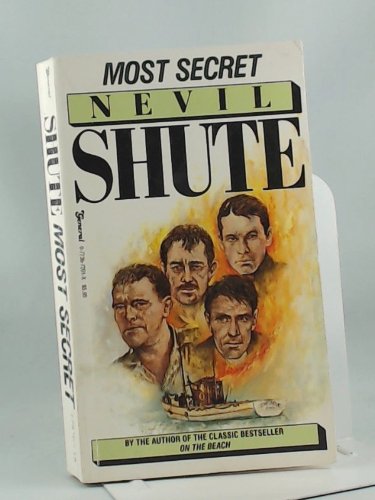
1. Most Secret by Nevil Shute. Nevil Shute is one of my favourite authors. He has written some of my favourite books; On the Beach, Pied Piper, Far Country, etc. This book was written 1942 and was his 11th work. This is the synopsis.

"Not even his smash best sellers, On the Beach and No Highway, can surpass the drama and narrative suspense which Nevil Shute poured into Most Secret. One of the most exciting novels ever written, it is the story of four men who carry out a private and terrible mission of vengeance in the dark days of the Second World War.


2. Sliver by Ira Levin. I read Levin's Rosemary's Baby last year and enjoyed very much. This was also turned into a movie and I want to compare.

"Thirteen hundred Madison Avenue, an elegant 'Sliver' building, soars high and narrow over Manhattan's smart upper east side. Kay Norris, a successful single woman, moves on to the twentieth floor of the building, high on hopes of a fresh start and the glorious Indian summer outside. But she doesn't know that someone is listening to her. Someone is watching her."

Great Historical Events

Today's excerpt starts at Dec. 16, 1773.

"Destruction of Tea in Boston Harbour

Dec. 16. - The citizens of Boston throw a cargo of tea into the ocean, which was sent by Great Britain in open disregard and violation of the act of the colonies against receiving any merchandise subject to tariff.
1774. Shakers founded by Ann Lee, an English woman. (Ed. Note. The Shakers were officially called the United Society of Believers in Christ's Second Appearing. They were initially known as 'Shaking Quakers' because of their ecstatic behaviour during services.)
General Gage arrived in Boston harbor as commander of the royal forces of North America.
June 6. - Boston harbor was blockaded by the English, and all commerce interdicted.
The members of the Massachusetts Assembly resolve themselves into a Provincial Congress.
The Colonies all unite in approving the spirit of resentment shown by Massachusetts against the oppressive taxation of Great Britain.
Gen. Gage was reinforced by two regiments of soldiers.
1774. The colonies proceed to enlist and drill a portion of the citizens as minutemen, and appoint committees of safety and supplies.
Massachusetts calls for 12,000 men to be equipped for service.
Great Britain prohibits the exportation of military stores, upon which the people of Rhode Island seized 40 pieces of cannon from the public battery, and proceed to arm the inhabitants."

Well, well, interesting stuff. The First Continental Congress will follow next!

Science of Common Things.

The next excerpt from facts provided by Prof. L.G. Gorton.

"What is an element? An element is a body composed of but one kind of atoms. What is a compound? A compound is a body composed of two or more kinds of atoms. What is combustion? It is the rapid union of elements in forming compounds. Why does exercise make one feel warmer? Because muscular tissue is torn down, consequently more carbon is given off to unite with the oxygen, thus producing heat."

Well, there you go. Nothing wrong with a bit of science to start your day, eh?

The Birth Day Thing 10 November 1979

US Billboard #1 Single 10 November 1979

Heartache Tonight by The Eagles. The Eagles formed in Los Angeles in 1971 with founding members Glenn Frey, Don Henley, Bernie Leadon and Randy Meisner. They had 5 number one singles and six number one albums. Heartache Tonight was the first single from The Long Run and was written by Henley, Frey, J.D. Souther and Bob Seger.

UK #1 Single 10 November 1979.

One Day at a Time by Lena Martell.  I have never heard of Lena Martell, I don't believe. She is a Scottish singer and this was her sole #1 song.

New York #1 Fiction Best Seller 10 November 1979


Jailbird by Kurt Vonnegut. I have read at least one of Vonnegut's books, Slaughterhouse Five, which I enjoyed. But I've kind of avoided his other works. I know I purchased a few at one time or another, but they seemed to disappear from my book shelves. At the moment, I've got Deadeye Dick, which was written in 1982.

Jailbird is classified as Vonnegut's 'Watergate' novel. It tells the story of Walter F. Starbuck, released from prison after a small role in the Watergate Scandal.


Pulitzer Prize Winner 1979


The Stories of John Cheevers by John Cheevers. Cheevers is another of those writers I've never read. This book is a collection of short stories, one of which was turned into a movie starring Burt Lancaster. That story was The Swimmer, which I saw a couple of years ago and found it kind of interesting. Will this make me read any of Cheevers' books? *shrug*

Cheever was an American writer who lived from 1912 - 1982. He wrote novels and short stories and was called the 'Chekhov of the Suburbs.'


Nobel Prize Laureate 1979

Odysseus Elytis (Greece). Odysseus Elytis who lived from 1911 - 1996 was considered one of the major exponents of Modern Romanticism in Greece and the world. He was awarded the Nobel Prize 'for his poetry, which, against the background of Greek tradition, depicts with sensuous strength and intellectual clear-sightedness modern man's struggle for freedom and creativeness'.

Hugo Award Winner 1979


Dreamsnake by Vonda N. McIntyre. Here we go, another new writer for me. Vonda McIntyre is an American writer who was born in 1948. She has written novels and short stories, including a number of Star Trek and Star Wars related pieces.

Dreamsnake is a post-apocalyptic novel telling the story of a healer on the quest to replace her Dreamsnake, a snake whose venom produces hallucinations in people.


Edgar Award Winner 1979


Eye of the Needle by Ken Follett. This was an excellent, tense novel and also an excellent movie starring Donald Sutherland. Follett is a Welsh author born in 1949, who has written thrillers and historical novels, such as The Pillars of the Earth and World Without End, amongst many others.

The Eye of the Needle was Follett's first successful, best selling effort. It tells the story 'die Nadel', a German spy working in England whose preferred method of killing is using a stiletto.

Excellent story. I highly recommend if you like wartime thrillers.

Man Booker Prize 1979


Offshore by Penelope Fitzgerald. Penelope Fitzgerald was an English writer from Lincoln who lived from 1916 - 2000. Offshore tells the story of her time spent on the river boats on the Thames. The story is about Nenna, whose husband takes a job overseas and she ends up living on a houseboat on the Thames.


There you go. Next time we move on to the '80s, when I hit the grand old age of 25...

Tuesday, 19 May 2015

Nevil Shute - Story Teller

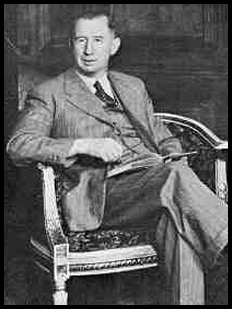
Nevil Shute - 17 Jan 1899/ 12 Jan 1960
This past weekend I finished Nevil Shute's So Disdained, one of the first books he had published; that being in 1928. It reminded me once again what a great story - teller Shute was. When I first started this Blog back in Sept 2010 (hmmm, I guess I've been at this for awhile) one of the first series of posts that I wrote dealt with the subject of my All-Time favourite stories. I updated this list in December 2013 (click on this link to see my first list and updated list.)

Number 2 All-Time favourite
The reason I mention the list is that Shute's 1957 novel, On the Beach, was my Number 2 book for both lists. This was his 3rd last book and is probably his most famous, also being made into a movie (1959), starring Gregory Peck, Ava Gardner and Fred Astaire. I've read this book 3 or 4 times at least and seen the movie at least as many times and they never cease to amaze me and to strike a chord in my soul. The book was written during the nuclear missile crisis of the '50s, a time when the world held its breath to see if the superpowers would launch the nuclear arsenals, and dared to portray the devastating results of such a disaster, the basic premise being that we readers were seeing the world end. Even in such a dire, depressing scenario, Shute was able to find and portray human decency, courageousness in this situation and to make common, sensible people deal with this crisis in an honourable manner. That was Shute's speciality in my mind, his ability to write about ordinary decent people and to show how they dealt with dangerous, often horrendous situations, not with histrionics and guns blazing but still managing to perform heroic acts, without considering them heroic.

This was what I had to say after the last time I read the book, Jan 2011, "2. On the Beach by Nevil Shute (published in 1957). I have read this book 3 or 4 times and never tire of it. It is probably the best 'end-of-the-world' stories I've ever read and that is a genre that I enjoy very much. It's such a classic and as I mentioned with my other Nevil Shute story, he is one of the best story - tellers ever. No matter what the situation, he presents people gently, demonstrating them to be loving, heroic and thoughtful. He writes such wonderful stories and having most recently read another of his stories, The Far Country, which was one of my Top Tens for 2013, I look forward to reading even more. This is my Goodread's reviews of the book, pretty basic for such an excellent book, "One of my top ten favourite books. I've read it so many times and also seen the movie with Gregory Peck a few times. So low key, yet it's the end of the world. US submarine in Australia, trying to see if there is any life in the Northern hemisphere. Life in Australia as the end draws near. US submarine makes final voyage to US. Truly fantastic story.  (added after most recent read) Having read this again, it's still a great story, what a powerful lesson to teach mankind. So depressing, ultimately, but told with class."

Number 10 on my All-Time List
In my 2013, I added Pied Piper to my All-Time favourites. Pied Piper was written in 1942, during what is referred to as Shute's 'War' category of books, according to Wikipedia. This is another of those books I refer to when I talk about ordinary people, in this case, a retired English gentleman, Mr Howard, who at loose ends, decides to take a journey to Switzerland to enjoy a fishing expedition, as he had in the past. Unfortunately for Mr. Howard, his journey takes place just at the start of WWII and as he heads back to England, he finds himself taking a number of children with him, handed to him along the way as their families try to get them out of France before the invading Nazis arrive. Mr Howard is an unassuming gentlemen, in the truest sense of the word, and he assumes the responsibility without questioning it and, while he wouldn't think so, performs acts of heroism to try and get these children to safety. Once again, this is a book I've read many times and the actions of Mr Howard still amaze me and I find myself wondering again and again what I would have done in such a situation. Would I have accepted this responsibility so easily and willingly knowing what risks it might entail to my well-being? What Nevil Shute has done again in this story is present these normal, well-balance individuals, not superheroes in the current sense of the word, but just normal people who have no issue with risking their lives and without blasting their way through enormous odds, still manage great acts of heroism.

These two books remain all-time favourites. Recently, because of my enjoyment of rereading these stories, I've finally begun to explore Shute's other writings. I honestly don't know why I didn't do this before, maybe they were so good that I was afraid that I might discover that his other stories didn't live up to them. Well, guess what! I was wrong if that was my thinking.

Another Classic
I have seen this book many times but always thought it would be basically a romance story. Well, in fact, there is a love story entwined in the pages but it's so much more than that. Once again, it's a story of heroism. The Far Country was published in 1952 and falls into Shute's Post-War grouping of stories. Set just after WWII, when England was still trying to recover from the effects of the devastating bombing that it had endured during the war, the story focuses on Helen, who lives in England, trying to survive and also to help her aunt survive the conditions that England finds it self enduring. A bone is tossed her way, an opportunity to visit her aunt in Australia. So begins a great adventure, in which she finds herself visiting, trying to survive in this strange land and also finding love. The story, like all of Shute's works (or at least those I've read so far), is told gently and lovingly. Events do happen, events that can be considered momentous, both to Helen and to her acquaintances, but they are dealt with calmly, with honour and with perseverance. Like Pied Piper and On the Beach, the story struck a chord with me, these are people I wish I knew and people I wish I could emulate.
This was the review I wrote for The Far Country - "In its way, it's a relatively simple story, but I love Shute's style. He tells a story gently, lovingly and at the same time, matter-of-factly (Is that a proper word? :0)). At its core it's a love story, but it represents its time as well. Set after WWII, England is struggling to feed its people, life is hard; whereas in counterpoint, in Australia, the frontier so to speak, life is pretty good, wool prices are high, money is good, there is work available. Helen goes to Australia at the request of her auntie, who thinks Australia might represent England more from her time in the early 1900s. Helen visits with an Aunt and her family, meets Carl, a Czech doctor, who works in the forest as a lumberman (as a Displaced Person from the war) he must work where the Australians let him for 2 years as a sort of payment for being allowed to live in Australia. He can then work towards getting his Doctor's certificate. The two meet under very interesting circumstances, a friendship/ relationship develops. This is the simple story, but there is so much more. Shute doesn't get involved in the politics of the time, other than in the background as it affects peoples' lives, but he does present an excellent picture of the time, contrasting life in England and Australia very nicely and very simply. It's a lovely story, not one I would have picked earlier in my life I don't think, but the more I read Nevil Shute's stories (two of my all-time favourites are his, On the Beach and Pied Piper) the more I enjoy his writing and the more of his books I want to read. Highly recommended."

I have read other Shute books since, including An Old Captivity (1940) probably my least favourite so far and So Disdained (1928), which I mentioned in my initial comments. These were my thoughts on So Disdained, "This is one of Nevil Shute's earlier works, written in 1928, and even with his early writings, you can see his unique story - telling style. The story is set during this time frame, between the wars and there were many interesting bits of history (assuming he was using a true perspective) that I really wasn't all the knowledgeable about. For one is the tension between England and Soviet Russia; the story involves Russian spying on English military facilities. As well, at one point, the main character, Peter Moran, must enlist the assistance of Italians to help a friend from the Communists and he asks for the help of the Fascists; interesting that they might be considered an ally, considering the events of WWII. The story is typical Nevil Shute, telling the story of a man, relatively mild and even-keeled, who is put in a situation that forces him to make decisions that become heroic, even though he doesn't feel them to be heroic. I love the way Shute lays out his stories, introduces his characters, introduces concepts of patriotism or heroism without preaching but at the same time making you think about what they are and what they mean. He is a story - teller, one of the best and it was enjoyable to read one of his early ones and see how his style developed as he came to write my favourites of his later works." Once again, we find normal people thrust into situations that require decisions, heroic ones, that they make easily and without question. I think that's what I like most, the people don't let any personal issues stop them from making decisions that will help people in need, in fact, their personal issues are not really highlighted or made much of. They are normal, decent, relatively happy people, which is a change from so many mystery and adventure stories that are so popular these days; the anti-hero with a past, who blasts his way through tough situations. I'm not saying that I don't enjoy reading those stories just as well, but they don't strike a chord with me as much as the stories I mentioned above.

Donna Leon's - Inspector Brunetti
To wind this up, I think that one of the reasons I enjoy series such as Donna Leon's Inspector Brunetti, or Martin Walker's Bruno, Chief of Police, and more recently, Louise Penny's Inspector Gamache, is that like those characters who people Nevil Shute's excellent stories, these series are also about people, in this case, police detectives, who are decent people, who have loving families or friends. They find themselves trying to solve sometimes disturbing crimes, but what is more important in the stories, is the inspectors themselves, their friends and family, their community, even the food and music they love. The stories are more personal and you find yourself wanting to visit with these people, who are heroic, but quietly so. You want to meet their families, have dinner with them, enjoy the sites that make their homes so important to them, so important that they want to protect these communities.

Anyway, I've begun to ramble somewhat, but my point is that Nevil Shute and the others mentioned should be explored; they are true story-tellers and, if you try them, you'll enjoy being pulled into their communities.
Related Posts with Thumbnails