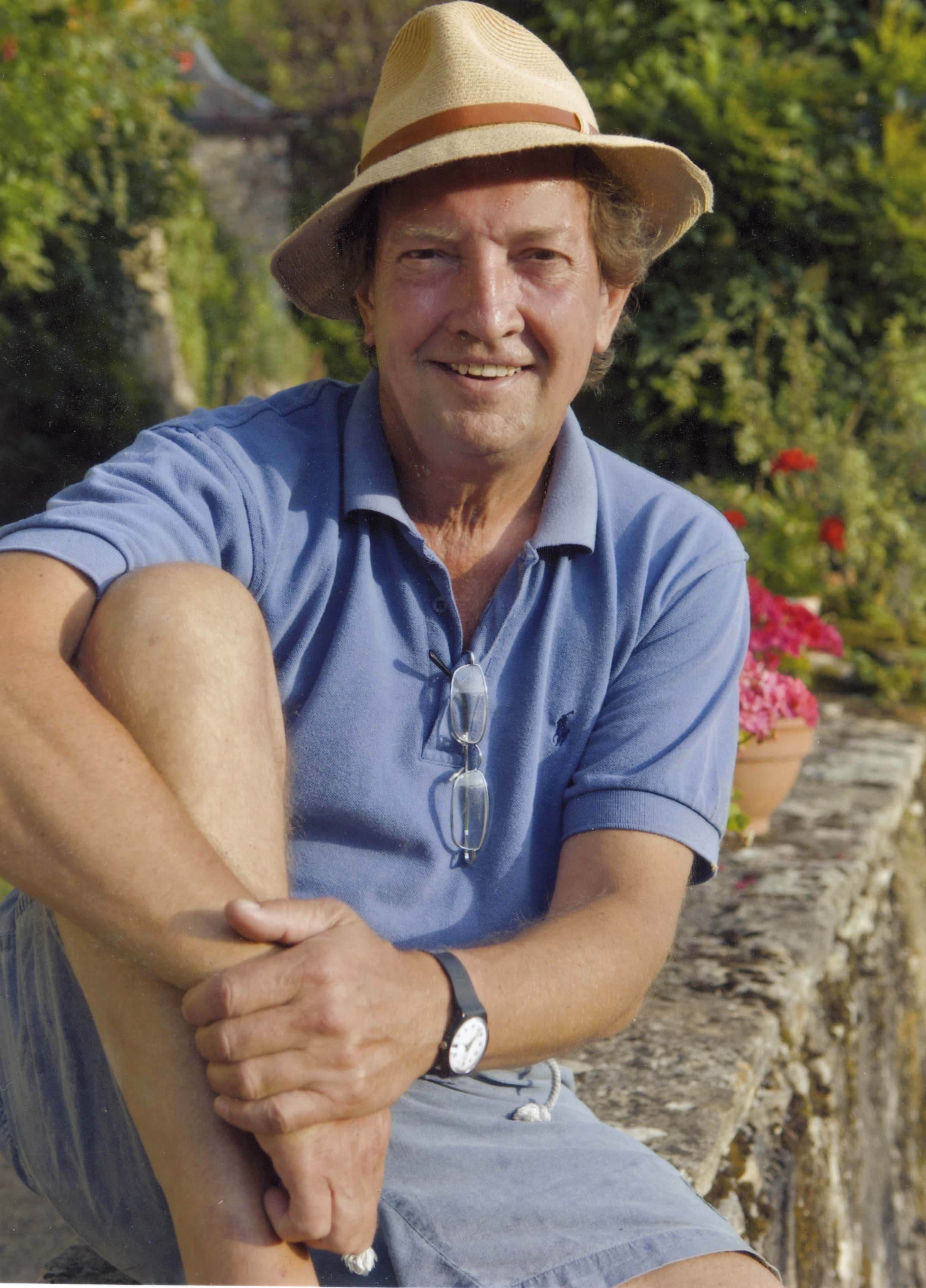
It's a lovely, fresh Sunday. The sun is shining and there is a cool breeze blowing into the den window. I've spent my morning reading, relaxing and watching English footie. It's been a strange exciting season, with the Big Four struggling to stay in the top four and teams like Leicester, Tottenham and West Ham making significant progress. It'll gratifying to see if Leicester and Tottenham can take the top two positions. I always enjoy cheering for the underdogs. Now if only the stupid darn Blue Jays would wake up and start hitting a baseball like they are supposed to and I'd be really happy.
I've got a couple of other BLog entries sitting on the back burner but today I'm going to do my monthly reading update. So let's get on with that April update.
Goodreads' Challenge and General Stats
Goodreads' Challenge
I had a really good April, finishing 13 books. Having said that, there were a number of short books but they were still challenging enough. I'm particularly enjoying getting into short story collections. They have been most enjoyable. So 13 books in April, with an overall total for 2016 of 45 books. I'm 12 books ahead of schedule for completing 100 books by end-year. In April, I completed 4008 pages for a yearly total of 14,349 pages. So even though I read a number of shorter books, my overall page count for April was still pretty satisfactory.
Page Breakdown
April Total
< 250 = 6 books 18
250 - 350 = 3 books 12
350 - 450 = 0 books 5
> 450 = 4 books 10
Author Gender
April Total
Male 9 30
Female 4 15
Genre
Fiction 2 6
Mystery/ Adv 6 21
SciFi/ Fan 2 10
Non Fict 2 4
Humour 1 2
Classics 0 2
Ratings
5-star 1 8
4-star 7 18
3-star 5 19
CHALLENGES
12 + 4 Reading Group Challenge (Canadian Literature)
I only finished one more book in this challenge, but after only 4 months, I've read 11 of the 16 books I selected. The Lyre of Orpheus by Robertson Davies was also my favourite book of April and my only 5-star rating. This is my review.
"This is the 3rd book in the Cornish trilogy. I enjoyed the first, The Rebel Angels, very much. It had been most enjoyable to get back into Robertson Davies, after a 20+ year absence. The second book, What's Bred in the Bone, while interesting, didn't hold the same level of enjoyment that the first did. So The Lyre of Orpheus sat on my shelf for a couple of years now, awaiting my attention. I'm so glad that I dusted it off and got back into this trilogy. It was excellent. I loved everything about this, the writing, the characters, the story.
The basic story is that the Cornish foundation, run by Arthur Cornish and his lovely wife, Maria, and assisted by a loose collection of directors, agrees to use Cornish foundation money, to fund the doctoral work of a young music student, Hulda Schnakenburg. She is trying to complete an unfinished opera by Hoffman, the Story of Arthur of Britain. A concurrent story has Simon Darcourt, old friend of Francis Cornish and of Arthur and Maria, seeking to complete a biography of Francis Cornish. The investigation into this biography, to find out the missing middle of Francis' life and the development of the opera, are fascinating stories. The characters, from the main ones, as well as Schnak and the others brought in to help with the creation of the opera, were lovingly written and so interesting.
I can't say I'm an opera fan, but watching the creation and development and the ultimate presentation of this opera, was a joy to read. Throw in asides by the ghost Hoffman, throughout the story, as he watches from Limbo and waits to see what the ultimate result will be, and you've got a richly textured story. Sex, cuckoldry and just downright entertainment and you have a fantastic, wonderful story. A perfect ending to this trilogy."
Decades Challenge
I read three books in this challenge. The unfortunate thing is that two of the books were from decades where I had already read stories. I've completed 7 of 12 decades and have 3 duplicate decades overall.
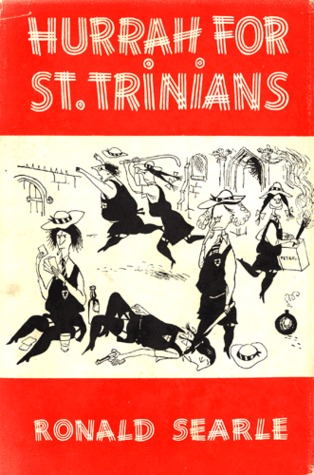
1940 - 49 - This was the 2nd book from this decade. Hurrah for St. Trinians is a collection of cartoons by Ronald Searle, some which formed the St. Trinians book and movie series and others that he produced during his life. It was basically a fun read and is the second book of his works that I've collected.
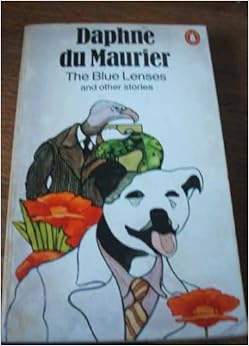
1950 - 59 - The Blue Lenses and Other Stories by Daphne du Maurier is one of the collections of short stories that I've read this past year. Most enjoyable. This was the 2nd book from this decade.
"An interesting collection of short stories by the author of Rebecca and The House on the Strand. The book was published in 1959 and contains 8 stories, each different and unique in its own right. I particularly liked The Alibi and The Blue Lenses; the first about a man trying to get some excitement into his life and finding that his plan takes an unexpected turn to the left and the second, almost science fiction, a strange tale of a woman seeing life through new lenses, a very strange and disturbing vision. The Pool and The Archduchess were good, but missed the mark somewhat from my perspective. But all in all, an excellent, well-written book. It's continued to whet my appetite for more du Maurier fiction."
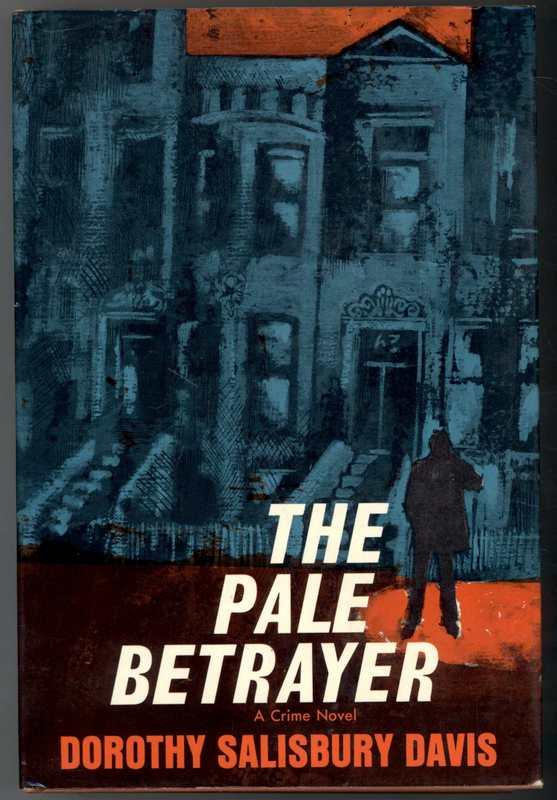
1960 - 69 - The Pale Betrayer by Dorothy Salisbury Davis is the first book I've read by this author and it didn't turn me off trying more of her work.
"I'm not sure where I first heard of Dorothy Salisbury Davis, but I think The Pale Betrayer was listed in the back of another similar type story I read. The plot looked interesting so I ordered it and have finally got around to reading it. Sort of a simple plot, a scientist, a physicist who works in nuclear physics, returning from a conference in Greece is murdered on his way to his university labs to show a movie he had received from a Russian physicist. This is during the Cold War period, which adds one possible motive. As well, his friend, who may also love his wife, seems to have some involvement, as he might be being blackmailed.
The story is a slow-burn, but from the beginning I liked some of the main characters; the police investigating the crime, the young female physicist student, Anne Russo, who the lead cop, Lt Marks, is taken with. All are interesting and I liked them very much. As well, Louise Steinberg, best friend of the victim's wife is down-to-earth and adds nice colour. The story moves along at a nice pace and, ultimately, gets you hooked and as the plot becomes clearer, it is even more enjoyable. I did like this and it was worth getting through the vagueness of the first few chapters to get into the story. Well worth reading. I think I will look up more of her books now."
Science Fiction/ Horror/ Fantasy
I have read 5 of 12 planned books in this challenge now.
1. Goliath by Scott Westerfield. This is the third book in this Young Adult/ Dystopic Science Fiction story and as entertaining as the other two books. I enjoyed this series very much and kind of wish it was more than just a trilogy as there are more stories that could be told about the characters and the world in which they reside.
"Goliath is the third and final book in the Leviathan trilogy, an excellent series of YA fantasy/ steampunk. Set during WWI, it features a war between the Darwinist states (UK, France, etc.) and the Clanker nations (Germany, Austro/ Hungary). The Darwinists use genetically-modified creatures as their war weapons; Leviathan is a whale like creature that acts as a Zeppelin and its weapons feature strafing hawks and flechette bats). The Clankers use mechanical weapons. Into this mix is thrown Alek, the son of the assassinated ruler of Austro Hungary, who was rescued in the 1st book by the RAF ship, Leviathan. Also is Deryn, a young girl disguised as a boy (Dylan) so she can fly in the airship (girls can't join the Air Force), and the development of their budding relationship.
In Goliath, the Leviathan finds itself traveling over Russia to rescue mad inventor, Tesla, who claims to have built a weapon to end the war (Goliath) and the continued journey and adventures of the crew over the US and Mexico. You will meet new characters, including Tesla, and interesting adventures. Goliath has everything and is an excellent page turner and end to this enjoyable trilogy. Lots of adventure, great characters and budding romance await you. You've got to try this excellent series."
2. News from Elsewhere by Edmund Cooper. Another collection of short stories, this one from Science Fiction writer, Edmund Cooper.
"A collection of short stories dealing with space exploration, either outward by humans or inward by aliens to Earth. A nice mix, some ending not so happily, others quite humorous. I enjoyed them all, some more than others. The first two ended somewhat obliquely, but for the most part they were all excellent. The Lizard of Woz, an alien lizard coming to Earth to make contact and his experiences on Earth was my favourite. It definitely made me chuckle. If you are a fan of speculative fiction from the '60s, give this one a try. You'll be pleasantly entertained."
Classics - I didn't read any books in this category in April so I remain at 2 of 4 completed.
Ongoing Series
I read five books in this challenge and have now completed 14 books. I didn't set a limit on this challenge. I've got so many series on the go or awaiting my initial attention that I will just read as many as possible.
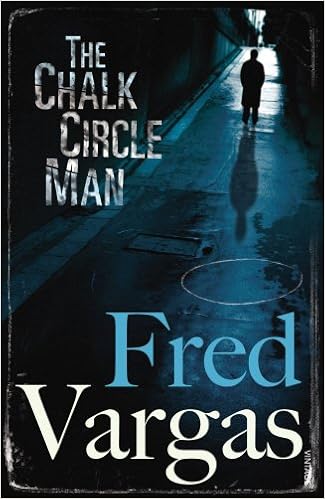
1. Chalk Circle Man by Fred Vargas - This is the first book of the Commissaire Adamsberg mystery series. I was somewhat disappointed with it, I must say. I don't know if it was the translation or just that the author seemed to be trying too hard. It ended better than it started and some of my acquaintances in my Goodreads' book groups say that the series is worth continuing. So we'll see.
2. The Allingham Minibus by Margery Allingham. This is a collection of short stories by British crime writer, Margery Allingham, some of them featuring her favourite detective, Albert Campion. Most enjoyable.
"An excellent collection of short stories from Margery Allingham. I expected them all to feature her favourite detective, Albert Campion, but, in fact, only two of them did. Both of them were excellent, demonstrating Campion's ability to grasp the salient clues to quickly solve both mysteries. I enjoyed them very much. I was surprised, pleasantly it turned out, that there were 3 or 4 ghostly stories contained in the book. I can't say the endings totally surprised me, but I enjoyed them very much. My favourite story also happened to be the longest, A Quarter of a Million, which featured a gang of ruthless, cunning robbers who didn't mind killing to get what they wanted and an intelligent police inspector who was able to outsmart the gang, with a neat little twist at the end as he explained how he had figured things out. All in all, a most enjoyable collection."

3. Winter Frost by R.D. Wingfield. This is the 5th and 2nd last book in the Inspector Frost mystery series, everyone excellent and entertaining.
"I do enjoy the Frost series. Each story is somewhat similar, Frost bumbles and stumbles through a variety of cases, with a short - manned police station, fighting with his boss, Superintendent Mullett, trying to stay out of trouble and solve his cases. In this story, prostitutes are being raped and murdered, there are missing children, an old skeleton has been found and the 'pillow case' robber is robbing houses.
Frost works on each case, as Mullett has loaned half of his station to another detachment working on a drug case. The weather is awful, Frost gets no sleep, working around the clock, trying to deal with a bit of a wastrel on his staff and with friction from a female acting inspector who is trying to make a name for herself. He stumbles from one solution to another, often finding himself on the wrong track.
But even with that and with his sexist remarks and curmudgeonly personality, Frost draws you in. He cares about his people and about the victims. I like how cases are worked, methodically at times, with bursts of inspiration. The story moves along nicely, keeps you hooked and the result is always satisfying. Only one book left in this series. I look forward to reading it, but not finishing it."
4. For Your Eyes Only by Ian Fleming. This is an excellent collection of 5 short stories featuring James Bond, 007.
"I enjoyed this collection of James Bond short stories very much. Three of them feature as titles (titles only really) in recent full-length 007 movies; Quantum of Solace, For Your Eyes Only and From a View to a Kill. I enjoyed each story as they offered different perspectives on James Bond's Life.
Quantum of Solace was especially interesting as Bond appears only as an interested listener; a visitor to the British diplomats house in Bahamas and listening to a story about a married couple. Definitely not a typical Bond story, more a tale of relationships and how they can go bad. A View to a Kill is set in Paris and Bond is sent to find out why and how a despatch rider has been killed, a nice taut suspense story. In For Your Eyes Only, M asks Bond to enact revenge on a Cuban killer, who has murdered friends of M's in Jamaica. Bond goes to the US (a house in the wilderness of Vermont) to complete the job and finds himself assisting the daughter of the family, a very satisfying story. In Risico, Bond heads to Venice to assist in dismantling a drug operation and finds that there are two sides to every story. I liked this one especially. The final story, The Hildebrand Rarity, finds Bond at the end of a mission in the Seychelles and helping a millionaire find a rare fish. Of course, there are twists as the millionaire isn't very nice. Every story was enjoyable and nicely, tautly written."
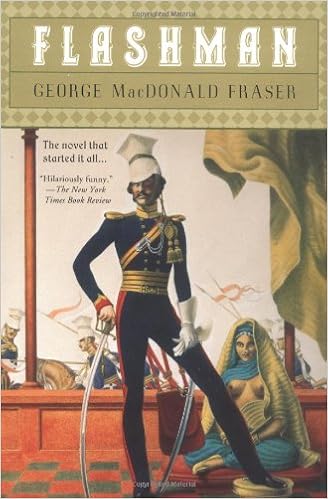
5. Flashman by George MacDonald Fraser. The first book about English adventurer, Flashman.
"A good historical adventure, in the style of CS Forester's Hornblower books or Bernard Cornwell's Sharpe series. Flashman originally showed up as a minor character in Tom Brown's Schooldays. He is a bounder, a coward and a ne'er do well, but he always seems to come up smelling like roses. He readily acknowledges his characteristics, of course, but others see him as a hero. This is usually because there is nobody else left around to contradict these assessments. In the first Flashman book, he finds himself deployed to Afghanistan during the English retreat, in disarray, from Kabul. Flashman has many adventures, is captured by an arch enemy and has relationships with many women, some not of a willing nature. He always manages to escape from these situations, often with the help of others, who naturally don't survive very well. Even with his faults, and they are many, he's still entertaining and interesting. Worth reading if you want an excellent adventure."
Non-Fiction
I read two books this month and now have completed 3 of a planned 6.
1. One Summer: America 1927. My wife, Jo, introduced me to Bill Bryson's work. He writes excellent travel novels and also histories.
"I was introduced to Bill Bryson by my wife when she was reading his travel books. I've read a few now and do enjoy his style of writing. One Summer: America 1927 highlights a specific period of time in American history, focusing on a number of the important public figures of the time; Charles Lindbergh's crossing of the Atlantic, Babe Ruth's run at his home run record, Al Capone's rise in Chicago, etc. It was interesting to see that time in history, having said that, considering the intolerance of the time, I don't know that I would have wanted to live there then. You have Sacco and Vanzetti's trial for murder; were they really guilty? It didn't seem to matter because there were Italians. You have the popularity of the Eugenics ideas; e.g. the strong race concept. You have the rising popularity of the Ku Klux Klan. It was definitely a tumultuous time and a time of great discoveries. Fascinating read."
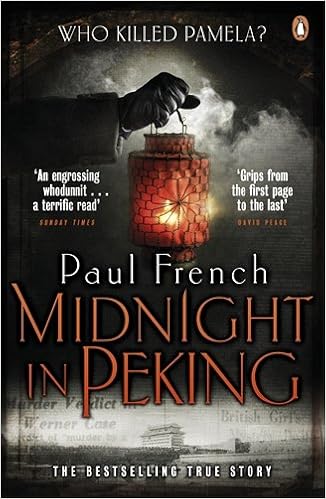
2. Midnight in Peking: How the Murder of a Young Englishwoman Haunted the Last Days of Old China by Paul French. This was one of those books I saw in the window of my local used book store, Nearly New Books, and it grabbed my attention right away. My initial impressions weren't disappointed.
"This was one of those opportunistic purchases; the cover caught my eye and the blurb inside sounded very interesting. Set in Peking just before WWII, when Peking was being pressured by the Japanese armies that surrounded it, it is the story of the murder of a young English girl and the investigation into her murder. The story is recreated by English writer, Paul French, as he researched through varied archives and the letters of her father.
I found the locale intriguing, the lives of the people who lived in Peking (both the Chinese themselves and the foreigners who worked and lived there). Such an exotic location; with White Russians hiding from Communist Russia, English/ Americans and other nationalities living in the Foreign Legation district and the locals as well. Peking must have been such a fascinating city, trying to cope with threats from without and also trying to live a normal life. The book follows the initial investigation by the Chinese police officer, Han, and the English Detective brought in from Tsintsen. The last half is taken from the father of Pamela Werner as he tries to continue with the investigation on his own, always suffering with the intransigence of the British ambassador. A true story and a very interesting one."
So there you go. That is my April reading. All in all, I enjoyed every book. I've got four on the go at the moment and hope May will be as successful and as entertaining.
Sunday, 1 May 2016
Thursday, 28 April 2016
Book Purchases - Apr 2016 Update
April is almost over and our local Rotary Club is having its biannual Book Sale. It runs from 27 Apr - 30 Apr. I went yesterday after Physio and found a few books (ok ok, I found 18). It was a pretty good deal, 3 books for $5.00. You can't go wrong with that. I might drop in again on Saturday, as generally it's $ 5.00 for a bag of books. We'll see if they continue with that. It makes sense as they do like to get rid of as many as possible.
I figure it's the perfect opportunity to update you on the books I've purchased over the past month. I've still traded in more than I've purchased so far this year, so I guess that's a good thing. :)
Anyway, since my last update at the beginning of the month, these are the books I've managed to find; both at the Rotary Club Book Sale and at my local used book stores and a couple that I ordered online. I've broken down by categories, including a new one; Canadian Literature (Can Lit). I've been reading a book I received for Xmas a couple of years ago, which is basically a list of the author's favourite selections of Can Lit from the '80s on. I've noted a few of the selections down and have found some of them this past month. Hence, the Can Lit category.
Ok, here we go.
Mystery
Mystery is by far my favourite genre these days and my purchases tend to reflect this. Of the books you'll see, over half are from the genre. It's so varied and wide - ranging.
These are some of the British mysteries/ adventures that I found. Hammond Innes wrote over 30 novels during his life. I've previously read The Trojan Horse and enjoyed very much. The Angry Mountain sounded interesting and it's one of his that I've been looking for. Ruth Rendell wrote the Inspector Wexford mysteries and I've read the first in the series. I do have others in the series already, but I try to read in sequence if possible and A New Lease of Death (published as The Sins of the Fathers in the US) is Number 2. Add to these two, Michael Gilbert's The Final Throw, which was published in 1982.
I have found a few more books from various US mystery series. Michael Connelly's Harry Bosch series is a new one for me and I've been looking for the first book for awhile now. The Black Echo will finally get me started on this series. I saw the Kat Colorado series listed in another book I was reading. It's written by Karen Kijewski. I have found a couple of others of this series, but I was happy to find the first book, Katwalk, at the Rotary Club Books Sale. I have purchased a couple of other series books as well this past month; from Rex Stout's Nero Wolfe series, Prisoner's Base and from Nevada Barr's US Park Ranger, Anna Pigeon series, Destroyer Angel.
I've become interested in the various Clive Cussler series over the past couple of years. I read the first book in the Isaac Bell series, The Chase, this year and I've purchased the first books in his NUMA and Oregon Files series as well. Pacific Vortex and Iceberg belong to the Dirk Pitt series. I hope to read a couple more of Cussler's books this year.
I took a chance on the first book of this series a few years ago and it was pretty good. I've now read the first three books and each one has been better than the last. The series is set in 1900's New York when Teddy Roosevelt was Police Commissioner and features mid-wife / detective Sarah Brandt and her reluctant associate, police detective sergeant Frank Malloy. Murder on Marble Row and Murder on Mulberry Bend are the 5th and 6th books in the series.
Howard Engel is a familiar writer to me. I've read a few of his Benny Cooperman mysteries and also enjoyed the books that were turned into TV movies by the CBC many years ago. Memory Book sort of follows Engel's real life situation. Engel suffered a stroke in 2000 which left him with alexia sine agraphia, a condition that affects his ability to read words without difficulty but enables him to write. In Memory Book, Cooperman is hit on the head, with similar results. Seaweed on Ice by Stanley Evans and Never Saw It Coming by Linwood Barclay are books by new authors for me. I've enjoyed many other Canadian mystery writers so it's always good to give some new ones a try.
The above section features two new authors and one I've read before. Susan Hill writes mysteries and horror. I particularly like The Lady in Black. The Shadows in the Street is the fifth book in her Simon Serrailler mystery series. I enjoyed the first book and look forward to continuing with this series. David Liss writes historical mysteries. I have his second on order. A Conspiracy of Paper is his first book and is also the first in a trilogy featuring recurring character Benjamin Weaver. The book is set in 1720. Qiu Xiaolong is another new writer for me and, amongst his writings, he pens the Inspector Chen mystery series. The Mao Case is one of the later books in this series. Will I wait to find the first one? We'll see.
Science Fiction/ Fantasy/ Horror
The three books above are all quite different. I discovered Shirley Jackson when I read her short story, The Lottery, a very strange, interesting story. I next read The Haunting of Hill House, which has been turned into movies twice. Finally, I tried We Have Always Lived in the Castle, another unique horror story. The Rotary Club Book Sale had a couple of her books, so I thought I'd give The Bird's Nest a try. It definitely looked interesting. China MiƩville is a relatively new writer to me. I just finished his Perdido Street Station, which has been one of my favourite books of 2016. It's a different, exciting world he's created. The Scar, while not technically a sequel, is still set in the same world, just at a different time and with different characters. I've heard it's better than the first. Finally, I've begun to explore the Young Adult world of fantasy; the Divergent series, the Scorpio Races and The Hunger Games. Rick Riordan has written a series of books featuring Percy Jackson, which also features the Olympic Gods. The Lightning Thief is the first book in this series and I've heard good things about it.
Fiction
I have read Anthony Burgess' A Clockwork Orange before. He's one of those authors who, for some reason, I never think of having written more than that, probably because it's such a unique work. The Rotary Club Book Sale had a couple of his other books, so I thought I should give at least one a try. It's described as a story of Shakespeare's Love-Life. It definitely sounds interesting. I've also read one other book by Richard Brautigan, that being The Hawkline Monster, a combination western/ gothic horror story, quirky but so readable and interesting. I have no idea what Trout Fishing in America is about. The notes on the back say things like; 'Mr. Brautigan submitted a book to us in 1962 called Trout Fishing in America. I gather from the reports that it was not about trout fishing" (The Viking Press); or, 'Reading Trout Fishing in America won't help you catch more fish, but it does have something to do with trout fishing; (Fly Fisherman: The Magazine for the Complete Angler).. I'll let you know what it's about. Finally, The Man in the Gray Flannel Suit II, was written by Sloan Wilson, who also wrote The Man in the Gray Flannel Suit and A Summer Place, both of which were turned into movies.
Canadian Fiction
I'm currently half way through Hooked on Canadian Books, which is a list of the good, better and best Canadian novels since 1984, according to its author, T.F. Rigelhof. As I mentioned earlier, I've noted a few of the books listed as worth giving a try. The books below, with one exception came from those listed in this book.
Margaret Atwood's The Penelopiad was not listed in Hooked on Canadian Books. Well, at least, not so far. I've read a few of Margaret Atwood's books and enjoyed. The Penelopiad is her take on the Odyssey, which is Homer's book about the voyage of Odysseus, as he returns to his home and wife, Penelope, from the Trojan War. The Penelopiad tells the story of his return from the point-of-view of Penelope. As I understand it anyway. I've read Mordecai Richler's works during my university days; The Apprenticeship of Duddy Kravitz and St. Urbain's Horseman come to mind. So it's been many years since I've delved into his works. Solomon Gursky Was Here will be my first.
The remaining authors are all new to me. Guy Vanderhaeghe's The Last Crossing is set in the 2nd half of the 19th century and is a search for a missing brother which encompasses the treacherous and unknown landscape of the American and Canadian West. Douglas Coupland's Player One is a five-hour story set in an airport cocktail lounge during a global disaster. Add to this two other new books that aren't pictured; Michael Ignatieff's Scar Tissue, deals with a philosophy professor's coping with his mother's decline into dementia and David Adams Richards' Nights Below Station Street explores the day-to-day lives of people from the wrong side of town.
So there you have it, my updated book purchases. I may head over to the Rotary Club Book Sale one more time. If I do, I'll have more to add. I hope this gives you some ideas of books you might like to try.
I figure it's the perfect opportunity to update you on the books I've purchased over the past month. I've still traded in more than I've purchased so far this year, so I guess that's a good thing. :)
Anyway, since my last update at the beginning of the month, these are the books I've managed to find; both at the Rotary Club Book Sale and at my local used book stores and a couple that I ordered online. I've broken down by categories, including a new one; Canadian Literature (Can Lit). I've been reading a book I received for Xmas a couple of years ago, which is basically a list of the author's favourite selections of Can Lit from the '80s on. I've noted a few of the selections down and have found some of them this past month. Hence, the Can Lit category.
Ok, here we go.
Mystery
Mystery is by far my favourite genre these days and my purchases tend to reflect this. Of the books you'll see, over half are from the genre. It's so varied and wide - ranging.
| British Mysteries |
| US Mystery Series |
| Clive Cussler's Dirk Pitt |
| Gaslight Mysteries |
| Canadian Mysteries |
| Miscellaneous Mysteries |
Science Fiction/ Fantasy/ Horror
| SciFi/ Fantasy/ Horror |
Fiction
| Fiction |
Canadian Fiction
I'm currently half way through Hooked on Canadian Books, which is a list of the good, better and best Canadian novels since 1984, according to its author, T.F. Rigelhof. As I mentioned earlier, I've noted a few of the books listed as worth giving a try. The books below, with one exception came from those listed in this book.
| Can Lit (1) |
| Can Lit (2) |
So there you have it, my updated book purchases. I may head over to the Rotary Club Book Sale one more time. If I do, I'll have more to add. I hope this gives you some ideas of books you might like to try.
Friday, 15 April 2016
Quirky Books - British Humour
Over the past few years, I've been in many, many interesting books stores and found some 'quirky', interesting books. When we visit new places, Jo and I like to wander around and see the various shops and Jo, nicely, doesn't mind me checking out new book stores. You never know what you might find.
I'm dedicating this particular entry to some of the neat books I've found that feature British humour. I guess that's the best angle to take. The first book we actually found close to home. Jo and I used to periodically visit the local Auction House in Cumberland (unfortunately, the owners retired a few years back) and we did pick up nice bits of furniture and some boxes of books. We even sold a few pieces there, which made it even more interesting. But this is about books. In one of the boxes of books, I found this 1858 edition of Punch magazine, the year's summary.
Punch magazine was founded in 1841 as a humour and satire magazine. It's been around for ages. I remember scanning the magazine in high school, just to check out the cartoons and to see if I actually could get the jokes. (generally not).
Back when it first was being published, it helped coin the term 'cartoon' and this edition is filled with wonderful drawings/ cartoons. The book itself, considering its age is also in excellent condition and it has pride of place on our bookshelves.
When Jo and I went over to England in 2012 to visit her family and to watch the London Olympics, we took quite a few side trips. On one occasion we visited the town of Holt and I found one of the neatest bookstores, located in a mews in the town centre. I can't remember the name, unfortunately, but it covered three floors and books were stacked everywhere. Even though it was hot and stuffy, I spent a good hour there and found a few books I'd been looking for and even one I hadn't but which attracted my eye. It was Fanny Hill's Cook Book, a humorous take off of John Cleland's erotic novel, published in 1748. The book is filled with quirky recipes and drawings; Whores d'Oeuvres like Cheesed Balls and Climax Pudding; Fish dishes such as Codpieces; Meat Dishes like The Naked Lunch, and, well, you get the idea. :0)
On one of my visits to Russell Books in Victoria, back in 2011, I saw this book, The Terror of St. Trinian's by Ronald Searle. The St Trinian's movies were based on the drawings and stories of Ronald Searle. He took a great pleasure in creating this school for girls, quite nasty and funny girls they are.
His drawings are wonderful, as you can see and the story was always a good chuckle. The girls run amok, smoke, drink, arm themselves with knives and terrorise the teachers, but all in good fun, of course. It's one of those books that leaves you laughing and shaking your head. The Terror of St. Trinian's was originally published in 1952, with this 10th impression published in 1956.
I've since been trying to find others of the series and just recently ordered and received the first book of the St. Trinian's, Hurrah for St. Trinian's, from Hay-on-Wye Books in Hereford, UK. This book was initially published in April of 1948, with this third impression published in Jan of 1950.
The book isn't a story but, rather, a collection of Ronald Searle's cartoon drawings that had been featured in various publications throughout the UK; Lilliput, London Opinion, Men Only and Punch, etc. They feature day-to-day life and of course, the wonderful students of St. Trinian's. I will continue to hunt the other books in this series as they add a bit of spice to my library.
So there you have it, some of the quirky books you might find as you wander through those lovely book stores that you find. Keep them open by frequenting them, please.
| Punch magazine reissue, 1858 |
| 1858 Punch Almanac |
Back when it first was being published, it helped coin the term 'cartoon' and this edition is filled with wonderful drawings/ cartoons. The book itself, considering its age is also in excellent condition and it has pride of place on our bookshelves.
When Jo and I went over to England in 2012 to visit her family and to watch the London Olympics, we took quite a few side trips. On one occasion we visited the town of Holt and I found one of the neatest bookstores, located in a mews in the town centre. I can't remember the name, unfortunately, but it covered three floors and books were stacked everywhere. Even though it was hot and stuffy, I spent a good hour there and found a few books I'd been looking for and even one I hadn't but which attracted my eye. It was Fanny Hill's Cook Book, a humorous take off of John Cleland's erotic novel, published in 1748. The book is filled with quirky recipes and drawings; Whores d'Oeuvres like Cheesed Balls and Climax Pudding; Fish dishes such as Codpieces; Meat Dishes like The Naked Lunch, and, well, you get the idea. :0)
On one of my visits to Russell Books in Victoria, back in 2011, I saw this book, The Terror of St. Trinian's by Ronald Searle. The St Trinian's movies were based on the drawings and stories of Ronald Searle. He took a great pleasure in creating this school for girls, quite nasty and funny girls they are.
His drawings are wonderful, as you can see and the story was always a good chuckle. The girls run amok, smoke, drink, arm themselves with knives and terrorise the teachers, but all in good fun, of course. It's one of those books that leaves you laughing and shaking your head. The Terror of St. Trinian's was originally published in 1952, with this 10th impression published in 1956.
I've since been trying to find others of the series and just recently ordered and received the first book of the St. Trinian's, Hurrah for St. Trinian's, from Hay-on-Wye Books in Hereford, UK. This book was initially published in April of 1948, with this third impression published in Jan of 1950.
The book isn't a story but, rather, a collection of Ronald Searle's cartoon drawings that had been featured in various publications throughout the UK; Lilliput, London Opinion, Men Only and Punch, etc. They feature day-to-day life and of course, the wonderful students of St. Trinian's. I will continue to hunt the other books in this series as they add a bit of spice to my library.
So there you have it, some of the quirky books you might find as you wander through those lovely book stores that you find. Keep them open by frequenting them, please.
Thursday, 14 April 2016
Martin Walker and the Bruno, Chief of Police Mystery Series
Back a few years, when I was stationed down in Victoria, BC, if I didn't come back to Comox for my weekend, I'd spend a Saturday afternoon wandering downtown Victoria, checking out the book stores. Often it's the cover of a book that will attract my attention at first and then I'll check out the synopsis and if that also sounds interesting, I'll get the book. I remember seeing the first Bruno, Chief of Police book at Munro's Book Store during one of my wanderings. There was definitely something about it; I liked the cool blue, the cover photo. It just seemed fresh and inviting. The synopsis also attracted my attention. It wasn't until I came back to Comox though, that I finally took the plunge with Bruno. I had looked at it many times and finally could no longer resist and I purchased it at The Laughing Oyster in downtown Courtenay.
Bruno, Chief of Police was the first book in, what has become one of my favourite series, by British author, Martin Walker. Of course, when I bought Bruno, I had no idea that it would become a series. Walker is a reporter and author, also a senior director at the management consulting corporation, AT Kearney. He has written various non-fiction books as well, besides the Bruno series, but it's that series that interested me. His bio states that he lives in the PƩrichord region of France and this is where he has set the Bruno series.
Bruno is Chief of Police of the small town of Saint Denis, a town in the Dordogne region. He is an ex-French soldier who had served in the Balkans. What I love about the story and, in fact, all of the stories is that they are more than just a mystery. We get to meet the people of the area, experience the cultural activities that make the community rich, sample the foods and wines that the people enjoy. It is very much like Donna Leon's Inspector Brunetti series, which I focused on in a much earlier Blog. The mystery is important and can be quite gritty, but it is interspersed with a perspective of a wonderful lifestyle and wonderful people.
This is the synopsis of Bruno, Chief of Police.
"Meet Bruno: amateur chef, foie gras connoisseur, bachelor about town and - in his spare time, it seems - Chief of Police. Of course, Bruno is the only police officer in sleepy Saint Denis, a town in France's beautiful Dordogne region known more for its caves at Lascaux than for its crime rate. In a typical week, Bruno's responsibilities include marshalling cantankerous veterans into a parade, making his own special vin de noix from local walnuts and protecting the town's traditional cheeses from the pasteurizing influences of EU inspectors. He has a gun but never wears it; he has the power to arrest but hopes never to use it.
Still, not every day is postcard perfect in Saint Denis. When the elderly patriarch of an Algerian family is found murdered, Bruno must use his formidable investigative skills to restore peace to his beloved village. Marks on the victim's body lead to immediate assumptions that the crime is racially motivated, and suspicion quickly falls on the local doctor's son, caught surrounded by Nazi paraphernalia. But Bruno knows his people better than to jump to quick conclusions and sees a more complex explanation lurking in the memories and unsettled feuds of the German occupation during WW II."
I loved this story right from the get-go. I loved the characters, the relationships and the locale and the mystery was well crafted and written. I especially liked the 'mad Englishwoman'. All in all it was a fantastic, 5-star introduction to the wonderful world of Bruno.
Since that time, I've read the next two books in the series and enjoyed them just as much. The Dark Vineyard is the 2nd book in the series and this is its synopsis.
"When an agricultural research station is burned down, Bruno suspects a group of fervent environmentalists, but the fire is only the first in a string of incidents centering on the fertile soil of Saint-Denis. Soon winemakers from outside the town - Max, who hopes to make organic wine; Jacqueline, a flirtatious, newly arrived QuƩbƩcoise; and Fernando, the heir to a wine fortune - are competing with the villagers for its land. Events grow darker and darker, culminating in two mysterious deaths. The Dordogne's great pleasures - wine, romance and intrigue - are suddenly a threat, and it's up to Bruno to use his skills, tact and local knowledge to discover the truth."
As a 2nd book, The Dark Vineyard was every bit as good as the first book. Martin Walker does have a way with creating, developing and making his stories most enjoyable. This was my review of this book.
"This is the second in the Bruno Chief of Police books. It was a worthy follow-on to the intro to Bruno and his small community of Saint-Denis in France. Bruno is involved solving an arson and murder case and must also deal with an American businessman trying to establish an international wine business in the valley. Not only an excellent mystery, the story by Martin Walker provides a well-crafted, interesting description of the small community and the people who live there. I enjoyed very much, definitely like Bruno and his dog, Gigi and also his friends. A nice mix of mystery, character development and just an excellent story."
The third instalment, Black Diamond, came out in 2010 and delves into the exotic world of truffles, especially the 'black diamond' truffle of Saint-Denis.
"The village of Saint-Denis is home to the exquisite 'black diamond' truffle, and at five thousand euros a kilo, it's a treasured asset. When reports come in that this delicacy is being adulterated with a cheaper Chinese version, the town's beloved chief of police, Bruno Courreges, is asked to investigate. Is organized crime behind the gastronomic swindle? In the local market, a Vietnamese family's popular food stall is one day wrecked by vicious attackers. Bruno wonders if this is the opening shot in an Asian gang war. When Hercule, Bruno's hunting partner and a former top-level military man, is found brutally murdered, things start to look more complex still, as past and present converge around historical wounds."
This was my review of this third instalment.
"There is something about this series that I love. I picked up the first book, Bruno, Chief Of Police, because I was firstly attracted to the cover. And then when I read the synopsis, I had to give it a try. I wasn't disappointed, quickly falling in love with Bruno's life, his village and friends. I've since read the second book, The Dark Vineyard, which was even better, further developing Bruno's character and letting us know more about his friends and his village. I finished the third book this morning; I had to find out how it would end. I have to give this a five-star rating. I find that Martin Walker writes the story in such a way that I find myself drawn into the life of the community of Saint Denis in the district of Perigord. I find myself caring for Bruno, worrying about his future, his personal life and the lives of his close friends; the Baron, Pamela (the English resident), the lovely Fabiola (the doctor) and all of the others. This story is filled with action, from illegal truffle activities, illegal Asian immigrants, gang wars and political intrigue. But even with all that, there is time to delve into the community that Bruno patrols and into Bruno's life. He loves his community and will do anything to protect it. The people are colourful and different from my own experiences and Walker describes them gently and lovingly. And the food... ah, the food, my mouth waters as I watch Bruno prepare his repasts. At any rate, it's an excellent series and I'm happy to discover that there are at least three follow-on books for me to find and see what will happen next? Will Bruno settle down with Pamela? Or someone else? :) Enjoy!"
Now that's as far as I've explored the Bruno series so far. Book 4 sits on my bookshelf awaiting my attention and I'm sure I'll get to it this year. As well, there are 4 more books and one e-book in the series. It's definitely well-worth making the effort to try at least the first book. What have you got to lose? Spending an enjoyable visit to this fantastic region of France and meeting its people?
Just for your interest and to whet mine once more, this is the synopsis of the 4th instalment; The Crowded Grave.
"It's spring in the idyllic village of Saint-Denis, and for Bruno that means lamb stews, bottles of his beloved Pomerol, morning walks with his hound - and a new string of regional capers and international crimes. When a local archeological dig turns up a contemporary corpse, Bruno has a new case to solve. But there are complications: an escalating series of attacks on local foie gras producers; an international summit about to take place nearby; and two beautiful, brilliant women vying for Bruno's affections. Bruno's investigations take him deeper and deeper into Europe's recent history of terrorism and counterterrorism - and, inexorably, toward a dramatic, startling conclusion."
The other books in the series (so far) are -
- The Devil's Cave (2012)
- Bruno and the Carol Singers (e-book, short story)
- The Resistance Man (2013)
- Children of War (2014)
- The Dying Season (2015)
Try them out. :0)
![]() |
| Author Martin Walker |
Bruno is Chief of Police of the small town of Saint Denis, a town in the Dordogne region. He is an ex-French soldier who had served in the Balkans. What I love about the story and, in fact, all of the stories is that they are more than just a mystery. We get to meet the people of the area, experience the cultural activities that make the community rich, sample the foods and wines that the people enjoy. It is very much like Donna Leon's Inspector Brunetti series, which I focused on in a much earlier Blog. The mystery is important and can be quite gritty, but it is interspersed with a perspective of a wonderful lifestyle and wonderful people.
This is the synopsis of Bruno, Chief of Police.
"Meet Bruno: amateur chef, foie gras connoisseur, bachelor about town and - in his spare time, it seems - Chief of Police. Of course, Bruno is the only police officer in sleepy Saint Denis, a town in France's beautiful Dordogne region known more for its caves at Lascaux than for its crime rate. In a typical week, Bruno's responsibilities include marshalling cantankerous veterans into a parade, making his own special vin de noix from local walnuts and protecting the town's traditional cheeses from the pasteurizing influences of EU inspectors. He has a gun but never wears it; he has the power to arrest but hopes never to use it.
Still, not every day is postcard perfect in Saint Denis. When the elderly patriarch of an Algerian family is found murdered, Bruno must use his formidable investigative skills to restore peace to his beloved village. Marks on the victim's body lead to immediate assumptions that the crime is racially motivated, and suspicion quickly falls on the local doctor's son, caught surrounded by Nazi paraphernalia. But Bruno knows his people better than to jump to quick conclusions and sees a more complex explanation lurking in the memories and unsettled feuds of the German occupation during WW II."
I loved this story right from the get-go. I loved the characters, the relationships and the locale and the mystery was well crafted and written. I especially liked the 'mad Englishwoman'. All in all it was a fantastic, 5-star introduction to the wonderful world of Bruno.
Since that time, I've read the next two books in the series and enjoyed them just as much. The Dark Vineyard is the 2nd book in the series and this is its synopsis.
"When an agricultural research station is burned down, Bruno suspects a group of fervent environmentalists, but the fire is only the first in a string of incidents centering on the fertile soil of Saint-Denis. Soon winemakers from outside the town - Max, who hopes to make organic wine; Jacqueline, a flirtatious, newly arrived QuƩbƩcoise; and Fernando, the heir to a wine fortune - are competing with the villagers for its land. Events grow darker and darker, culminating in two mysterious deaths. The Dordogne's great pleasures - wine, romance and intrigue - are suddenly a threat, and it's up to Bruno to use his skills, tact and local knowledge to discover the truth."
As a 2nd book, The Dark Vineyard was every bit as good as the first book. Martin Walker does have a way with creating, developing and making his stories most enjoyable. This was my review of this book.
"This is the second in the Bruno Chief of Police books. It was a worthy follow-on to the intro to Bruno and his small community of Saint-Denis in France. Bruno is involved solving an arson and murder case and must also deal with an American businessman trying to establish an international wine business in the valley. Not only an excellent mystery, the story by Martin Walker provides a well-crafted, interesting description of the small community and the people who live there. I enjoyed very much, definitely like Bruno and his dog, Gigi and also his friends. A nice mix of mystery, character development and just an excellent story."
The third instalment, Black Diamond, came out in 2010 and delves into the exotic world of truffles, especially the 'black diamond' truffle of Saint-Denis.
"The village of Saint-Denis is home to the exquisite 'black diamond' truffle, and at five thousand euros a kilo, it's a treasured asset. When reports come in that this delicacy is being adulterated with a cheaper Chinese version, the town's beloved chief of police, Bruno Courreges, is asked to investigate. Is organized crime behind the gastronomic swindle? In the local market, a Vietnamese family's popular food stall is one day wrecked by vicious attackers. Bruno wonders if this is the opening shot in an Asian gang war. When Hercule, Bruno's hunting partner and a former top-level military man, is found brutally murdered, things start to look more complex still, as past and present converge around historical wounds."
This was my review of this third instalment.
"There is something about this series that I love. I picked up the first book, Bruno, Chief Of Police, because I was firstly attracted to the cover. And then when I read the synopsis, I had to give it a try. I wasn't disappointed, quickly falling in love with Bruno's life, his village and friends. I've since read the second book, The Dark Vineyard, which was even better, further developing Bruno's character and letting us know more about his friends and his village. I finished the third book this morning; I had to find out how it would end. I have to give this a five-star rating. I find that Martin Walker writes the story in such a way that I find myself drawn into the life of the community of Saint Denis in the district of Perigord. I find myself caring for Bruno, worrying about his future, his personal life and the lives of his close friends; the Baron, Pamela (the English resident), the lovely Fabiola (the doctor) and all of the others. This story is filled with action, from illegal truffle activities, illegal Asian immigrants, gang wars and political intrigue. But even with all that, there is time to delve into the community that Bruno patrols and into Bruno's life. He loves his community and will do anything to protect it. The people are colourful and different from my own experiences and Walker describes them gently and lovingly. And the food... ah, the food, my mouth waters as I watch Bruno prepare his repasts. At any rate, it's an excellent series and I'm happy to discover that there are at least three follow-on books for me to find and see what will happen next? Will Bruno settle down with Pamela? Or someone else? :) Enjoy!"
Now that's as far as I've explored the Bruno series so far. Book 4 sits on my bookshelf awaiting my attention and I'm sure I'll get to it this year. As well, there are 4 more books and one e-book in the series. It's definitely well-worth making the effort to try at least the first book. What have you got to lose? Spending an enjoyable visit to this fantastic region of France and meeting its people?
Just for your interest and to whet mine once more, this is the synopsis of the 4th instalment; The Crowded Grave.
"It's spring in the idyllic village of Saint-Denis, and for Bruno that means lamb stews, bottles of his beloved Pomerol, morning walks with his hound - and a new string of regional capers and international crimes. When a local archeological dig turns up a contemporary corpse, Bruno has a new case to solve. But there are complications: an escalating series of attacks on local foie gras producers; an international summit about to take place nearby; and two beautiful, brilliant women vying for Bruno's affections. Bruno's investigations take him deeper and deeper into Europe's recent history of terrorism and counterterrorism - and, inexorably, toward a dramatic, startling conclusion."
The other books in the series (so far) are -
- The Devil's Cave (2012)
- Bruno and the Carol Singers (e-book, short story)
- The Resistance Man (2013)
- Children of War (2014)
- The Dying Season (2015)
Try them out. :0)
Friday, 8 April 2016
Reminiscences of a Military Brat - Part 20 - 1 Air Movement Unit (AMU) Edmonton Alberta
I was just looking back over my previous entries and realised that I haven't made a post on this subject since very early December 2015. I'm not sure why, although, if I were to guess, I'd say that this one year of my military career was one of my least favourite. I had enjoyed my previous tour at Cold Lake so very much, lots of responsibility, many good friends and my move to Edmonton was a bit of a harsh awakening.
I'll try not to gripe too much as I present this entry, but I'm also going through a bit of a head cold, so am feeling somewhat grumpy already, so there are no guarantees. :0)
In the spring of 1981, I was offered an opportunity to go on a year long French course. That would have meant 6 months at St Jean, Quebec for the formal part of the training and then another six months posted somewhere, maybe even back to Cold Lake, but possibly to a base in Quebec for more training and an opportunity to use my newly updated French language skills on the job someplace. For two reasons, I didn't want to do this. I was still sick of school. I had tried to take a couple of correspondence courses in Cold Lake but didn't finish them. I had also been on a number of military type training courses throughout my time in Cold Lake. I had taken various General Safety Officer courses in Edmonton, my Transport Speciality and Mobile Support Equipment Officer Safety Supervisors Course in Borden and my Air Movement Officer's Course in Trenton, as preparation for a future posting to an Air Movement's Unit.
I had also just proposed to my future wife and the thought of being apart for a year while I took this French course didn't appeal to me. So for those reasons, I asked to not be considered for the French course. For that reason and because the next job for a Transportation Officer was normally a tour at an Air Movement's Unit, I was posted down the road to 1 Air Movement Unit, Edmonton, Alberta. I had the course, but what it really taught me, as I recall, was how to load the various passenger and cargo aircraft and helicopters in the Canadian Armed Forces, how to do a weight and balance (we used slide rules back then) and maybe some general rules and procedures for running an Air Movement Unit.
At the time, there were two big Air Movement units, one in Edmonton and one in Trenton (2 Air Movement Unit). There were also detachments across the country, mainly to coincide with the weekly Service Flight schedule that traversed the country on a daily basis. So you had units at Greenwood Nova Scotia, Winnipeg Manitoba and Comox British Columbia. There were also units in Europe; London England and Lahr Germany. The Air Movement Units (AMU) supported the service flight and also provided Movement teams to air move troops and cargo around Canada and the world. From Edmonton, we had a weekly flight of a CC130 Hercules aircraft that provided supplies and mail to our station at Inuvik, Northwest Territories, and whatever team was working that week had to build up the cargo the day before and then load the aircraft the next morning.
The Movement teams, also known as Mobile Air Movement Support (MAMS) teams also deployed wherever required in support of various exercises; moving the army and their equipment to and from their bases. Three times a year, MAMS teams went to Thule Greenland, a combination American and Danish base to provide both equipment and fuel to our radar station at CFS Alert. In my one year at 1 AMU, my team did all three Operation Boxtops, the airlift support of Alert. During my time there, 1 AMU also supported the major airlift and sea lift of troops and aircraft to Norway for the big NATO exercise that took place there every two or three years. I wasn't involved with that airlift.
So back to my new posting. Because I was getting married in the Autumn, my boss in Cold Lake called the CO of 1 AMU to see if there would be any problem with me getting leave from Edmonton to come back to Cold Lake for my wedding. I was prepared to ask for an extension of my posting date or to take vacation time so that the date wouldn't conflict with any exercises that 1 AMU might want me to take part in. My new boss, who shall remain nameless (but if you look at the course photo, he's the fellow on the far left) indicated that there would be no conflict, so not to worry about taking any leave or asking for an extension.
So off I went merrily to Edmonton, moved into a one-story, two bedroom bungalow in Namao, the PMQ area near the Air Base side and reported for duty. I discovered that I was to take over one of the three MAMS teams (unfortunately, I can't remember the number. I think it might have been 7 MAMS). The teams were numbered from East Coast to West Coast I believe. Remember it was 35 years ago. I asked about getting some vacation time to attend my wedding and was told, to my shock, by my new boss, that there was an exercise that I needed to attend, so how could I expect to go back to Cold Lake? Welcome to 1 AMU... sucker. Well, he didn't actually say that, but I felt like it.
I went to the Ops officer, who I ended up liking very much, although, unfortunately, he, as well as the CO, were both leaving that summer, and he told me that I could leave the exercise early (it was basically loading aircraft with Army personnel, the Princess Patricia's Canadian Light Infantry (PPCLI), from Calgary so they could be airlifted to CFB Wainwright for a summer exercise). Needless to say, this wasn't the welcome I expected to my Air Movement career.
So what did we do at 1 AMU you ask? Basically, there were 3 MAMS teams, one team on for a month, one on training and one off / back-up. There was also a training cell and a Passenger Terminal Ops group that supported the weekly Service flight and any other passenger aircraft that flew through Edmonton. The team that was 'on' was responsible for loading and offloading any and all aircraft that required it and also was responsible for deploying to any operations or exercises that might need on loading or offloading support. The back up team or the team that was off helped them with the daily base offloading / on loading support and filled in with the first team deployed. The other team was on training and also provided support. I think this sounds sort of convoluted but even when you were off, you still might have responsibilities. You could count on deploying quite regularly.
There were 3 MAMS officers, an Ops officer, an Admin officer and a Passenger Terminal officer, plus the CO. The new one we got that summer, in my grumpy opinion, wasn't any better than the one he replaced. He was out for himself, rather than having any real concern for his troops. I never really felt at home there. I liked some of the officers and my team, but there were others who I felt were backstabbers or sycophants, sucking up to the CO. Sometimes you had two teams go on an exercise to load an army group for deployment. Generally my team got stuck with the night shift, which was fine in it's own right. You tried to work with the other team, prepare the loads that they would put on the aircraft during their shift and they would do the same for you. That made your shift go reasonably quickly as you always had something to do. There was one MAMS officer who would run his team ragged during their shift, preparing all the loads for the week. So what were we supposed to do. Well, quite often, we spent our shift, reloading our cargo because it was either too high or too heavy for the aircraft weight and balance. If you tried to talk to the other officer about it, when you got back to Edmonton, you were taken in to the Ops O and told that you weren't a team player.
I'm not trying to say I'm perfect by any means, but when my team went on exercise, we gave everybody a chance to try all the various aspects of preparing loads; doing the paperwork and weight and balance, being the guide for loading moving vehicles, running the forklift, etc. And when we were on night shift, we tried to give at least one member a day off so they could at least experience the place we were operating out of. We sometimes got other team's members deploying with us due to manpower issues and they always liked being with our team. My Sgt, Gordie Guittard, and my MCpl, Paul Lampier, were very calm supervisors and they tried to teach and vary the work for everybody. Anyway, enough tooting my own horn. :)
During my year at Edmonton, my team did all three of the Box Top operations. Generally, there was another team as well from Trenton, so one would do the day shift, one the night shift. At that time, the fall BoxTop was required to airlift any materials from Thule to Alert that might be needed over the course of the year there. It was sea lifted from Montreal and anchored in Thule harbour and then moved to the airfield where we prepared the loads for airlift. I think there were 3 Hercules aircraft operating out of Thule, so we had two weeks of steady work. At this time of year, Thule was under 24 hours of daylight, which was kind of weird, but it did make it easier to do this lift, the Dry lift as it was known. Thule was quite a place. During the Cold War, the USAF used this as a major SAC bomber base. When we went up their in the '80s, it was much smaller. The USAF maintained and operated the radar equipment and the Danes performed the administrative functions; quarters, airfield ops, accommodations, etc. It was an interesting place to be, meals were excellent. The Thule omelets were to die for. The Mess Hall ran 24 hours a day. There were other messes as well, The Top of the World Club, an all-ranks kind of bar and the officers also had a nice dining hall. Besides that there was a bowling alley, an audio room where you could borrow records and make tapes and also there was a nice Post Exchange and grocery store. This was nice during a wet lift, because if you were confined to quarters due to white outs, you could cook your own meals.
So the dry lift took place in late August/ early September and we shipped construction materials, and many other pieces of equipment. In November, my team went back up for the Wet lift. The Hercules aircraft had fuel bladders installed and for the next two weeks, we shipped load after load of fuel to Alert to keep them stocked up for the winter, or at least, until the spring Wet lift. The wet lift was more monotonous. Basically the MAMS crew hooked up a hose to the bladders and monitored the pumping of fuel into the bladders, then made sure that everything was snug and ready for airlift. The highlight of this airlift, at least for the personnel stationed at Alert was the Thule Olympics. Personnel from Alert were airlifted to Thule and took part in contests with the US personnel in Thule. Both of the wet lifts took place during 24 hours of darkness. The son approached the horizon around noon each day and the sky kind of turned grey, but it was dark all of the time. As well, wind storms could blow up at any time, causing white out conditions, meaning no airlift ops and every body confined to quarters. It was definitely interesting and I'm glad I have the Box Top Ops to reflect upon.
I managed to see a bit of Canada, especially the North during my time as a MAMS O. We conducted airlift ops in Resolute Bay, Frobisher Bay, Wainwright Alberta and Victoria BC during my short time at Edmonton.
Ultimately, I was getting very frustrated at 1 AMU. My personal life wasn't great, mainly because I was away so much and I wasn't all that happy with the job. The best parts were when we deployed. I had little responsibility when I was back at the home unit. The Ops O and Admin O had all that responsibility, so I spent many days, twiddling my thumbs, watching the other MAMS Os do the same thing. Unless you were loading the service flight or preparing for an exercise, there could be a lot of sitting around.
Oh, yes, the daily service flight. I should mention that. Every day but one, a Boeing 707 passenger aircraft flew through, either going West or returning East, filled with military personnel and their families and the team on duty was responsible for offloading and loading the aircraft for onward transmission. We didn't travel very much be commercial aircraft back then, the Service Flight was mode of moving people back and forth. It hit Greenwood, NS, Trenton ON, Winnipeg MB, Edmonton AB, Vancouver BC and Comox BC. If you were going to Cold Lake or Calgary, you would get off in Edmonton and there would be an Inter base Bus waiting to pick you up and take you to your final destination. It could be a long haul if you were going from Greenwood to Comox; each stop along the way could be an hour or so. I couldn't tell you how many times the aircraft ran out of crew day and had to stay over night in Edmonton. My team would offload the aeroplane for those connecting passengers, then load the plane for those going on out west. Then the crew would inform us that they couldn't continue and we'd have to offload again and the passenger terminal folks would have to make arrangements for the passengers at hotels downtown for the night. It was an interesting job and you got to see many old friends who were flying through.
Anyway, back to my issues. I was so frustrated that I put my release in. I was to be released from the CF in the summer of 1982. However let's just say, I chickened out and asked to cancel my release. This was accepted and I was informed that during the posting season, I would be moved to National Defence HQ in Ottawa to become a Supply officer.
I spent my last few months as the Passenger Terminal Officer, after I did my last BoxTop, which meant no deployments and a relatively stable last few months before my posting out. I liked the job, had a good group of personnel. There were always interesting little occurrences. One day, the crew of the Service Flight showed up at the Passenger Terminal Office, accompanied by a Chinese gentleman. As it turned out, this gentleman, who spoke no English, noticed all of the passengers for the Service Flight getting up in Vancouver to board the aircraft and thinking it was his aircraft as well, he followed them. For some strange reason, the crew didn't notice anything odd and let him board. The gentleman was actually heading down to Gary Indiana, via Chicago, so needless to say, he shouldn't have been allowed to get on our aeroplane.
I went to report this to the CO (and this was my CO to a tee), but he was heading off to the gold course with the Ops O and a couple of other officers, so left me to handle it. I must say, it made for an interesting afternoon. We put the gentleman in the VIP lounge, got him coffee. Using his ticket, phone his travel agent in Vancouver, explained everything to him. He passed the information on to the gentleman, booked him in a hotel in Edmonton and got him a flight to Gary out of Edmonton International. I arranged for Base Transport to drive the gentleman to his hotel and in the morning, to the airport and to make sure he got checked in for his onward flight to Gary. I felt very satisfied with that little bit of work.
So anyway, that summer, I headed off to Ottawa. My one Performance Evaluation Report from Edmonton basically indicated that maybe I wasn't suited to be a Transportation Officer, that Supply might be a better fit. (Odd how three years later, my Career Manager told me just the opposite. But that's for a later story.)
Did I sound too grumpy? I won't say my next couple of jobs were any happier, but at least they weren't Edmonton. I did miss my team and some of the officers, but not the job, unfortunately.
Ottawa, next. :)
I'll try not to gripe too much as I present this entry, but I'm also going through a bit of a head cold, so am feeling somewhat grumpy already, so there are no guarantees. :0)
![]() |
| Air Movement Officers Course in Trenton. My future boss beside me, farthest left |
I had also just proposed to my future wife and the thought of being apart for a year while I took this French course didn't appeal to me. So for those reasons, I asked to not be considered for the French course. For that reason and because the next job for a Transportation Officer was normally a tour at an Air Movement's Unit, I was posted down the road to 1 Air Movement Unit, Edmonton, Alberta. I had the course, but what it really taught me, as I recall, was how to load the various passenger and cargo aircraft and helicopters in the Canadian Armed Forces, how to do a weight and balance (we used slide rules back then) and maybe some general rules and procedures for running an Air Movement Unit.
At the time, there were two big Air Movement units, one in Edmonton and one in Trenton (2 Air Movement Unit). There were also detachments across the country, mainly to coincide with the weekly Service Flight schedule that traversed the country on a daily basis. So you had units at Greenwood Nova Scotia, Winnipeg Manitoba and Comox British Columbia. There were also units in Europe; London England and Lahr Germany. The Air Movement Units (AMU) supported the service flight and also provided Movement teams to air move troops and cargo around Canada and the world. From Edmonton, we had a weekly flight of a CC130 Hercules aircraft that provided supplies and mail to our station at Inuvik, Northwest Territories, and whatever team was working that week had to build up the cargo the day before and then load the aircraft the next morning.
The Movement teams, also known as Mobile Air Movement Support (MAMS) teams also deployed wherever required in support of various exercises; moving the army and their equipment to and from their bases. Three times a year, MAMS teams went to Thule Greenland, a combination American and Danish base to provide both equipment and fuel to our radar station at CFS Alert. In my one year at 1 AMU, my team did all three Operation Boxtops, the airlift support of Alert. During my time there, 1 AMU also supported the major airlift and sea lift of troops and aircraft to Norway for the big NATO exercise that took place there every two or three years. I wasn't involved with that airlift.
So back to my new posting. Because I was getting married in the Autumn, my boss in Cold Lake called the CO of 1 AMU to see if there would be any problem with me getting leave from Edmonton to come back to Cold Lake for my wedding. I was prepared to ask for an extension of my posting date or to take vacation time so that the date wouldn't conflict with any exercises that 1 AMU might want me to take part in. My new boss, who shall remain nameless (but if you look at the course photo, he's the fellow on the far left) indicated that there would be no conflict, so not to worry about taking any leave or asking for an extension.
![]() |
| My MAMS team... a good group. (#7 MAMS?) |
I went to the Ops officer, who I ended up liking very much, although, unfortunately, he, as well as the CO, were both leaving that summer, and he told me that I could leave the exercise early (it was basically loading aircraft with Army personnel, the Princess Patricia's Canadian Light Infantry (PPCLI), from Calgary so they could be airlifted to CFB Wainwright for a summer exercise). Needless to say, this wasn't the welcome I expected to my Air Movement career.
So what did we do at 1 AMU you ask? Basically, there were 3 MAMS teams, one team on for a month, one on training and one off / back-up. There was also a training cell and a Passenger Terminal Ops group that supported the weekly Service flight and any other passenger aircraft that flew through Edmonton. The team that was 'on' was responsible for loading and offloading any and all aircraft that required it and also was responsible for deploying to any operations or exercises that might need on loading or offloading support. The back up team or the team that was off helped them with the daily base offloading / on loading support and filled in with the first team deployed. The other team was on training and also provided support. I think this sounds sort of convoluted but even when you were off, you still might have responsibilities. You could count on deploying quite regularly.
![]() |
| One of the interesting aircraft that flew through. This transported satellites and such. The Super Guppy |
I'm not trying to say I'm perfect by any means, but when my team went on exercise, we gave everybody a chance to try all the various aspects of preparing loads; doing the paperwork and weight and balance, being the guide for loading moving vehicles, running the forklift, etc. And when we were on night shift, we tried to give at least one member a day off so they could at least experience the place we were operating out of. We sometimes got other team's members deploying with us due to manpower issues and they always liked being with our team. My Sgt, Gordie Guittard, and my MCpl, Paul Lampier, were very calm supervisors and they tried to teach and vary the work for everybody. Anyway, enough tooting my own horn. :)
![]() |
| Thule Air Force Base, Greenland (site of Box Top) |
So the dry lift took place in late August/ early September and we shipped construction materials, and many other pieces of equipment. In November, my team went back up for the Wet lift. The Hercules aircraft had fuel bladders installed and for the next two weeks, we shipped load after load of fuel to Alert to keep them stocked up for the winter, or at least, until the spring Wet lift. The wet lift was more monotonous. Basically the MAMS crew hooked up a hose to the bladders and monitored the pumping of fuel into the bladders, then made sure that everything was snug and ready for airlift. The highlight of this airlift, at least for the personnel stationed at Alert was the Thule Olympics. Personnel from Alert were airlifted to Thule and took part in contests with the US personnel in Thule. Both of the wet lifts took place during 24 hours of darkness. The son approached the horizon around noon each day and the sky kind of turned grey, but it was dark all of the time. As well, wind storms could blow up at any time, causing white out conditions, meaning no airlift ops and every body confined to quarters. It was definitely interesting and I'm glad I have the Box Top Ops to reflect upon.
I managed to see a bit of Canada, especially the North during my time as a MAMS O. We conducted airlift ops in Resolute Bay, Frobisher Bay, Wainwright Alberta and Victoria BC during my short time at Edmonton.
Ultimately, I was getting very frustrated at 1 AMU. My personal life wasn't great, mainly because I was away so much and I wasn't all that happy with the job. The best parts were when we deployed. I had little responsibility when I was back at the home unit. The Ops O and Admin O had all that responsibility, so I spent many days, twiddling my thumbs, watching the other MAMS Os do the same thing. Unless you were loading the service flight or preparing for an exercise, there could be a lot of sitting around.
Oh, yes, the daily service flight. I should mention that. Every day but one, a Boeing 707 passenger aircraft flew through, either going West or returning East, filled with military personnel and their families and the team on duty was responsible for offloading and loading the aircraft for onward transmission. We didn't travel very much be commercial aircraft back then, the Service Flight was mode of moving people back and forth. It hit Greenwood, NS, Trenton ON, Winnipeg MB, Edmonton AB, Vancouver BC and Comox BC. If you were going to Cold Lake or Calgary, you would get off in Edmonton and there would be an Inter base Bus waiting to pick you up and take you to your final destination. It could be a long haul if you were going from Greenwood to Comox; each stop along the way could be an hour or so. I couldn't tell you how many times the aircraft ran out of crew day and had to stay over night in Edmonton. My team would offload the aeroplane for those connecting passengers, then load the plane for those going on out west. Then the crew would inform us that they couldn't continue and we'd have to offload again and the passenger terminal folks would have to make arrangements for the passengers at hotels downtown for the night. It was an interesting job and you got to see many old friends who were flying through.
Anyway, back to my issues. I was so frustrated that I put my release in. I was to be released from the CF in the summer of 1982. However let's just say, I chickened out and asked to cancel my release. This was accepted and I was informed that during the posting season, I would be moved to National Defence HQ in Ottawa to become a Supply officer.
I spent my last few months as the Passenger Terminal Officer, after I did my last BoxTop, which meant no deployments and a relatively stable last few months before my posting out. I liked the job, had a good group of personnel. There were always interesting little occurrences. One day, the crew of the Service Flight showed up at the Passenger Terminal Office, accompanied by a Chinese gentleman. As it turned out, this gentleman, who spoke no English, noticed all of the passengers for the Service Flight getting up in Vancouver to board the aircraft and thinking it was his aircraft as well, he followed them. For some strange reason, the crew didn't notice anything odd and let him board. The gentleman was actually heading down to Gary Indiana, via Chicago, so needless to say, he shouldn't have been allowed to get on our aeroplane.
I went to report this to the CO (and this was my CO to a tee), but he was heading off to the gold course with the Ops O and a couple of other officers, so left me to handle it. I must say, it made for an interesting afternoon. We put the gentleman in the VIP lounge, got him coffee. Using his ticket, phone his travel agent in Vancouver, explained everything to him. He passed the information on to the gentleman, booked him in a hotel in Edmonton and got him a flight to Gary out of Edmonton International. I arranged for Base Transport to drive the gentleman to his hotel and in the morning, to the airport and to make sure he got checked in for his onward flight to Gary. I felt very satisfied with that little bit of work.
So anyway, that summer, I headed off to Ottawa. My one Performance Evaluation Report from Edmonton basically indicated that maybe I wasn't suited to be a Transportation Officer, that Supply might be a better fit. (Odd how three years later, my Career Manager told me just the opposite. But that's for a later story.)
Did I sound too grumpy? I won't say my next couple of jobs were any happier, but at least they weren't Edmonton. I did miss my team and some of the officers, but not the job, unfortunately.
Ottawa, next. :)
Friday, 1 April 2016
Book Purchases - As of Feb 11, 2016
I've purchased a few more books since my last update. However, I have still managed to cull more books off the book shelves than I've added to them. Since the beginning of January, I've traded in 136 books my favourite local used book store, Nearly New Books in Comox. That drain to the book store might slow down a bit though over the next few months as I've pretty well vetted most of the book shelves in the house. As I read them, I will probably return more books than I will keep so that will help. Hopefully by the end of the year, the outflow will slightly outweigh the input. :0)
Since the beginning of the year, I've 47 overall. I provided a listing of books purchased up to Feb 10 in one of my previous Blog entries, so let's move along with a list since then (I've bought a few more this time, I'm afraid). Any of them interest you?
I'll try to break down by genres -
Mystery
1. Colin Dexter - Last Seen Wearing (#2 Inspector Morse - set in Oxford)
2. Fred Vargas - The Chalk Circle Man (Inspector Adamsberg #1 - set in Paris)
3. Ken Bruen - Priest (Jack Taylor #5 - set in Ireland)
4. Karen Kijewski - Wild Kat (Kat Colorado #5 - set in California) (a new author for me)
5. Jasper Fforde - First Among Sequels (Tuesday Next #6 - set in a Fantasy world)
6. Margery Allingham - Mr. Campion: Criminologist (Arthur Campion #9 - set in England)
Adventure (some new authors here and some series continuations)
7. Michael Cordy - The Miracle Strain (a new author for me - I think he's been compared to Dan Brown)
8. Wilbur Smith - Shout at the Devil (set in Africa during WWI)
9. Tom Bradby - The White Russian (another new author - the story is set in St Petersburg in 1917)
10. Clive Cussler - Blue Gold (the 2nd book in the NUMA files series
11. " " - The Mediterranean Caper (the first book in the Dirk Pitt series. I've been looking for this so I can start this series)
Spy
12. W. Somerset Maugham - Ashenden: The British Agent (loosely based on Maugham's experiences in British intelligence during WW1)
13. Alan Furst - Midnight in Europe (a great series, Night Soldiers #13)
14. Daniel Silva - The Unlikely Spy (a new writer for me)
15. Agatha Christie - The Secret Adversary (this is the first book with Tommy and Tuppence)
Science Fiction/ Fantasy / Horror (kind of all encompassing)
16. Ira Levin - Rosemary's Baby (Horror) I've never read but I've seen the movie. I was thrilled to find this hard cover version.)
17. Jim Butcher - Turn Coat (Fantasy) (#11 in one of my favourite series, the Dresden files.)
18. John Brunner - Players at the Game of People (Science Fiction)
19. Richard Matheson - I Am Legend (Science Fiction/ Horror) (The basis for various films; The Last Man on Earth (1964), The Omega Man (1971) and, of course, I Am Legend (2007))
20. Gene Wolfe - Storeys from the Old Hotel (a new author for me. A collection of science fiction/ fantasy stories)
21 & 22. Dean Koontz - Odd Thomas and Brother Odd. I've read some Koontz, but not for ages now. The Odd Thomas series has been getting excellent reviews from some of my Goodread friends so I want to give it a try. Odd Thomas is the first book and Brother Odd, the third.
Young Adult (they would fit in the Fantasy section, but they are focused on Young Adults)
23. Maggie Stiefvater - The Scorpio Races (one I've wanted to try for awhile)
24. Veronica Roth - Divergent (another I've been interested in)
Classics
25. Gaston Leroux - Phantom of the Opera (first published in 1909)
26. H. Rider Haggard - King Solomon's Mines (1885 - Alan Quartermain series)
Fiction
27. Betsy Tobin - Bone House (don't know much about it, except to say the story looked interesting)
Non-Fiction/ True Crime
28. Paul French - Midnight in Peking (a chance buy, the story and the setting looked very interesting)
So there you go, my latest purchases. I do have two on order but I won't add them until I receive them. (How cruel, eh?)
Like I said, I've been pretty good this year so far. Now the missus and I might be heading down to Victoria near the end of the month and that might provide me an opportunity to visit a couple of stores I haven't been to in a couple of years, but I will still try to be good. As well, the bi-annual Rotary Club book sale is coming up at the end of the month. Still haven't totally decided if I will go to this one. The price is always right. We'll see.
I hope some of these books might intrigue you enough to check them out. If so, enjoy. Keep on reading!! It's a good thing.
Since the beginning of the year, I've 47 overall. I provided a listing of books purchased up to Feb 10 in one of my previous Blog entries, so let's move along with a list since then (I've bought a few more this time, I'm afraid). Any of them interest you?
I'll try to break down by genres -
Mystery
1. Colin Dexter - Last Seen Wearing (#2 Inspector Morse - set in Oxford)
2. Fred Vargas - The Chalk Circle Man (Inspector Adamsberg #1 - set in Paris)
3. Ken Bruen - Priest (Jack Taylor #5 - set in Ireland)
4. Karen Kijewski - Wild Kat (Kat Colorado #5 - set in California) (a new author for me)
5. Jasper Fforde - First Among Sequels (Tuesday Next #6 - set in a Fantasy world)
6. Margery Allingham - Mr. Campion: Criminologist (Arthur Campion #9 - set in England)
Adventure (some new authors here and some series continuations)
7. Michael Cordy - The Miracle Strain (a new author for me - I think he's been compared to Dan Brown)
8. Wilbur Smith - Shout at the Devil (set in Africa during WWI)
9. Tom Bradby - The White Russian (another new author - the story is set in St Petersburg in 1917)
10. Clive Cussler - Blue Gold (the 2nd book in the NUMA files series
11. " " - The Mediterranean Caper (the first book in the Dirk Pitt series. I've been looking for this so I can start this series)
Spy
12. W. Somerset Maugham - Ashenden: The British Agent (loosely based on Maugham's experiences in British intelligence during WW1)
13. Alan Furst - Midnight in Europe (a great series, Night Soldiers #13)
14. Daniel Silva - The Unlikely Spy (a new writer for me)
15. Agatha Christie - The Secret Adversary (this is the first book with Tommy and Tuppence)
Science Fiction/ Fantasy / Horror (kind of all encompassing)
16. Ira Levin - Rosemary's Baby (Horror) I've never read but I've seen the movie. I was thrilled to find this hard cover version.)
17. Jim Butcher - Turn Coat (Fantasy) (#11 in one of my favourite series, the Dresden files.)
18. John Brunner - Players at the Game of People (Science Fiction)
19. Richard Matheson - I Am Legend (Science Fiction/ Horror) (The basis for various films; The Last Man on Earth (1964), The Omega Man (1971) and, of course, I Am Legend (2007))
20. Gene Wolfe - Storeys from the Old Hotel (a new author for me. A collection of science fiction/ fantasy stories)
21 & 22. Dean Koontz - Odd Thomas and Brother Odd. I've read some Koontz, but not for ages now. The Odd Thomas series has been getting excellent reviews from some of my Goodread friends so I want to give it a try. Odd Thomas is the first book and Brother Odd, the third.
Young Adult (they would fit in the Fantasy section, but they are focused on Young Adults)
23. Maggie Stiefvater - The Scorpio Races (one I've wanted to try for awhile)
24. Veronica Roth - Divergent (another I've been interested in)
Classics
25. Gaston Leroux - Phantom of the Opera (first published in 1909)
26. H. Rider Haggard - King Solomon's Mines (1885 - Alan Quartermain series)
Fiction
27. Betsy Tobin - Bone House (don't know much about it, except to say the story looked interesting)
Non-Fiction/ True Crime
28. Paul French - Midnight in Peking (a chance buy, the story and the setting looked very interesting)
So there you go, my latest purchases. I do have two on order but I won't add them until I receive them. (How cruel, eh?)
Like I said, I've been pretty good this year so far. Now the missus and I might be heading down to Victoria near the end of the month and that might provide me an opportunity to visit a couple of stores I haven't been to in a couple of years, but I will still try to be good. As well, the bi-annual Rotary Club book sale is coming up at the end of the month. Still haven't totally decided if I will go to this one. The price is always right. We'll see.
I hope some of these books might intrigue you enough to check them out. If so, enjoy. Keep on reading!! It's a good thing.
Subscribe to:
Posts (Atom)