The countdown is winding down. We're getting to the heavy hitters now! The excitement is palpable. So while the missus and I watch Nicolle Wallace and Deadline: White House, let's get into the 'teens.
#20 - 11
20. The Day of the Triffids by John Wyndham (Science Fiction). This has long been one of my favourite Science Fiction books. I remember my sister telling me about the movie when we lived in Chatham. I finally read the book and have since read it 4 or 5 times. One of the classics. There have been varied TV mini-series as well, one by the BBC being a favorite of mine.
"When a freak cosmic
event renders most of the Earth's population blind, Bill Masen is one of
the lucky few to retain his sight. The London he walks is crammed with
groups of men and women needing help, some ready to prey on those who
can still see. But another menace stalks blind and sighted alike. With
nobody to stop their spread the Triffids, mobile plants with lethal
stingers and carnivorous appetites, seem set to take control."
19. Peyton Place by Grace Metalious (Fiction). As a kid growing up in Chatham, New Brunswick, I remember watching Peyton Place, the TV series, which starred Ryan O'Neal, Mia Farrow and Barbara Parkins, etc. I think I had a bit of a crush on Barbara Parkins. A few years back, Jo and I watched the original movie on TCM. It made me start searching a bit and I discovered this book. I finally found a copy and when I finally got around to reading it, found it to be an excellent story. It was definitely Grace Metalious' most successful effort.
"Excellent story. I was drawn in right from the start and enjoyed it throughout. I had seen portions of the movie based on the book and also as a youngster, vaguely recall watching the TV series. Once I heard there was a book, I had to try it out and I wasn't disappointed. It was similar in some ways to books like; The Heart is a Lonely Hunter and To Kill a Mockingbird, especially in the aspect of telling a story from a small town perspective. But it was also very different, as it focused on the secrets that guide people's lives in small towns. I liked so many of the characters, but each had their flaws and their positive aspects. I liked Constance McKenzie; she was a strong independent woman and she helped Selena and her mother, providing work to them. (But she also has many faults; is three-dimensional) I liked Selena, a strong young lady, who lived on the wrong side of the tracks and had tribulations like you won't believe, but who tries to work through them and make something of herself. There were characters who you can't like, as in any community, close-minded, snappish, maybe even evil people. But it's a community and Grace Metallious tells it in such an interesting style. I like how she switches from character to character and their stories, e.g. Alison walking down the street and looking at a neighbor's house, then the story moving onto that person. I'm glad that I finally read this excellent book and I highly recommend. Fascinating and a true gem."
18. Perdido Street Station by China Mieville (Science Fiction / Fantasy). I can't exactly remember where I heard of Mieville. I may just have seen this book in one of my local book stores. But what a world Mieville has created and what fascinating beings.
"Wow! My first exposure to China Mieville's writing and I'm so very impressed. Call it a combination science fiction/ fantasy. China has created such a unique world in New Crobuzon and wonderfully described and written characters and species. New Crobuzon is a city that is built beneath the ribs of some ancient creature. It is filled with humans, other species and also remade creatures (a form of punishment) and also mechanical creatures. It's basically a dictatorship masked as a democracy. Crime is rife, the city is a maze of districts and it's all so interesting. The story is a slow - burn at first; rebel scientist Isaac is asked by a garuda (a flying creature) to help him get his wings back, as they had been removed as a punishment. Isaac's girlfriend, a khedri (an insectoid - type creature) is an artist who has been commissioned by the city's biggest criminal, to do a statue of him/ her (he is a 'remade' to the extreme). Isaac, while exploring theories of flight, has a petty thief, find him specimens of as many flying creatures as he can, including eggs, so he can explore flight and see how he can help the garuda. Unfortunately, one of the eggs contains a slake moth (one of the most horrific fictional beasts you will ever read about, I think) and when it hatches, it escapes and sets in motion the rest of the story. The City governors have had 4 other adult slake moths as prisoners. When they all escape, the whole city is in danger. This leads to the 2nd half of the story, a fascinating chase by Isaac, Derkhan, another friend and my favourite character and the garuda to try and stop the Slake Moths. I hope I haven't told too much of the story; just suffice to say it's fascinating and worth the read. 5 stars (I've since ordered the next book about the New Crobuzon world, Scar (although it's supposedly not necessarily a sequel). I can't wait!!"
17. A Death in Town by Hilary Waugh (Mystery). This is one of two mysteries by American crime writer, Hilary Waugh, since 2014 and both were excellent. A Death in Town was a clear favorite.
"Excellent, excellent! This is the second mystery I've read by Hillary Waugh and I loved both of them. Such a unique way of presenting a mystery. The first was Last Seen Wearing, which I enjoyed very much. This was no different. Basically the plot revolves around the murder and rape of a young teenage girl in a small town in Connecticut. The way this is presented is via a series of interviews of the town citizens, from the family of the murdered girl through various others. As well, there are records of meetings of the police board and the town council. He portrays small town attitudes and how they change as the investigation drags on. Racism and other attitudes of intolerance begin to come to the fore; innocents are accused and their lives turned upside down. And the ending is so surprising and almost had me out of breath. I found this to be one of those books I couldn't put down. As it developed, I had to read a few more pages, then a few more, until I had to get to the end. I can't recommend more."
16. The Soft Talkers by Margaret Millar (Mystery). I've enjoyed all of the books I've read by Canadian writer, Margaret Millar. This has been the best book of hers by far. It was also published under the name, An Air That Kills.
"I've read a couple of Margaret Millar's stories before; they can be hard to find. I enjoyed them quite a bit, as she has a very accessible writing style. The Soft Talkers, also published under the name An Air That Kills was a pleasure to read. It was a perfect little mystery. Millar has such a smooth writing style, even little details like "she buttoned up her sweater to the very top", fill the story and make it even better. The story basically deals with the disappearance of Ron Galloway, who is supposed to meet his buddies at a cabin he owns north of Toronto, Ontario, Canada. He never shows up and the rest of the story deals with the follow-on reactions of his friends and family and the follow-on search for him. The story is told from the perspective of his various friends and his wife and also even small sub-stories by side characters. Even these sub-stories are interesting and so well-written. It's a story that I just enjoyed reading and the ending had a nice surprise that I actually didn't see coming. Being Canadian, I also enjoyed the setting; the city of Toronto and cottage country north of Toronto. The story was written in 1957 and in some ways reminds me of some of the Patricia Highsmith stories I've read, just better. Such a simple but entertaining read, clear, concise and intelligently written. I highly recommend."
15. Nicholas Nickleby by Charles Dickens (Classic). When I was in high school I read Dickens' The Pickwick Papers. That was it until I decided to try this book. I must say I've kind of intimidated about trying his works as they look to be so long. I'm glad I decided to finally give it a try.
"Back during my high school days, and I shudder to think it was 50 years ago, I read The Pickwick Papers by Charles Dickens and I recall enjoying it very much. However such is my memory I may be wrong. ;0) Anyway, it took me that long to try another book by Dickens. Over the past couple of years I've been exploring the Classics more and in Jul, decided to try Nicholas Nickleby. I had an old copy of this story. Not sure when it was published but the illustrations by W.H.C. Groome lead me to believe it was published in 1907.
Anyway, enough administrative details, what about the story? Simply put, I loved it. Dickens' writing style is so accessible and entertaining. He creates wonderful characters who you find yourself becoming very invested in. The story starts off with Nicholas and his mother and sister, Kate, being placed in dire circumstances. Their father has died recently, leaving the family without income. Uncle Ralph, not a nice man, sends Nicholas off to be a teacher at a boys school in Yorkshire and then provides poor lodgings for Kate and her mother, also getting Kate a job as a dressmaker. In both instances, both Nicholas and Kate are treated horribly. Things look so very grim. Nicholas finds the treatment of the boys at the school to be abominable, especially that of Smike, a boy or more rather a young man, who has been at the school for years and is the special punching bag of Squeers and his wife. Nicholas finally can't take it anymore and after thrashing Squeers leaves with Smike to return to London.
This is the barest introduction to Nicholas Nickleby, so much more is to happen. You meet such wonderful characters as Newman Noggs, hard worked clerk for Ralph Nickleby, who does everything in his power to help the family, Vincent Crummles, leader of a roving band of actors, who takes in Nicholas and Smike, the Cheeryble brothers who provide so much generous assistance to the Nickleby family, even Miss La Creevy, the lovely lady who is such a good friend. And then the villains, the Squeers, Ralph Nickleby, and Mulberry Hawk, who wants to abuse Kate, etc.
Getting to know these characters as the story develops makes it such fascinating reading. Wanting to find out how everything will resolve makes you turn page after page. It's a very long story but it doesn't seem so. I won't say how everything turns out. There are so many varied possibilities. Ultimately I was left very satisfied. Dickens is a great writer and story teller. I will have to now try another of his books, and I'll ensure it doesn't take me 50 years to try another."
14. Behind the Scenes at the Museum by Kate Atkinson (Fiction). I've mentioned Atkinson's Jackson Brodie mysteries in a previous entry; Case Histories was listed as #24 in my Top 100. Behind the Scenes is a different kind of story and excellent.
"What a beautiful, wonderful, funny, sad, lovely novel Behind the Scenes at the Museum is. The novel was the debut for Kate Atkinson. I'd already read a couple of her Jackson Brodie mysteries and enjoyed them very much. While this novel displayed her wonderful story - telling abilities, it is so different. Basically it is the history of a family, as told by Ruby (Bunty) Lennox. It follows Ruby and her sisters as they grow up in York, England but also tracks back to her descendants, her mother, Bunty's parents and grand-parents and her siblings. That's the story at its simplest. Atkinson tells it so wonderfully, filling each page with beautifully crafted scenes and events. Some are so funny, e.g. the family road trip to Scotland. Some are desperately sad, Edmund's last minutes in a bomber over Germany. You feel each and every little story within the larger context of Ruby's growing up. After each couple of chapters, there are footnotes, where we meet the descendants, Edmund, Lillian, Lawrence. I found myself asking my wife, who is from England, what various references were, TV shows that Ruby watched, toys they played with, etc. Not crucial to enjoying the story, but still nice to add that additional texture. It's a family with secrets, as I imagine most families have, and they all tie together by the end. There are neat little path crossings of characters throughout the story and by the end, some revelations that will complete the whole story. I found myself running through the whole gamut of emotions, anger at times, sadness, happiness. I found myself chuckling at bits and having to read those portions to the missus. At the end, even as it wound up satisfactorily, I felt an ache in my heart and had to get a big hug. Wonderful story of family history, in the same vein as some of my other favorites, like The Poisonwood Bible, The Heart is a Lonely Hunter, To Kill a Mockingbird and The World According to Garp. So glad I read it finally. I will continue reading the Jackson Brodie mysteries and her other standalone books. Atkinson is a great author."
13. Jane Eyre by Charlotte Bronte (Classic). This is another of the classics I've tried the past few years that I'm enjoying so very much. I've also enjoyed Charlotte's The Professor and The Tenant of Wildfell Hall by Charlotte's sister, Anne, and even though I read Wuthering Heights in high school, I'll have to try it again.
"Great story. I had great difficulty putting it down. Jane is a fantastic character; strong, intelligent, independent. I liked how she stood up to her cousin, how well she did at the boarding school she was sent to (as an outcast) and how she performed at Rochester's home when she became governess to his ward, the lovely Adelie. Even with the 'plot device' as my wife calls it, which kind of makes you go, 'yeah right', it's a fantastic story; a love story, a Gothic romance at times, an adventure (Jane's life is an adventure) and just a great work of fiction. There were characters I liked very much; Mrs Fairfax (Rochester's house keeper), who treats Jane so caringly, after a life of much tribulation for Jane; St. John's sisters, Diana and Mary, both lovely, who take in Jane and make her part of their family; even the headmistress of the boarding school, who loves her charges, even under the strictures of the school's Master. The scenes with Rochester's 'wife' are quite intense and even spooky. The description of the north of England, where the story takes place, is well - described. The story is excellent, the characters well-developed and I'm glad that I read it finally. I guess I'll now have to try Charlotte Bronte's sister's, Wuthering Heights again now.."
12. The Far Country by Nevil Shute (Fiction). Many of Shute's later books were set in Australia. This was on such. My continued exploration of Shute's writing has uncovered a treasure trove of fascinating, wonderful stories.
"In its way, it's a relatively simple story, but I love Shute's style. He tells a story gently, lovingly and at the same time, matter of factly (Is that a proper word? :0)). At its core it's a love story, but it represents its time as well. Set after WWII, England is struggling to feed its people, life is hard; whereas in counterpoint, in Australia, the frontier so to speak, life is pretty good. Wool prices are high, money is good, there is work available. Helen goes to England at the request of her auntie, who thinks Australia might represent England more from her time in the early 1900s. Helen visits with an Aunt and her family, meets Carl, a Czech doctor, who works in the forest as a lumberman. As a Displaced Person from the war, he must work where the Australians let him, for 2 years as a sort of payment for being allowed to live in Australia. He can then work towards getting his Doctor's certificate. The two meet under very interesting circumstances, a friendship/ relationship develops. This is the simple story, but there is so much more. Shute doesn't get involved in the politics of the time, other than in the background as it affects peoples' lives, but he does present an excellent picture of the time, contrasting life in England and Australia very nicely and very simply. It's a lovely story, not one I would have picked earlier in my life, I don't think, but the more I read Nevil Shute's stories (two of my all-time favorites are his, On the Beach and Pied Piper) the more I enjoy his writing and the more of his books I want to read. Highly recommended."
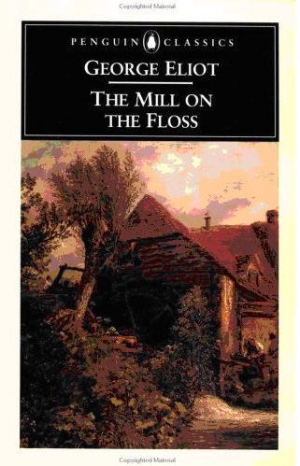
11. The Mill on the Floss by George Eliot (Classic). Of the classics I've enjoyed in the past few years, those of George Eliot are among my very favorites.
"Such an excellent classic. I had read George Eliot's Daniel Deronda last year and loved her writing style. She writes with intelligence and emotion. The Mill on the Floss tells the story of Maggie Tulliver and her family, father and mother and brother Tom. Her father owns the mill of the title. It has been in his family for generations. Due to various dealings, a lost court case and debts, he loses the mill and ends up working for the lawyer, Wakem, who he had the court case against. Maggie is a beautiful, head strong girl, a difficult way to be in the time of this story. She loves Wakem's son, Phillip, a disabled young man, but due to her father's strong feelings against that family, they must meet in secret. There are many tragedies in this story, the family's bankruptcy, the father's illness as a result of losing the court case, his death, Maggie's tragic loves, etc. The story is told in seven sub-stories, as Maggie and Tom grow up. Tom is her brother, she loves him dearly and craves his returned love. It is his intransigence, that keeps her and Phillip apart and leads to other tragedies. I liked many of the characters, especially Maggie's cousin, Lucy, who loves and cares for Maggie dearly. The story moves easily through Maggie's life and as you get used to the language of the day, and this isn't a hard prospect as Eliot writes so well, you will get into the flow of the story. The ending left me feeling very sad and bereft, especially that it took this final event to bring brother and sister back together. Excellent story..."
So there you go. My next entry will have my Top Ten.. :)
Now for an Honorable Mention.
Honorable Mention
Like many people, I've become hooked on the Scandinavian mysteries; Jo Nesbo's Harry Hole books, Stieg Larsson's Girl with the Dragon Tattoo books, Jussi Adler Olsen's Department Q series, Henning Mankell's Wallander series, etc. I'd like to mention one more writer, Swedish writer Karin Alvtegen. She is unique in that she writes stand-alone mysteries; more in the vein of Minette Walters or Margaret Millar. Five of her books have been translated so far and I've enjoyed four very much.
1. Betrayal. "By the prize-winning
author of Missing Eva, a dynamic, successful young mother, is forced to
reassess her marriage when her husband's apathy can no longer be
ignored. Then she discovers he's been having an affair with her young
son's day-care teacher and her grief and rage drive her into vengeful
action. Fatefully, she comes across Jonas, an isolated young man who for
the past two years has been keeping vigil beside his obstinately
comatose girlfriend. Burdened with his own sinister history of betrayal
and his quest for acceptance, he sees a chance to start afresh with Eva.
When Jonas and Eva react to redress their wrongs, the combination
proves lethal.."
2. Shame. "Two women are trapped
by a past that won't let go. At first sight, Monika and Maj-Britt are as
different as two people can be. They have nothing in common but the
determination to obliterate their memories. But then a tragic car
accident briefly brings them face to face and forces them to confront
the emotional voids and secret sadnesses they have been trying to bury. A
suspenseful, psychological thriller, Shame reveals the ordinary days of
the odd and lonely as they twist into self-destruction—and holds out a
glimmering hope of redemption and acceptance."
3. Shadow. "Gerda Persson has lain
dead for three days. Her life seems to have been quite ordinary. Until
the freezer in her home is opened. It is full of books, neatly stacked
and wrapped in clingfilm, a thick layer of ice covering them - all by
the same prize-winning author, all with handwritten dedications to
Gerda. What story do these books have to tell? And what is their
connection to a young boy found abandoned in an amusement park?"
4. Missing. "Karin Alvtegen --
without any training or thought of becoming a novelist - resolved to
write her way out of some family tragedies: The result was her first
novel, Guilt (Skuld), which was published in Sweden in 1998, to rave
reviews. This was followed in 2000 by Missing (Saknad), which won
Scandinavia's prestigious Glass Key award for Best Crime Novel of the
Year, and went on to win an award for bestselling Scandinavian
paperback. Her third novel, Betrayal (Svek) -- coming next year from
Felony & Mayhem -- was shortlisted for the Glass Key award, and also
for the Swedish Crime Writers Academy award for Best Swedish Crime
Novel of the year. And Swedish reviewers have called Alvtegen's most
recent novel, Shame (Skam) (also to come from Felony & Mayhem) her
finest novel to date -- the work, in the words of one critic, of a
modern-day Strindberg. Karin Alvtegen is the great-niece of Astrid
Lundgren, author of the ever-popular Pippi Longstocking books."
I highly recommend her books.
Showing posts with label All-Time Favourites. Show all posts
Friday, 9 March 2018
Saturday, 3 March 2018
Bill's Scientifically Calculated Top 100 Books of All-Time Part 3, Plus an Updt
I could today just post about the new book I got yesterday. It was a veritable bounty. I went downtown to pick up Bonnie's medicine and while I was there I stopped in at 2nd Page books. I found a couple of interesting looking books there. Well, when I got home and took the hounds out to check the mail (our 3:00 o'clock walk) there were 3 packages of books. One was an overdue one and the others arrived early. So there you go, I received an untold wealth of books. I'll provide that update in my next BLog entry. Today I'll update on the book I finished this morning and also continue my Top 100 Book list, #71 - 80.
Just Finished
1. The Common Lawyer by Mark Gimenez (Decades Challenge). I've had a couple of Gimenez's books on my shelf for awhile so was glad to finally try one. This was his 4th publication. Not a classic but still entertaining. My review is below.
"I've had The Common Lawyer by Mark Gimenez on my bookshelf for awhile and was glad to finally get to try it. I'd seen it at one of my local used book stores and the synopsis sounded interesting and I always like to try a new author.
The premise is this. Andy Prescott is a lawyer in Austin Tx. He's sort of lazy, was a C student at law school and now lives in the lives in the SoCo area of Austin getting by sorting out traffic tickets in court. His system, which always works, is to appeal the tickets, await the follow-on hearing, which can take up to two years and then when the cop doesn't appear, the case is thrown out. He rents a small office above a tattoo parlor, spends his time with his three buddies, watching the girls go by, and cross-country cycling. His mother is a liberal art teacher at the local uni and his father is dying of liver disease, was once a budding country singer.
So, with this happyish life style, Andy's life is going to be thrown into turmoil. Billionaire developer Russell Reeves hires Andy to be his local voice for his plans to redevelop portions of SoCo. As well, he wants Andy to hunt down 17 women that he had been involved with in his past to try and make amends. However this second assignment is not quite what it seems and the tension ratchets up from this point on. Andy now has lots of money but does it make him any happier? And who is following him?
It's an interesting premise and the story and action builds quickly as the story develops. Andy is a happy-go-lucky sort of guy, an under achiever and likeable. Austin seems to be a lovely city and is well-described. I found the story to be somewhat John Grisham lite but still entertaining and an easy, quick read, when I settled down to it. I'll check out others of Gimenez's books to see how his writing matures. (3 stars)"
Currently Reading
I'm continuing with my Decades Challenge with this next book. Published in 1912, it's my first attempt at the books of Zane Grey, Riders of the Purple Sage. The synopsis is below.
"Cottonwoods, Utah. 1871. A woman stands accused. A man, sentenced to whipping. Into this travesty of small-town justice rides the one man the town elders fear. His name is Lassiter, a notorious gunman who's come to avenge his sister's death. It doesn't take Lassiter long to see that this once-peaceful Mormon community is controlled by the corrupt Deacon Tull--a powerful elder who's trying to take the woman's land by forcing her to marry him, branding her foreman - as a dangerous "outsider." Lassiter vows to help them. But when the ranch is attacked by horse thieves, cattle rustlers, and a mysterious Masked Rider, he realizes they're up against something bigger, and more brutal, than the land itself. . ."
OK, now on to my list. Ta dahh!
Books 71 - 80
80. Unfinished Clue by Georgette Heyer (Mys). This is the first book that I read by Heyer, who was both a romance and mystery writer. It impressed me and I will continue to read through the other books I've got on my shelf. My review is below.
"A most enjoyable mystery, my first by Heyer and I thoroughly enjoyed. It was a cozy mystery, involving the murder of a cantankerous man, unloved by pretty well everybody associated with him. Inspector Harding is called down from Scotland Yard to investigate and ultimately solves the crime. I liked his character very much and also that of his plodding Sgt. There were also other characters I liked very much, especially Miss Fawcett. No reliance on fancy CSI-type technology, basically interviews and following up on questions, but so totally satisfying of a story. The ending was also satisfying and had a little twist I didn't really see coming. Not a book I'll think about for years to come, but just a perfect, enjoyable read. (5 stars). Always nice to discover a new author that you want to read more of."
79. Consider Phlebas by Iain M. Banks (SciFi). Banks' Culture series is one of my favourite. I've enjoyed every book that I've tried so far.
"Excellent. One of the most unique SciFi writers I've ever read. Iain Banks has created (a) fascinating universe(s) populated with interesting characters, both human and machine. The Culture is a well-crafted, diverse 'organization', with amazing technology and concepts. Consider Phlebas is Banks' first to feature the Culture. I've read others already and have been drawn into his stories. This story is about an adventure, voyage to find a lost Culture Mind and about the Idaran/ Culture war. Horza, a Changer (you have to read it to find out what that means) is a mercenary working for the Idarans who is charged with going to one of the Planets of the Dead to find the Mind and Perosteck Balveda is the Culture agent trying to stop him. The plot is a slow-moving, journey through Banks' universes but don't the slow pace put you off. It's an excellent story and as the story comes to its climax moves along very nicely. His characters are all interesting and his story excellent. Highly recommended."
78. The Outsiders by S.E. Hinton (Young Adult). I've read this two or three times and also have enjoyed the movie. It's gritty, touching and just a wonderful book. The movie has a roster of future stars.
"An excellent story. I read it once previously as I'd seen the movie and really enjoyed. The book was just as good. It was a very touching story about growing up (mind you, nothing like the world in which I grew up). Loved the camaraderie of the group of friends. I loved the names, Soda Pop, Ponyboy, Two - Bit.. It's a scary story in a way, children having to grow up in such a rough, potentially violent world. At the same time it had a positiveness about it; love of the brothers for each other, the caring of the gang and how they supported each other and the positive outlook at the end."
77. Maddaddam by Margaret Atwood (SciFi). This is the 3rd book in Atwood's dystopian trilogy. It was the perfect ending to the series.
"It's been a long while between reading the first two books in this trilogy; Oryx and Crake and The Year of the Flood. Looking back at my reviews, I can see I didn't write much in those days. I think I was somewhat disappointed with the 2nd book, Year of the Flood, but isn't that often the way with the 2nd books of trilogies? So what did I think of MaddAddam? Well, to put it simply, I loved it and even shed a tear or two at the end. It was a fantastic finish to this journey of a group of people trying to survive the end of the world (basically, anyway, as the gist is that Crake caused a virus to sweep through the world and kill off most of mankind). This story is basically written by Toby, one of those wonderful characters you meet in the best of books, a strong woman, trying to survive, to help keep her group together and help it build up humanity once again. The story itself contains stories within stories; Zeb, her lover, telling Toby of his life and how he got to where they now find themselves; and Toby, taking on the story-telling roll of Snowman-the-Jimmy to the new race, the Crakes. As well, this mixed group of humans, Crakes and, even the Pigoons (mutant pigs) must try to prevent the Painballers (a group of psychotic killers) from hurting them anymore. I loved the characters, Toby being my favourite, but also Zeb, Ren, Blackbeard and so many others. It's a heartfelt story and gets better as it moves along. Hoping I don't ruin it, but the ending is positive and, even with some sadness, I left it with a happy, hopeful mood. Definitely worth 5 stars."
76. Necronomicon by H.P. Lovecraft (Horror). I'd been looking for something by Lovecraft for a long time. I'd found a set of paperbacks with many of his stories but when Jo and I visited Kingston back in 2015, I found this collection of stories that appealed to me. Lovecraft has a cult following and has been used as a source by so many writers for their own stories. His stories are not perfect. They aren't necessarily terrifying but in so many of them he creates a feeling of dread and creepiness.
"An excellent collection of the stories of H.P. Lovecraft, from Dagon, originally published in 1919 to The Dream Quest of Unknown Kadath, 1943. There are themes throughout, the Old Ones, the area of Arkham, Mass, the Miskatonic University, the Cthulu, etc. The stories are creepy, more so than outright terrifying, but still, leave you feeling nervous and chilled. Some are excellent; the Mountains of Madness, The Dunwich Horror, the Haunter of the Dark, the Thing on the Doorstep. Excellent to be provided the opportunity to explore Lovecraft's worlds and stories under one book."
75. The Man with Two Left Feet and Other Stories by P.G. Wodehouse (Humour). A total change of pace from #76, this shows Wodehouse at his wittiest. Great collection featuring Bertie Wooster.
"I have to say this is a perfect little book. As I wondered what to rate it, I thought, 'well, they're nice stories, they make me feel good, they are perfectly written.....' It has to be 5-stars. I've read a few of Wodehouse's books, particularly enjoy the whimsy of his Jeeves and Wooster stories. This collection contains one story involving Bertie Wooster, in which Bertie is sent to New York to extricate his cousin from an impending marriage with a 'dance-hall' girl. For once Jeeves play almost no role and we see Bertie at his very best. It left me feeling very happy. The stories, for the most part, deal with relationships and you tend to leave the stories with a positive view on life. I particularly enjoyed The Mixer, two stories told from the perspective of 'the dog', in which the dog moves through life happily affecting the people around him and, for all his mishaps, landing on all four feet. Just a joy to read and I highly recommend. (I even liked the cover of this Penguin edition, with illustration by Ionicus.)"
74. 1984 by George Orwell (SciFi). This is a true classic that seems to have foretold the situation we see in the US these days. Newspeak lives with every word that comes out of the White House from either the main character or one of his mouthpieces. The synopsis is below.
"Among the seminal texts of the 20th century, Nineteen Eighty-Four is a rare work that grows more haunting as its futuristic purgatory becomes more real. Published in 1949, the book offers political satirist George Orwell's nightmare vision of a totalitarian, bureaucratic world and one poor stiff's attempt to find individuality. The brilliance of the novel is Orwell's prescience of modern life--the ubiquity of television, the distortion of the language - and his ability to construct such a thorough version of hell. Required reading for students since it was published, it ranks among the most terrifying novels ever written.
73. The Time Traveler's Wife by Audrey Niffenegger (Fantasy). This is one of those books and movies that causes mixed reactions. I loved both. The book especially is so unique; a love story with a time travel component. It's emotional, fascinating and really grabs you. (The synopsis is below)
"Audrey Niffenegger’s innovative debut, The Time Traveler’s Wife, is the story of Clare, a beautiful art student, and Henry, an adventuresome librarian, who have known each other since Clare was six and Henry was thirty-six, and were married when Clare was twenty-three and Henry thirty-one. Impossible but true, because Henry is one of the first people diagnosed with Chrono-Displacement Disorder: periodically his genetic clock resets and he finds himself misplaced in time, pulled to moments of emotional gravity in his life, past and future. His disappearances are spontaneous, his experiences unpredictable, alternately harrowing and amusing."
72. HMS Ulysses by Alistair MacLean (War). I think this is MacLean's best novel, a fascinating look at the stresses and strain forced on sailors on a convoy run to Murmansk during WWII.
"I'm left speechless by this story. A truly amazing story of heroism of men tired beyond belief fighting a war in conditions unbelievable but true. The HMS Ulysses is a Royal Navy cruiser whose crew have recently mutinied and are tasked once again to meet and escort a convoy on the Murmansk run to Russia. The crew is beaten, tired and the Captain is dying. They sail to meet the convoy of merchant ships at Iceland to take over from the warships escorting the convoy from Canada. The result is a fascinating, horrifying, touching story of this voyage; the love of the crew for their ill Captain, his love for them; the many personalities of the crew and the ordeal they must sail through. The story makes me think of my father as he also sailed to Murmansk, something he doesn't tell me much about. I've read this story before, but so long ago. I'm glad I read again."
71. The Secret Agent by Joseph Conrad (Spy). One of the early spy novels and more than your standard tales of espionage. Fascinating.
"This book was a slow start for me. It's a style of writing I'm not used to these days, but once I got into it, the story flowed nicely and it was a thoughtful, interesting read. I enjoyed having to read and think about what I was reading. The characters were interesting, the story well-crafted and tragic. Mr Verloc, the spy, caught in a tragic situation and his wife Winnie, taking care of him, her simplish brother Stevie and her mother, having to deal with unexpected death... Also an interesting, if unresolved interplay between the Assistant Commissioner (unnamed) and Chief Inspector Heat, each with his own motives and thoughts on dealing with the key 'incident'. I'm glad I worked my way through the story, it was quite excellent."
So there you go, the 70s. See any that interest you? Now for my honorable mention.
Honorable Mention
In my first year at university, I discovered Atlas Shrugged by Ayn Rand. It blew me away. I still remember 'Who is John Galt?' I found myself underlining passages, finding it difficult to put down Rand espoused a political philosophy which I kind of liked (mind you I was an impressionable freshman); as I remember understanding it, a barter system, where you produce what you are best at and trade with others. Obviously there was more to it than that, but it really grabbed me. I found myself reading We the Living. I tried The Fountainhead but couldn't get into it. I started a subscription to the Ayn Rand newsletter. It's can be a pedantic sort of book, but if you want to check out a philosophy, it's well worth reading. At the time, I remember thinking that it was a philosophy impossible to attain unless the world was starting over. lol.. Anyway, worth checking out.
Just Finished
1. The Common Lawyer by Mark Gimenez (Decades Challenge). I've had a couple of Gimenez's books on my shelf for awhile so was glad to finally try one. This was his 4th publication. Not a classic but still entertaining. My review is below.
"I've had The Common Lawyer by Mark Gimenez on my bookshelf for awhile and was glad to finally get to try it. I'd seen it at one of my local used book stores and the synopsis sounded interesting and I always like to try a new author.
The premise is this. Andy Prescott is a lawyer in Austin Tx. He's sort of lazy, was a C student at law school and now lives in the lives in the SoCo area of Austin getting by sorting out traffic tickets in court. His system, which always works, is to appeal the tickets, await the follow-on hearing, which can take up to two years and then when the cop doesn't appear, the case is thrown out. He rents a small office above a tattoo parlor, spends his time with his three buddies, watching the girls go by, and cross-country cycling. His mother is a liberal art teacher at the local uni and his father is dying of liver disease, was once a budding country singer.
So, with this happyish life style, Andy's life is going to be thrown into turmoil. Billionaire developer Russell Reeves hires Andy to be his local voice for his plans to redevelop portions of SoCo. As well, he wants Andy to hunt down 17 women that he had been involved with in his past to try and make amends. However this second assignment is not quite what it seems and the tension ratchets up from this point on. Andy now has lots of money but does it make him any happier? And who is following him?
It's an interesting premise and the story and action builds quickly as the story develops. Andy is a happy-go-lucky sort of guy, an under achiever and likeable. Austin seems to be a lovely city and is well-described. I found the story to be somewhat John Grisham lite but still entertaining and an easy, quick read, when I settled down to it. I'll check out others of Gimenez's books to see how his writing matures. (3 stars)"
Currently Reading
I'm continuing with my Decades Challenge with this next book. Published in 1912, it's my first attempt at the books of Zane Grey, Riders of the Purple Sage. The synopsis is below.
"Cottonwoods, Utah. 1871. A woman stands accused. A man, sentenced to whipping. Into this travesty of small-town justice rides the one man the town elders fear. His name is Lassiter, a notorious gunman who's come to avenge his sister's death. It doesn't take Lassiter long to see that this once-peaceful Mormon community is controlled by the corrupt Deacon Tull--a powerful elder who's trying to take the woman's land by forcing her to marry him, branding her foreman - as a dangerous "outsider." Lassiter vows to help them. But when the ranch is attacked by horse thieves, cattle rustlers, and a mysterious Masked Rider, he realizes they're up against something bigger, and more brutal, than the land itself. . ."
OK, now on to my list. Ta dahh!
Books 71 - 80
80. Unfinished Clue by Georgette Heyer (Mys). This is the first book that I read by Heyer, who was both a romance and mystery writer. It impressed me and I will continue to read through the other books I've got on my shelf. My review is below.
"A most enjoyable mystery, my first by Heyer and I thoroughly enjoyed. It was a cozy mystery, involving the murder of a cantankerous man, unloved by pretty well everybody associated with him. Inspector Harding is called down from Scotland Yard to investigate and ultimately solves the crime. I liked his character very much and also that of his plodding Sgt. There were also other characters I liked very much, especially Miss Fawcett. No reliance on fancy CSI-type technology, basically interviews and following up on questions, but so totally satisfying of a story. The ending was also satisfying and had a little twist I didn't really see coming. Not a book I'll think about for years to come, but just a perfect, enjoyable read. (5 stars). Always nice to discover a new author that you want to read more of."
79. Consider Phlebas by Iain M. Banks (SciFi). Banks' Culture series is one of my favourite. I've enjoyed every book that I've tried so far.
"Excellent. One of the most unique SciFi writers I've ever read. Iain Banks has created (a) fascinating universe(s) populated with interesting characters, both human and machine. The Culture is a well-crafted, diverse 'organization', with amazing technology and concepts. Consider Phlebas is Banks' first to feature the Culture. I've read others already and have been drawn into his stories. This story is about an adventure, voyage to find a lost Culture Mind and about the Idaran/ Culture war. Horza, a Changer (you have to read it to find out what that means) is a mercenary working for the Idarans who is charged with going to one of the Planets of the Dead to find the Mind and Perosteck Balveda is the Culture agent trying to stop him. The plot is a slow-moving, journey through Banks' universes but don't the slow pace put you off. It's an excellent story and as the story comes to its climax moves along very nicely. His characters are all interesting and his story excellent. Highly recommended."
78. The Outsiders by S.E. Hinton (Young Adult). I've read this two or three times and also have enjoyed the movie. It's gritty, touching and just a wonderful book. The movie has a roster of future stars.
"An excellent story. I read it once previously as I'd seen the movie and really enjoyed. The book was just as good. It was a very touching story about growing up (mind you, nothing like the world in which I grew up). Loved the camaraderie of the group of friends. I loved the names, Soda Pop, Ponyboy, Two - Bit.. It's a scary story in a way, children having to grow up in such a rough, potentially violent world. At the same time it had a positiveness about it; love of the brothers for each other, the caring of the gang and how they supported each other and the positive outlook at the end."
77. Maddaddam by Margaret Atwood (SciFi). This is the 3rd book in Atwood's dystopian trilogy. It was the perfect ending to the series.
"It's been a long while between reading the first two books in this trilogy; Oryx and Crake and The Year of the Flood. Looking back at my reviews, I can see I didn't write much in those days. I think I was somewhat disappointed with the 2nd book, Year of the Flood, but isn't that often the way with the 2nd books of trilogies? So what did I think of MaddAddam? Well, to put it simply, I loved it and even shed a tear or two at the end. It was a fantastic finish to this journey of a group of people trying to survive the end of the world (basically, anyway, as the gist is that Crake caused a virus to sweep through the world and kill off most of mankind). This story is basically written by Toby, one of those wonderful characters you meet in the best of books, a strong woman, trying to survive, to help keep her group together and help it build up humanity once again. The story itself contains stories within stories; Zeb, her lover, telling Toby of his life and how he got to where they now find themselves; and Toby, taking on the story-telling roll of Snowman-the-Jimmy to the new race, the Crakes. As well, this mixed group of humans, Crakes and, even the Pigoons (mutant pigs) must try to prevent the Painballers (a group of psychotic killers) from hurting them anymore. I loved the characters, Toby being my favourite, but also Zeb, Ren, Blackbeard and so many others. It's a heartfelt story and gets better as it moves along. Hoping I don't ruin it, but the ending is positive and, even with some sadness, I left it with a happy, hopeful mood. Definitely worth 5 stars."
76. Necronomicon by H.P. Lovecraft (Horror). I'd been looking for something by Lovecraft for a long time. I'd found a set of paperbacks with many of his stories but when Jo and I visited Kingston back in 2015, I found this collection of stories that appealed to me. Lovecraft has a cult following and has been used as a source by so many writers for their own stories. His stories are not perfect. They aren't necessarily terrifying but in so many of them he creates a feeling of dread and creepiness.
"An excellent collection of the stories of H.P. Lovecraft, from Dagon, originally published in 1919 to The Dream Quest of Unknown Kadath, 1943. There are themes throughout, the Old Ones, the area of Arkham, Mass, the Miskatonic University, the Cthulu, etc. The stories are creepy, more so than outright terrifying, but still, leave you feeling nervous and chilled. Some are excellent; the Mountains of Madness, The Dunwich Horror, the Haunter of the Dark, the Thing on the Doorstep. Excellent to be provided the opportunity to explore Lovecraft's worlds and stories under one book."
75. The Man with Two Left Feet and Other Stories by P.G. Wodehouse (Humour). A total change of pace from #76, this shows Wodehouse at his wittiest. Great collection featuring Bertie Wooster.
"I have to say this is a perfect little book. As I wondered what to rate it, I thought, 'well, they're nice stories, they make me feel good, they are perfectly written.....' It has to be 5-stars. I've read a few of Wodehouse's books, particularly enjoy the whimsy of his Jeeves and Wooster stories. This collection contains one story involving Bertie Wooster, in which Bertie is sent to New York to extricate his cousin from an impending marriage with a 'dance-hall' girl. For once Jeeves play almost no role and we see Bertie at his very best. It left me feeling very happy. The stories, for the most part, deal with relationships and you tend to leave the stories with a positive view on life. I particularly enjoyed The Mixer, two stories told from the perspective of 'the dog', in which the dog moves through life happily affecting the people around him and, for all his mishaps, landing on all four feet. Just a joy to read and I highly recommend. (I even liked the cover of this Penguin edition, with illustration by Ionicus.)"
74. 1984 by George Orwell (SciFi). This is a true classic that seems to have foretold the situation we see in the US these days. Newspeak lives with every word that comes out of the White House from either the main character or one of his mouthpieces. The synopsis is below.
"Among the seminal texts of the 20th century, Nineteen Eighty-Four is a rare work that grows more haunting as its futuristic purgatory becomes more real. Published in 1949, the book offers political satirist George Orwell's nightmare vision of a totalitarian, bureaucratic world and one poor stiff's attempt to find individuality. The brilliance of the novel is Orwell's prescience of modern life--the ubiquity of television, the distortion of the language - and his ability to construct such a thorough version of hell. Required reading for students since it was published, it ranks among the most terrifying novels ever written.
73. The Time Traveler's Wife by Audrey Niffenegger (Fantasy). This is one of those books and movies that causes mixed reactions. I loved both. The book especially is so unique; a love story with a time travel component. It's emotional, fascinating and really grabs you. (The synopsis is below)
"Audrey Niffenegger’s innovative debut, The Time Traveler’s Wife, is the story of Clare, a beautiful art student, and Henry, an adventuresome librarian, who have known each other since Clare was six and Henry was thirty-six, and were married when Clare was twenty-three and Henry thirty-one. Impossible but true, because Henry is one of the first people diagnosed with Chrono-Displacement Disorder: periodically his genetic clock resets and he finds himself misplaced in time, pulled to moments of emotional gravity in his life, past and future. His disappearances are spontaneous, his experiences unpredictable, alternately harrowing and amusing."
72. HMS Ulysses by Alistair MacLean (War). I think this is MacLean's best novel, a fascinating look at the stresses and strain forced on sailors on a convoy run to Murmansk during WWII.
"I'm left speechless by this story. A truly amazing story of heroism of men tired beyond belief fighting a war in conditions unbelievable but true. The HMS Ulysses is a Royal Navy cruiser whose crew have recently mutinied and are tasked once again to meet and escort a convoy on the Murmansk run to Russia. The crew is beaten, tired and the Captain is dying. They sail to meet the convoy of merchant ships at Iceland to take over from the warships escorting the convoy from Canada. The result is a fascinating, horrifying, touching story of this voyage; the love of the crew for their ill Captain, his love for them; the many personalities of the crew and the ordeal they must sail through. The story makes me think of my father as he also sailed to Murmansk, something he doesn't tell me much about. I've read this story before, but so long ago. I'm glad I read again."
"This book was a slow start for me. It's a style of writing I'm not used to these days, but once I got into it, the story flowed nicely and it was a thoughtful, interesting read. I enjoyed having to read and think about what I was reading. The characters were interesting, the story well-crafted and tragic. Mr Verloc, the spy, caught in a tragic situation and his wife Winnie, taking care of him, her simplish brother Stevie and her mother, having to deal with unexpected death... Also an interesting, if unresolved interplay between the Assistant Commissioner (unnamed) and Chief Inspector Heat, each with his own motives and thoughts on dealing with the key 'incident'. I'm glad I worked my way through the story, it was quite excellent."
So there you go, the 70s. See any that interest you? Now for my honorable mention.
Honorable Mention
In my first year at university, I discovered Atlas Shrugged by Ayn Rand. It blew me away. I still remember 'Who is John Galt?' I found myself underlining passages, finding it difficult to put down Rand espoused a political philosophy which I kind of liked (mind you I was an impressionable freshman); as I remember understanding it, a barter system, where you produce what you are best at and trade with others. Obviously there was more to it than that, but it really grabbed me. I found myself reading We the Living. I tried The Fountainhead but couldn't get into it. I started a subscription to the Ayn Rand newsletter. It's can be a pedantic sort of book, but if you want to check out a philosophy, it's well worth reading. At the time, I remember thinking that it was a philosophy impossible to attain unless the world was starting over. lol.. Anyway, worth checking out.
Friday, 2 March 2018
Bill's Scientifically Calculated Top 100 Books of All-Time Part 2, plus some new Books
Yesterday I posted the first part of my Top 100 Favourite books; 91 - 100. As I mentioned in that post, my list is based on my bookshelf in Goodreads. That will mean that some books that I read many, many years ago will probably be left out. But as I go along I'll try to highlight some of those books as well. Today's list will run from 81 - 90.
Before I get in to that, a couple of days ago I visited a local bookseller who also sells online; Charles Purpora Books. He has books in a nice outbuilding behind his house. He also has a main bookstore on the mainland. Anyway, I spent a half hour there looking through his books. My main purpose was to pick up a book of poetry by Margaret Atwood, for a monthly Genre challenge.... that being, of course, Poetry. Anyway, these are the books I picked up.
New Books
1. Power Politics by Margaret Atwood. For a book published in 1971, it was in beautiful condition. I've already read as it was fairly short. My review is below. I will say that poetry is a genre that I struggle with. Maybe it's the whole interpretation thing. But I did give it a go. I also have to say that I did enjoy it. Maybe reading it in one sitting allows you to get into the flow of the verse and the ideas.
"I readily admit that poetry is not my favourite genre. It's not poetry's fault, it's more that I probably just don't get it. Too thoughtful for my poor mind, maybe. So when one of my book groups decided that March would be poetry month, I decided to try poetry again. I remember reading The Circle Game by Margaret Atwood back in my university days so I thought maybe I'd try some of her offerings for the challenge. Hence finding a copy of Power Politics as one of my choices.
I have enjoyed Atwood's fiction and science fiction very much over the years. What did I think about this poetry offering? From a pure aesthetics perspective, I liked the look of the book, the clean simplicity of the cover and the layout of the words on the page in this Anansi Press edition from 1971. It's a short book so I thought I'd try to read it in one sitting and it was easy to get into the flow of the poems. There was a mood and feel to the book, the struggle and emotions within relationships. I actually could appreciate the feelings. There were some parts that I thought were just perfect; "I can change myself more easily than I can change you" or "A truth should exist, it should not be used like this. If I love you is that a fact or a weapon?"
I won't say I got it all, but it did strike a chord, a different mode of story. I'm glad I tried it. (4 stars)"
2. The Cunning Man by Robertson Davies. Back in my university days, the mid-70s, I enjoyed Canadian writer, Robertson Davies Deptford trilogy, Fifth Business, The Manticore and World of Wonders. But then I neglected his books for the next 40 years. Over the last couple of years, I tried and enjoyed his Cornish trilogy; Rebel Angels, What's Bred in the Bone and The Lyre of Orpheus. Oddly, like most trilogies, the middle book was the weakest. The Cunning Man is the 2nd book in his unfinished Toronto trilogy. The synopsis is below.
"A mysterious death prologues a rich and meaty saga, narrated by Dr. Jonathan Hullah, which looks back over a long life punctuated by the dazzling intellectual high-jinks and compassionate philosophies of Hullah and his circle."
3. The Space Vampires by Colin Wilson. Wilson is a new author for me. I have bought one of his mysteries and a non-fiction novel. I saw this one and, well, how can a person resist a title like that?
"Far out in the asteroid belt, an alien spaceship of colossal dimensions is discovered. Initial investigations of its vast, gothic interior reveal a number of humanoids preserved in a state of suspended animation. At last, there is real proof that intelligent life does exist in other galaxies. But when three of the beings are brought back to Earth, disaster strikes. The humanoids are discovered to be vampires, preying on people's life-fields and sucking the body's energy with a kiss of death. Suddenly one of the vampires--a female of extraordinary beauty and sexual allure--escapes. The desperate hunt to track it down soon develops into a psychic struggle for the survival of the human race."
Now to continue with my Top 100 Countdown.
Books 81 - 90
90. The Wire in the Blood by Val McDermid (Mys). This is the second book in an excellent series by McDermid. It was turned into an excellent BBC TV series as well. The story features Tony Hill as a profiler who assists the British police in their investigations, assisted by DI Carol Jordan. A gritty, exciting series. The synopsis is below.
"Across the country, dozens of teenage girls have vanished. Authorities are convinced they're runaways with just the bad luck of the draw to connect them. It's the job of criminal profilers Dr. Tony Hill and Carol Jordan to look for a pattern. They've spent years exploring the psyches of madmen. But sane men kill, too. And when they hide in plain sight, they can be difficult to find...
He's handsome and talented, rich and famous--a notorious charmer with the power to seduce...and the will to destroy. No one can believe what he's capable of. No one can imagine what he's already done. And no one can fathom what he's about to do next. Until one of Hill's students is murdered--the first move in a sick and violent game for three players. Now, of all the killers Hill and Jordan have hunted, none has been so ruthless, so terrifyingly clever, and so brilliantly elusive as the killer who's hunting them..."
89. The Serpent's Tale by Ariana Franklin (Mys). This is the 2nd book in a great historical mystery series. I've read the four books. They feature Adelia Aguilar, a forensic doctor who finds herself in England in the 12th century. Great characters, great story and fascinating concept.
"Rosamund Clifford, the mistress of King Henry II, has died an agonizing death by poison - and the king's estranged queen, Eleanor of Aquitaine, is the prime suspect. Henry suspects that Rosamund's murder is probably the first move in Eleanor's long-simmering plot to overthrow him. If Eleanor is guilty, the result could be civil war. The king must once again summon Adelia Aguilar, mistress of the art of death, to uncover the truth.
Adelia is not happy to be called out of retirement. She has been living contentedly in the countryside, caring for her infant daughter, Allie. But Henry's summons cannot be ignored, and Adelia must again join forces with the king's trusted fixer, Rowley Picot, the Bishop of St. Albans, who is also her baby's father.
Adelia and Rowley travel to the murdered courtesan's home, in a tower within a walled labyrinth - a strange and sinister place from the outside, but far more so on the inside, where a bizarre and gruesome discovery awaits them. But Adelia's investigation is cut short by the appearance of Rosamund's rival: Queen Eleanor. Adelia, Rowley, and the other members of her small party are taken captive by Eleanor's henchmen and held in the nunnery of Godstow, where Eleanor is holed up for the winter with her band of mercenaries, awaiting the right moment to launch their rebellion.
Isolated and trapped inside the nunnery by the snow and cold, Adelia and Rowley watch as dead bodies begin piling up. Adelia knows that there may be more than one killer at work, and she must unveil their true identities before England is once again plunged into civil war . . ."
88. Trustee from the Toolroom by Nevil Shute (Fiction). This was a recent read for me, like just last month... lol. You might find as I go through my Top 100 books, that Nevil Shute might make the list a couple of times or so. He is a pure story teller, thoughtful, excellent books. I posted my review in recent posts, but if you missed it, here it is again.
"Reading a new (only for me as Nevil Shute has been dead since 1960) book by Shute is like putting on a cardigan, comfy pj's and slippers and cozying up on the couch. It's comforting, even though astounding things can happen. Trustee from the Toolroom was Shute's last book. As soon as I started reading it, I fell comfortably into the fantastic world that he created for my reading enjoyment.
Like many of Shute's stories, it focuses on a normal, unassuming man (or woman) who finds him/ herself involved in a situation so far out of his comfort zone that you find yourself following him, holding your breath to see how it will resolve. Now, I'm not saying that it's page after page of heart-stopping action. Because it isn't that. It's just that you find yourself amazed at how this mild-mannered person deals with this situation so out of his comfort zone.
Keith Stewart is a middle-aged Englishman living in London in the 1960's. Many years ago he gave up his wartime job as a rigger at an aircraft factory and now works from home, creating miniature engines and such and writing articles for a magazine called Miniature Mechanic. The magazine is shipped to people around the world who try to create Keith's designs and correspond with him. He makes little money and his wife makes a bit more so they can live a relatively comfortable life, nothing extravagant. They have never really traveled and live very insular lives.
Keith sister, Jo and her husband, an ex-Navy officer have decided to travel by sailing boat to Vancouver. They ask Keith and Katie to look after their young daughter, Janice until they get settled. They die on the way. So that's the basic story, except that as well, they have designated Keith and Katie as trustees to their daughter. They had Keith install a jewelry box in concrete in the hull of their ship; Janice's inheritance. Keith decides that if they are to ensure Janice the life she deserves, he needs to get the jewels.
This leads to Keith journeying to Tahiti, with little to no money to try and achieve his aim. This is the crux of this fascinating story. There are so many rich elements that develop. Keith might seem an ordinary man who lives on his street, but we gradually discover hidden elements to him that make him more and more interesting and also links to so many people around the world, that even he doesn't realize. Like all of the other stories by Shute that I've read, I was instantly drawn into the characters and the story and ultimately so satisfied with the ending. If you've never read anything by Shute, you are missing out on one of the great story tellers. (4 stars)"
87. A Fine Balance by Rohinton Mistry (CanCon / Fiction). Mistry is a Canadian writer. I read his first 4 books in quick succession back early in 2005ish. All were excellent with A Fine Balance one of my two favorites. A Fine Balance was Mistry's 2nd book. It offers a rich, emotional portrait of India. The synopsis is below.
"Set in mid-1970s India, A Fine Balance is a subtle and compelling narrative about four unlikely characters who come together in circumstances no one could have foreseen soon after the government declares a 'State of Internal Emergency'. It is a breathtaking achievement: panoramic yet humane, intensely political yet rich with local delight; and, above all, compulsively readable."
86. Most Secret by Nevil Shute (War). I did warn you about Nevil Shute. Most Secret comes from Shute's war period. It was originally written in 1942, but censored until 1945. Excellent war story and just an excellent story.
"Nevil Shute continues to be one of my favourite authors. I've now read 4 or 5 of his books and each one has been so excellent. I can't sing the praises of books like On the Beach, Pied Piper and The Far Country enough. Today I finished Most Secret, published originally in 1945, during his war period.
On the surface, it's a simple war story, 4 men of diverse backgrounds coming together to devise a plan for the English to harass and destroy German assets and at the same time to give new courage to French citizens on the French coast, who have been under the thumb of German rule throughout the war.
But as always with such a well-crafted Shute story, it's much more than that. Shute takes the time to tell us about the characters, to develop feelings for them and what they've been through. His narrator is a Navy Commander, drawn into the scheme to bring fire to the Germans, who becomes invested in them and who tells their story in such a matter-of-fact way, but also manages to provide us with the emotion and caring he has for Simon, Boden, Rhodes and Colvin.
Shute also adds in the Navy Wren who is assigned to transport the crew, the Commander and who falls in love with Rhodes. The story is one of great heroism and daring and also fairly technical in its own way. The plot basically is to convert a French fishing vessel into a raider, equipped with flame throwers to go across to France and fight the Germans. That is it in its very simplest forms. The four men each has his own motivations, which you find out throughout the story.
I thought as I read it, that yes, it's a pretty interesting story, but more and more I became invested in these characters, even with Rhodes' rabbit and by the end felt quite choked up with the ending and how everything turned out. Shute writes in a very understated manner but at the same time manages to get you completely involved in his story. His heroes are everyday people who strike a deep chord with you. Another of my favorites. (5 stars)"
85. A Dedicated Man by Peter Robinson (Mys). This is the second book in Robinson's excellent mystery series featuring Inspector Banks. Robinson has a certain writing style that draws you in and creates more than a mystery.
"A Dedicated Man is the 2nd Chief Inspector Banks mystery by Peter Robinson. Once again I found it to be quite different to the TV series that was based on the books. But that matters not as both are enjoyable in their own way.
Banks is called to a small town in his district in Yorkshire to investigate the murder of a local professor / historian. It's a very small hamlet with basically one police officer. He brings along Sgt Hatchley to assist. It's a typical case, the professor is well-loved, seems to have no enemies and even though he has friends, they all seem to have little motive and reasonable alibis.
The pacing is excellent; we aren't caught up with countless murders to cope with. It's Banks and Hatchley investigating, talking to possible suspects as they try to gather information and we also get the perspective of a variety of the locals; young Sally, the budding actress with her own ideas of the murder, the local singer who may have had a relationship with the victim, etc.
It was a pleasure to read and just enjoy the thought processes, the locality, the people and the case. I had ideas of how the murder might have happened but for some reason, never considered the final solution which was presented and I must say I found it very satisfying. Banks is not really like the TV version; he has a much smaller staff to work with and his personal circumstances are different, at least for the first two books, but I like him very much and was very satisfied with this most enjoyable mystery. Now to find the 3rd book. (5 stars)"
84. Call for the Dead by John le Carré (Spy). Back in the day, I enjoyed reading le Carré's Smiley series' Tinker, Tailor, Soldier, Spy, The Honorable Schoolboy and Smiley's People. It started me reading more of le Carré's books, but I didn't get around to his earliest books. Call for the Dead was his first novel, written in 1961, and introduces us to George Smiley for the first time. The book is a great way to be introduced both to Smiley and the excellence of le Carré's spy novels.
"George Smiley had liked the man and now the man was dead. Suicide. But why? An anonymous letter had alleged that Foreign Office man Samuel Fennan had been a member of the Communist Party as a student before the war. Nothing very unusual for his generation.
Smiley had made it clear that the investigation, little more than a routine security check, was over and that the file on Fennan could be closed. Next day, Fennan was dead with a note by his body saying his career was finished and he couldn’t go on."
83. Solomon Gursky Was Here by Mordecai Richler (Can Lit / Fiction). Back in my university days I took a Canadian Literature course. One of the books we took was The Apprenticeship of Duddy Kravitz by Richler. It interested me enough that I also read St. Urbain's Horseman. But then my focus began to switch to Science Fiction and Fantasy so I never tried another. Over the past couple of years, I've begun to explore more Canadian literature. Some of the books I chose were as a result of a book on the best books in Canadian fiction and Solomon Gursky was one of those books. So excellent! I now have Barney's Version on my bookshelf as a result.
"What a joy to read! How do you describe Solomon Gursky Was Here? In its simplest form, it's the story of Ephraim Gursky, a minor crook and forger, who escapes from prison in England and tricks his way onto the ill-fated Franklin expedition, and manages to survive the disaster. He roams the Arctic, becomes a religious leader to a band of Eskimos; in some way he persuades them they are one of the 12 tribes of Israel. He eventually finds his way to Saskatchewan, starts a family and then the story follows his three grand-children; Solomon, Barnie and Morrie and their children. The grand-sons found successful liquor business, built partly on smuggling booze to the US during their prohibition; then settle in Montreal. The other aspect of the story follows one Moses Berger, son of poet LB Berger, who worked for the Gursky families. Moses goes through this story trying to find out the truth about Solomon Gursky; a trickster like his grand father, who died in a plane crash in the North of Canada. That is the story in its simplest form. It meanders from the past, following Ephraim, then his grand sons and their kids; also following Moses, now drunk, a failed writer as he explores the Gursky family. There are so many lovely tidbits, humor; just great, entertaining story-telling. It's an entertaining read and it winds up in such a satisfying manner; it was a pure joy to read. I highly recommend. It's been many years since I read something by Mordecai Richler and I'm going to have to find Barney's Version next."
82. Murder at the Vicarage by Agatha Christie (Mys). Christie is one of the grand-dames of the classic mystery. I did read some of her stories when I was a youngster but then drifted away from her works. It's been the past few years that I've begun to explore her stories more. Murder at the Vicarage is the first book in the Miss Marple series and is a great place setter for you to see if you like her work.
"A most enjoyable introduction to the Miss Marple series of mysteries. I particularly enjoyed how the story was presented, with the Vicar being the story teller. Miss Marple is almost in the shadows, as the Vicar wanders around town on his own or with the police inspector, chatting with people, hearing the ideas and thoughts. Miss Marple is a watcher, a wise lady, who observes and figures things out. The Vicar meets with her regularly, discussing ideas, clues and gaining her insight. I loved the story, loved trying to figure things out (for the most part, unsuccessfully) and I loved the main characters, the Vicar and his lovely young wife, Griselda and Miss Marple especially. The story was fun and a pleasure to read. I was even happy with the ending, more than satisfied as Miss Marple presented her findings and solution. Loved it!"
81. Wool by Hugh Howey (SciFi). I tried this book just by chance and was pleasantly surprised at how excellent it was. It's actually a compendium of the books 1-5 in the Silo (Wool) series. Fascinating dystopian world and great story. I have the next books sitting on my shelf, those being the Shift series.
"Wow! What a great story, courage, bad guys, good guys, interesting concept and characters that you can enjoy. The story of the people of Silo 18 (you'll have to read it to find out what it is) whose daily lives move along, a relationship from floor to floor, all contributing in their own way; Mechanical, Medical, IT, Farming, Law, but at the same time there are secrets and plots. The story starts off with Sheriff Holston who is dealing with the death of his wife three years before, who chose to go on a 'cleaning' (more for you to read about) and decides to join her. The Mayor and deputy go down to Mechanical in search of the new Sheriff (Juliette.. a lovely, brave, wonderful character), much to the dissatisfaction of Bernard, Head of IT, who has ideas of his own for running Silo. The implications of this conflict form the basis of the story, which, in this Omnibus edition, runs for 5 Chapters (Books). Silo will be turned upside down, new heros discovered; Juliette will go on her own journey and there will be discoveries that will shock many of the residents of Silo. I can't say enough about this story. I want to get the next books, but am also kind of hesitant as Hugh Howey indicates in a Q&A at the end of the book, "There is always a story to tell, just maybe not the one that the readers expect." Great story, hard to put down and enjoyed every minute of it, even if some were with trepidation."
So there you go, the Top 100 list from 81 - 90. Anything interest you?
Honorable Mention
As I've created this list, it's got me thinking of books I read much earlier in my life that I'd like to mention to you as well. Today's honorable mention are books from Russian author, Alexander Solzhenitsyn, who lived from 1918 to 2008. In high school, I read 3 of his earliest books. As I remember, they were excellent, depressing stories of the earlier days of the Russian revolution and how people suffered under it. If you want an early feel for his style, try One Day in the Life of Ivan Denisovich (1963) (the translated edition), the story of a Russian prisoner in the Gulags, terrifying and powerful. If you find that one interesting and worthwhile, then check out The First Circle (1968), the story of political prisoners forced to work for the government as punishment and then Cancer Ward (1968), the story of treatment of people with terminal illness and the 'cancerous' police state. They aren't necessarily easy reads. You have to get used to the names for the first thing. The stories are so detailed and rich that though that once you get into the flow, I'm sure you will have difficulty putting them down. I may have to try one again to see if my memories of them are accurate.
Before I get in to that, a couple of days ago I visited a local bookseller who also sells online; Charles Purpora Books. He has books in a nice outbuilding behind his house. He also has a main bookstore on the mainland. Anyway, I spent a half hour there looking through his books. My main purpose was to pick up a book of poetry by Margaret Atwood, for a monthly Genre challenge.... that being, of course, Poetry. Anyway, these are the books I picked up.
New Books
1. Power Politics by Margaret Atwood. For a book published in 1971, it was in beautiful condition. I've already read as it was fairly short. My review is below. I will say that poetry is a genre that I struggle with. Maybe it's the whole interpretation thing. But I did give it a go. I also have to say that I did enjoy it. Maybe reading it in one sitting allows you to get into the flow of the verse and the ideas.
"I readily admit that poetry is not my favourite genre. It's not poetry's fault, it's more that I probably just don't get it. Too thoughtful for my poor mind, maybe. So when one of my book groups decided that March would be poetry month, I decided to try poetry again. I remember reading The Circle Game by Margaret Atwood back in my university days so I thought maybe I'd try some of her offerings for the challenge. Hence finding a copy of Power Politics as one of my choices.
I have enjoyed Atwood's fiction and science fiction very much over the years. What did I think about this poetry offering? From a pure aesthetics perspective, I liked the look of the book, the clean simplicity of the cover and the layout of the words on the page in this Anansi Press edition from 1971. It's a short book so I thought I'd try to read it in one sitting and it was easy to get into the flow of the poems. There was a mood and feel to the book, the struggle and emotions within relationships. I actually could appreciate the feelings. There were some parts that I thought were just perfect; "I can change myself more easily than I can change you" or "A truth should exist, it should not be used like this. If I love you is that a fact or a weapon?"
I won't say I got it all, but it did strike a chord, a different mode of story. I'm glad I tried it. (4 stars)"
2. The Cunning Man by Robertson Davies. Back in my university days, the mid-70s, I enjoyed Canadian writer, Robertson Davies Deptford trilogy, Fifth Business, The Manticore and World of Wonders. But then I neglected his books for the next 40 years. Over the last couple of years, I tried and enjoyed his Cornish trilogy; Rebel Angels, What's Bred in the Bone and The Lyre of Orpheus. Oddly, like most trilogies, the middle book was the weakest. The Cunning Man is the 2nd book in his unfinished Toronto trilogy. The synopsis is below.
"A mysterious death prologues a rich and meaty saga, narrated by Dr. Jonathan Hullah, which looks back over a long life punctuated by the dazzling intellectual high-jinks and compassionate philosophies of Hullah and his circle."
3. The Space Vampires by Colin Wilson. Wilson is a new author for me. I have bought one of his mysteries and a non-fiction novel. I saw this one and, well, how can a person resist a title like that?
"Far out in the asteroid belt, an alien spaceship of colossal dimensions is discovered. Initial investigations of its vast, gothic interior reveal a number of humanoids preserved in a state of suspended animation. At last, there is real proof that intelligent life does exist in other galaxies. But when three of the beings are brought back to Earth, disaster strikes. The humanoids are discovered to be vampires, preying on people's life-fields and sucking the body's energy with a kiss of death. Suddenly one of the vampires--a female of extraordinary beauty and sexual allure--escapes. The desperate hunt to track it down soon develops into a psychic struggle for the survival of the human race."
Now to continue with my Top 100 Countdown.
Books 81 - 90
90. The Wire in the Blood by Val McDermid (Mys). This is the second book in an excellent series by McDermid. It was turned into an excellent BBC TV series as well. The story features Tony Hill as a profiler who assists the British police in their investigations, assisted by DI Carol Jordan. A gritty, exciting series. The synopsis is below.
"Across the country, dozens of teenage girls have vanished. Authorities are convinced they're runaways with just the bad luck of the draw to connect them. It's the job of criminal profilers Dr. Tony Hill and Carol Jordan to look for a pattern. They've spent years exploring the psyches of madmen. But sane men kill, too. And when they hide in plain sight, they can be difficult to find...
He's handsome and talented, rich and famous--a notorious charmer with the power to seduce...and the will to destroy. No one can believe what he's capable of. No one can imagine what he's already done. And no one can fathom what he's about to do next. Until one of Hill's students is murdered--the first move in a sick and violent game for three players. Now, of all the killers Hill and Jordan have hunted, none has been so ruthless, so terrifyingly clever, and so brilliantly elusive as the killer who's hunting them..."
89. The Serpent's Tale by Ariana Franklin (Mys). This is the 2nd book in a great historical mystery series. I've read the four books. They feature Adelia Aguilar, a forensic doctor who finds herself in England in the 12th century. Great characters, great story and fascinating concept.
"Rosamund Clifford, the mistress of King Henry II, has died an agonizing death by poison - and the king's estranged queen, Eleanor of Aquitaine, is the prime suspect. Henry suspects that Rosamund's murder is probably the first move in Eleanor's long-simmering plot to overthrow him. If Eleanor is guilty, the result could be civil war. The king must once again summon Adelia Aguilar, mistress of the art of death, to uncover the truth.
Adelia is not happy to be called out of retirement. She has been living contentedly in the countryside, caring for her infant daughter, Allie. But Henry's summons cannot be ignored, and Adelia must again join forces with the king's trusted fixer, Rowley Picot, the Bishop of St. Albans, who is also her baby's father.
Adelia and Rowley travel to the murdered courtesan's home, in a tower within a walled labyrinth - a strange and sinister place from the outside, but far more so on the inside, where a bizarre and gruesome discovery awaits them. But Adelia's investigation is cut short by the appearance of Rosamund's rival: Queen Eleanor. Adelia, Rowley, and the other members of her small party are taken captive by Eleanor's henchmen and held in the nunnery of Godstow, where Eleanor is holed up for the winter with her band of mercenaries, awaiting the right moment to launch their rebellion.
Isolated and trapped inside the nunnery by the snow and cold, Adelia and Rowley watch as dead bodies begin piling up. Adelia knows that there may be more than one killer at work, and she must unveil their true identities before England is once again plunged into civil war . . ."
88. Trustee from the Toolroom by Nevil Shute (Fiction). This was a recent read for me, like just last month... lol. You might find as I go through my Top 100 books, that Nevil Shute might make the list a couple of times or so. He is a pure story teller, thoughtful, excellent books. I posted my review in recent posts, but if you missed it, here it is again.
"Reading a new (only for me as Nevil Shute has been dead since 1960) book by Shute is like putting on a cardigan, comfy pj's and slippers and cozying up on the couch. It's comforting, even though astounding things can happen. Trustee from the Toolroom was Shute's last book. As soon as I started reading it, I fell comfortably into the fantastic world that he created for my reading enjoyment.
Like many of Shute's stories, it focuses on a normal, unassuming man (or woman) who finds him/ herself involved in a situation so far out of his comfort zone that you find yourself following him, holding your breath to see how it will resolve. Now, I'm not saying that it's page after page of heart-stopping action. Because it isn't that. It's just that you find yourself amazed at how this mild-mannered person deals with this situation so out of his comfort zone.
Keith Stewart is a middle-aged Englishman living in London in the 1960's. Many years ago he gave up his wartime job as a rigger at an aircraft factory and now works from home, creating miniature engines and such and writing articles for a magazine called Miniature Mechanic. The magazine is shipped to people around the world who try to create Keith's designs and correspond with him. He makes little money and his wife makes a bit more so they can live a relatively comfortable life, nothing extravagant. They have never really traveled and live very insular lives.
Keith sister, Jo and her husband, an ex-Navy officer have decided to travel by sailing boat to Vancouver. They ask Keith and Katie to look after their young daughter, Janice until they get settled. They die on the way. So that's the basic story, except that as well, they have designated Keith and Katie as trustees to their daughter. They had Keith install a jewelry box in concrete in the hull of their ship; Janice's inheritance. Keith decides that if they are to ensure Janice the life she deserves, he needs to get the jewels.
This leads to Keith journeying to Tahiti, with little to no money to try and achieve his aim. This is the crux of this fascinating story. There are so many rich elements that develop. Keith might seem an ordinary man who lives on his street, but we gradually discover hidden elements to him that make him more and more interesting and also links to so many people around the world, that even he doesn't realize. Like all of the other stories by Shute that I've read, I was instantly drawn into the characters and the story and ultimately so satisfied with the ending. If you've never read anything by Shute, you are missing out on one of the great story tellers. (4 stars)"
87. A Fine Balance by Rohinton Mistry (CanCon / Fiction). Mistry is a Canadian writer. I read his first 4 books in quick succession back early in 2005ish. All were excellent with A Fine Balance one of my two favorites. A Fine Balance was Mistry's 2nd book. It offers a rich, emotional portrait of India. The synopsis is below.
"Set in mid-1970s India, A Fine Balance is a subtle and compelling narrative about four unlikely characters who come together in circumstances no one could have foreseen soon after the government declares a 'State of Internal Emergency'. It is a breathtaking achievement: panoramic yet humane, intensely political yet rich with local delight; and, above all, compulsively readable."
86. Most Secret by Nevil Shute (War). I did warn you about Nevil Shute. Most Secret comes from Shute's war period. It was originally written in 1942, but censored until 1945. Excellent war story and just an excellent story.
"Nevil Shute continues to be one of my favourite authors. I've now read 4 or 5 of his books and each one has been so excellent. I can't sing the praises of books like On the Beach, Pied Piper and The Far Country enough. Today I finished Most Secret, published originally in 1945, during his war period.
On the surface, it's a simple war story, 4 men of diverse backgrounds coming together to devise a plan for the English to harass and destroy German assets and at the same time to give new courage to French citizens on the French coast, who have been under the thumb of German rule throughout the war.
But as always with such a well-crafted Shute story, it's much more than that. Shute takes the time to tell us about the characters, to develop feelings for them and what they've been through. His narrator is a Navy Commander, drawn into the scheme to bring fire to the Germans, who becomes invested in them and who tells their story in such a matter-of-fact way, but also manages to provide us with the emotion and caring he has for Simon, Boden, Rhodes and Colvin.
Shute also adds in the Navy Wren who is assigned to transport the crew, the Commander and who falls in love with Rhodes. The story is one of great heroism and daring and also fairly technical in its own way. The plot basically is to convert a French fishing vessel into a raider, equipped with flame throwers to go across to France and fight the Germans. That is it in its very simplest forms. The four men each has his own motivations, which you find out throughout the story.
I thought as I read it, that yes, it's a pretty interesting story, but more and more I became invested in these characters, even with Rhodes' rabbit and by the end felt quite choked up with the ending and how everything turned out. Shute writes in a very understated manner but at the same time manages to get you completely involved in his story. His heroes are everyday people who strike a deep chord with you. Another of my favorites. (5 stars)"
85. A Dedicated Man by Peter Robinson (Mys). This is the second book in Robinson's excellent mystery series featuring Inspector Banks. Robinson has a certain writing style that draws you in and creates more than a mystery.
"A Dedicated Man is the 2nd Chief Inspector Banks mystery by Peter Robinson. Once again I found it to be quite different to the TV series that was based on the books. But that matters not as both are enjoyable in their own way.
Banks is called to a small town in his district in Yorkshire to investigate the murder of a local professor / historian. It's a very small hamlet with basically one police officer. He brings along Sgt Hatchley to assist. It's a typical case, the professor is well-loved, seems to have no enemies and even though he has friends, they all seem to have little motive and reasonable alibis.
The pacing is excellent; we aren't caught up with countless murders to cope with. It's Banks and Hatchley investigating, talking to possible suspects as they try to gather information and we also get the perspective of a variety of the locals; young Sally, the budding actress with her own ideas of the murder, the local singer who may have had a relationship with the victim, etc.
It was a pleasure to read and just enjoy the thought processes, the locality, the people and the case. I had ideas of how the murder might have happened but for some reason, never considered the final solution which was presented and I must say I found it very satisfying. Banks is not really like the TV version; he has a much smaller staff to work with and his personal circumstances are different, at least for the first two books, but I like him very much and was very satisfied with this most enjoyable mystery. Now to find the 3rd book. (5 stars)"
84. Call for the Dead by John le Carré (Spy). Back in the day, I enjoyed reading le Carré's Smiley series' Tinker, Tailor, Soldier, Spy, The Honorable Schoolboy and Smiley's People. It started me reading more of le Carré's books, but I didn't get around to his earliest books. Call for the Dead was his first novel, written in 1961, and introduces us to George Smiley for the first time. The book is a great way to be introduced both to Smiley and the excellence of le Carré's spy novels.
"George Smiley had liked the man and now the man was dead. Suicide. But why? An anonymous letter had alleged that Foreign Office man Samuel Fennan had been a member of the Communist Party as a student before the war. Nothing very unusual for his generation.
Smiley had made it clear that the investigation, little more than a routine security check, was over and that the file on Fennan could be closed. Next day, Fennan was dead with a note by his body saying his career was finished and he couldn’t go on."
83. Solomon Gursky Was Here by Mordecai Richler (Can Lit / Fiction). Back in my university days I took a Canadian Literature course. One of the books we took was The Apprenticeship of Duddy Kravitz by Richler. It interested me enough that I also read St. Urbain's Horseman. But then my focus began to switch to Science Fiction and Fantasy so I never tried another. Over the past couple of years, I've begun to explore more Canadian literature. Some of the books I chose were as a result of a book on the best books in Canadian fiction and Solomon Gursky was one of those books. So excellent! I now have Barney's Version on my bookshelf as a result.
"What a joy to read! How do you describe Solomon Gursky Was Here? In its simplest form, it's the story of Ephraim Gursky, a minor crook and forger, who escapes from prison in England and tricks his way onto the ill-fated Franklin expedition, and manages to survive the disaster. He roams the Arctic, becomes a religious leader to a band of Eskimos; in some way he persuades them they are one of the 12 tribes of Israel. He eventually finds his way to Saskatchewan, starts a family and then the story follows his three grand-children; Solomon, Barnie and Morrie and their children. The grand-sons found successful liquor business, built partly on smuggling booze to the US during their prohibition; then settle in Montreal. The other aspect of the story follows one Moses Berger, son of poet LB Berger, who worked for the Gursky families. Moses goes through this story trying to find out the truth about Solomon Gursky; a trickster like his grand father, who died in a plane crash in the North of Canada. That is the story in its simplest form. It meanders from the past, following Ephraim, then his grand sons and their kids; also following Moses, now drunk, a failed writer as he explores the Gursky family. There are so many lovely tidbits, humor; just great, entertaining story-telling. It's an entertaining read and it winds up in such a satisfying manner; it was a pure joy to read. I highly recommend. It's been many years since I read something by Mordecai Richler and I'm going to have to find Barney's Version next."
82. Murder at the Vicarage by Agatha Christie (Mys). Christie is one of the grand-dames of the classic mystery. I did read some of her stories when I was a youngster but then drifted away from her works. It's been the past few years that I've begun to explore her stories more. Murder at the Vicarage is the first book in the Miss Marple series and is a great place setter for you to see if you like her work.
"A most enjoyable introduction to the Miss Marple series of mysteries. I particularly enjoyed how the story was presented, with the Vicar being the story teller. Miss Marple is almost in the shadows, as the Vicar wanders around town on his own or with the police inspector, chatting with people, hearing the ideas and thoughts. Miss Marple is a watcher, a wise lady, who observes and figures things out. The Vicar meets with her regularly, discussing ideas, clues and gaining her insight. I loved the story, loved trying to figure things out (for the most part, unsuccessfully) and I loved the main characters, the Vicar and his lovely young wife, Griselda and Miss Marple especially. The story was fun and a pleasure to read. I was even happy with the ending, more than satisfied as Miss Marple presented her findings and solution. Loved it!"
81. Wool by Hugh Howey (SciFi). I tried this book just by chance and was pleasantly surprised at how excellent it was. It's actually a compendium of the books 1-5 in the Silo (Wool) series. Fascinating dystopian world and great story. I have the next books sitting on my shelf, those being the Shift series.
"Wow! What a great story, courage, bad guys, good guys, interesting concept and characters that you can enjoy. The story of the people of Silo 18 (you'll have to read it to find out what it is) whose daily lives move along, a relationship from floor to floor, all contributing in their own way; Mechanical, Medical, IT, Farming, Law, but at the same time there are secrets and plots. The story starts off with Sheriff Holston who is dealing with the death of his wife three years before, who chose to go on a 'cleaning' (more for you to read about) and decides to join her. The Mayor and deputy go down to Mechanical in search of the new Sheriff (Juliette.. a lovely, brave, wonderful character), much to the dissatisfaction of Bernard, Head of IT, who has ideas of his own for running Silo. The implications of this conflict form the basis of the story, which, in this Omnibus edition, runs for 5 Chapters (Books). Silo will be turned upside down, new heros discovered; Juliette will go on her own journey and there will be discoveries that will shock many of the residents of Silo. I can't say enough about this story. I want to get the next books, but am also kind of hesitant as Hugh Howey indicates in a Q&A at the end of the book, "There is always a story to tell, just maybe not the one that the readers expect." Great story, hard to put down and enjoyed every minute of it, even if some were with trepidation."
So there you go, the Top 100 list from 81 - 90. Anything interest you?
Honorable Mention
As I've created this list, it's got me thinking of books I read much earlier in my life that I'd like to mention to you as well. Today's honorable mention are books from Russian author, Alexander Solzhenitsyn, who lived from 1918 to 2008. In high school, I read 3 of his earliest books. As I remember, they were excellent, depressing stories of the earlier days of the Russian revolution and how people suffered under it. If you want an early feel for his style, try One Day in the Life of Ivan Denisovich (1963) (the translated edition), the story of a Russian prisoner in the Gulags, terrifying and powerful. If you find that one interesting and worthwhile, then check out The First Circle (1968), the story of political prisoners forced to work for the government as punishment and then Cancer Ward (1968), the story of treatment of people with terminal illness and the 'cancerous' police state. They aren't necessarily easy reads. You have to get used to the names for the first thing. The stories are so detailed and rich that though that once you get into the flow, I'm sure you will have difficulty putting them down. I may have to try one again to see if my memories of them are accurate.
Subscribe to:
Posts (Atom)


